

Typhoon Shelter Fried Crab 避風塘炒蟹 (Cantonese: bay fung tong chow hai) is a Hong Kong-born spicy dish. Most traditional Hong Kong dishes are not spicy since Hong Kong is part of southern China where Cantonese food is predominant. In the past 30 years, with the influx of migrants from mainland China, dishes have also evolved to cater to spicier palettes. Even native Hong Kong people started to like spicier foods. Examples of popular spicy foods in Hong Kong are curry fish balls, Thai chili crab and mala hot pot to name a few.
Typhoon Shelter Fried Crab 避風塘炒蟹 is a pretty iconic dish invented by Hong Kong “boat people”. Most of them were fishermen and their whole family would live on boats. Some would park their boats in the Causeway Bay Typhoon Shelter when a typhoon warning was issued. Since they did not have access to refrigeration and during a typhoon, demand for seafood was bad, they would preserve the seafood they caught by deep-frying it. They fried whatever they caught in aromatics such as garlic, chilis and fermented black beans to mask the fishiness, if any. The aroma of their cooking would float onto the harbor and create much demand for these dishes. From then on, deep-fried seafood with crispy garlic and chilis carried the prefix 避風塘 or Typhoon Shelter.
I remember in the early 1980’s, I went to Hong Kong and a relative brought me to Causeway Bay Typhoon Shelter to have this iconic dish! It was the same night she took me to watch Jacky Cheung’s first ever concert at the Hong Kong Coliseum! And then eating crab on a boat was just about the coolest thing ever!
Four of us went onto a little boat. There was a wok on the end of it (I can’t remember front end or back end). There was a table built into the boat and we sat on a bench around the table. As they were frying the crab, I thought I was going to die! As the wind blew, the smell of chilis kept blowing into my face. I was sure I was going to cough to death! And, no life jackets! And it was windy! I was going to die at 13, I was sure of it! I tried the crab, since I was going to die anyways. And it was inedible, at least for me! It was so spicy! It didn’t help that they ordered 勁辣 extra spicy!
As you probably figured out, I survived the dangerous ordeal! All joking aside, I’m so glad I had that experience because these boat restaurants have all been closed down due to sanitation and health reasons. Most, if not all, of these boat people have moved on land and many have opened seafood restaurants to carry-on the Typhoon Shelter cuisine.
In my Typhoon Shelter Fried Crab 避風塘炒蟹 recipe, I’ll show you how to make this dish to cater to your spice tolerance. I also like to add salted egg yolk so that the seasoning and garlic can adhere to the crab better. Thai basil also adds to the aromatics. I’ll also show you how to slaughter a crab in the most humane way I know.
For all you crab lovers, you’ll love this recipe. It’s easy and delicious! Best of all, I’ll show you how to make the seasoning stick on the crab and not slide off onto the plate!
Love seafood? Check out a few of my other recipes:
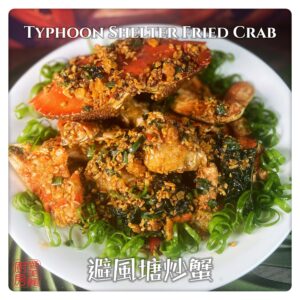
Typhoon Shelter Fried Crab 避風塘炒蟹
Ingredients
- 1 Whole fresh crab
- 1 tbsp Salt for soaking crab
- 10 g Fresh Thai basil leaves (approx. 20 leaves) (optional)
- 85 g Deep-fried garlic bits
- 1 tbsp Spicy salted egg yolk paste (optional)
- 4 Salted egg yolks (optional), chopped
- 2 Thai chilis , chopped
- 1 Jalepeno chili , chopped
- 4 Stalks green onions , chopped
- 3 tbsp Corn starch
- 3 tbsp Oil
- 2 tsp Fish sauce (optional)
- ½ tsp Sugar
- ½ tsp Salt
- 1.5 L Oil for deep-frying
Instructions
- Steps 1-17 is for how to process a live crab
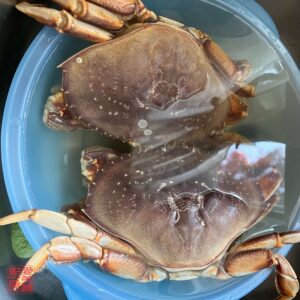
- Soak crab in enough water to cover its beak and add 1 tbsp of salt for 30 minutes.
Salt water will help the crab spit out any unwanted residue (sand and other impurities) 
- Rinse with water and scrub the shell with a brush
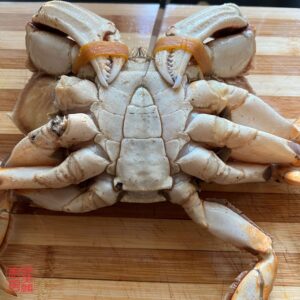
- Flip the crab on its top shell
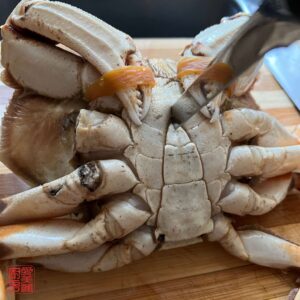
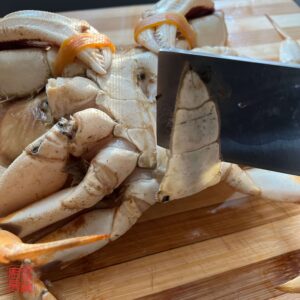
- Use a sharp pointy knife and insert above the abdominal flap without going through the top shell (or carapace)
I believe that this is the most humane way of killing the crab - Make sure that the crab is no longer moving then pull down the abdominal flap (aka apron) and remove
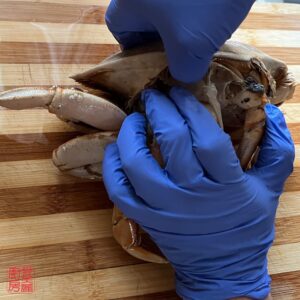
- Remove the top shell by prying it open with your fingers from the back (opposite side from the eyes)
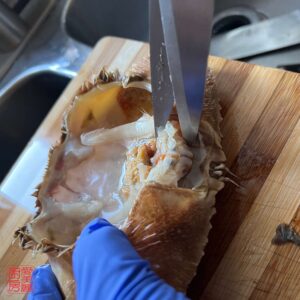
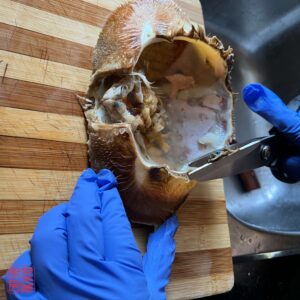
- Use kitchen shears to remove the beak area
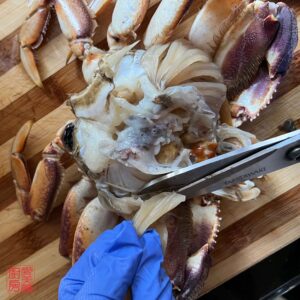
- Use kitchen shears to remove the gills
- Use kitchen shears to cut off some of the hairs on the rim of the top shell
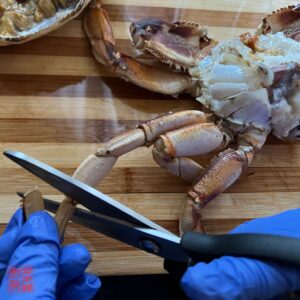
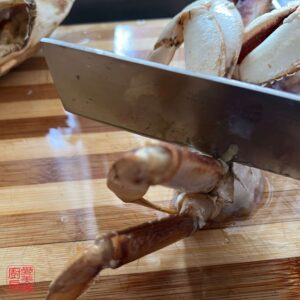
- Cut off the tip of each leg
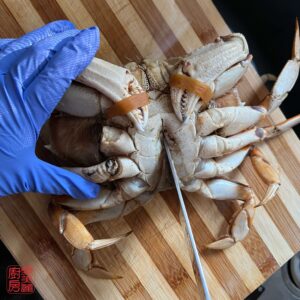
- Flip the crab over and cut from the abdomen to the posterior of the crab. Make another cut to the anterior so that the crab is now cut in half
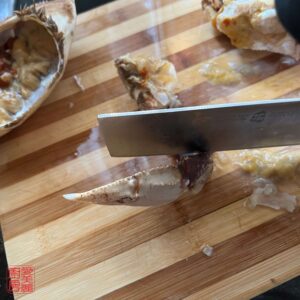
- Remove the leg with the claws and cut off the claw
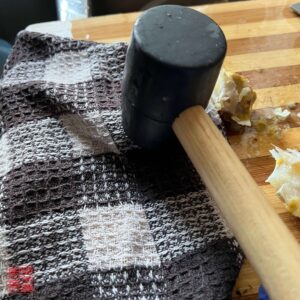
- Cover these pieces in a damp cloth and hit it with the side of a cleaver or a rubber mallet to break the shell
these are the parts with the hardest shell - Take one half side of the crab, place it on your cutting board so that the legs are up. Make a cut so that 2 legs are together. Repeat for the other half
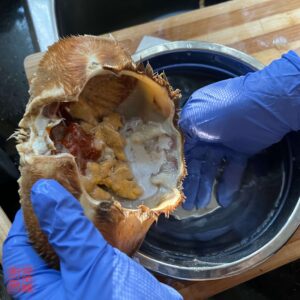
- Use a large bowl of water to clean the top shell. Gently fill it with water and pour it out making sure that the crab “mustard” aka hepatopancreas aka crab brains (in female crabs, there are roe as well) doesn’t come out
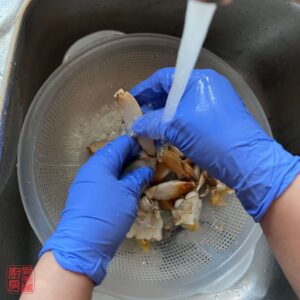
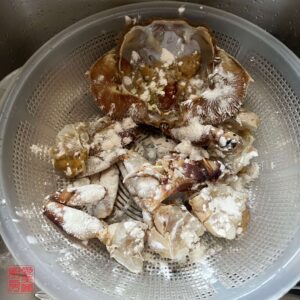
- Rinse all the other parts in running water and then let dry in the colander or pat dry with kitchen towels
- Take approximately 3 tbsp of corn starch and lightly coat all the pieces of crab
- Heat 1.5L oil in a wok or pot
- Prepare chopped chilis, green onions
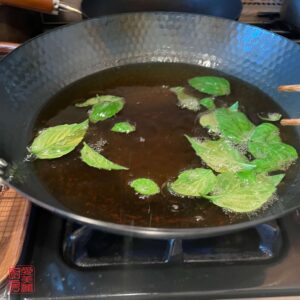
- Add Thai basil leaves to the oil when the oil is at approx. 120˚C or 250˚F
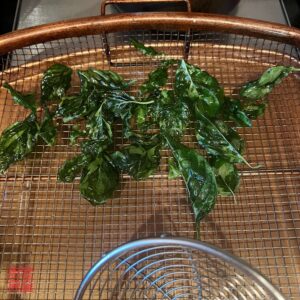
- Remove Thai basil from oil when it has crisped up When you lift it up from the oil, it can keep its shape. As it cools, it will further harden
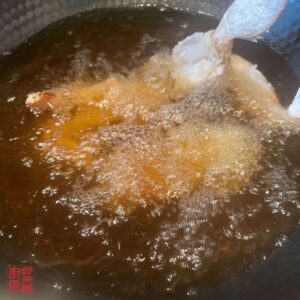
- When the oil gets to 175,C or 350˚F, add the crab to the oil
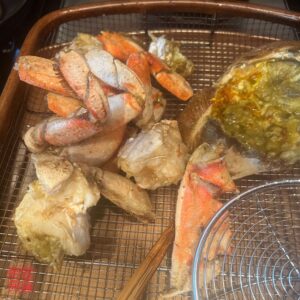
- Cook for approx. 3 minutes or until it turns to a golden color and remove from oil
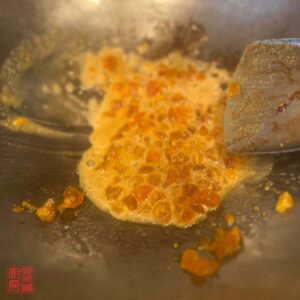
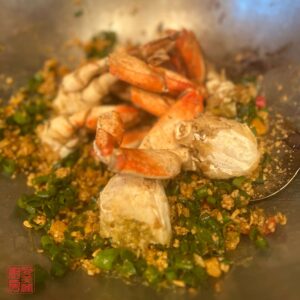
- In another wok, add 3 tbsp oil, chopped salted egg yolk, ½ tsp sugar and salted egg yolk paste. Stir-fry until foamy. Cook on medium-high heat
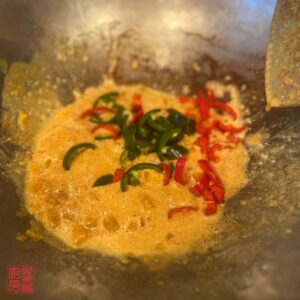
- Add chilis and fried garlic, mix well
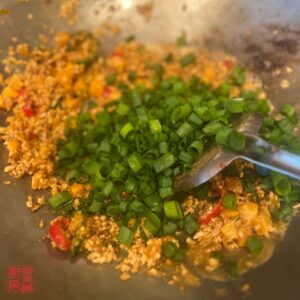
- Add green onions, mix well
- Add crab, mix well
- Taste test. Add salt and/or some fish sauce if you need it saltier
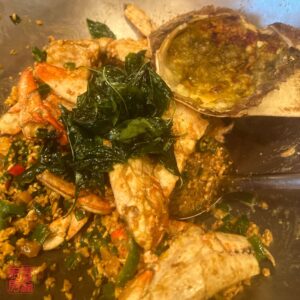
Sometimes the salted egg yolk paste is quite salty already, depends on the brand - Add deep-fried Thai basil and toss in the wok one last time
- Plate and serve
Leave a Reply