
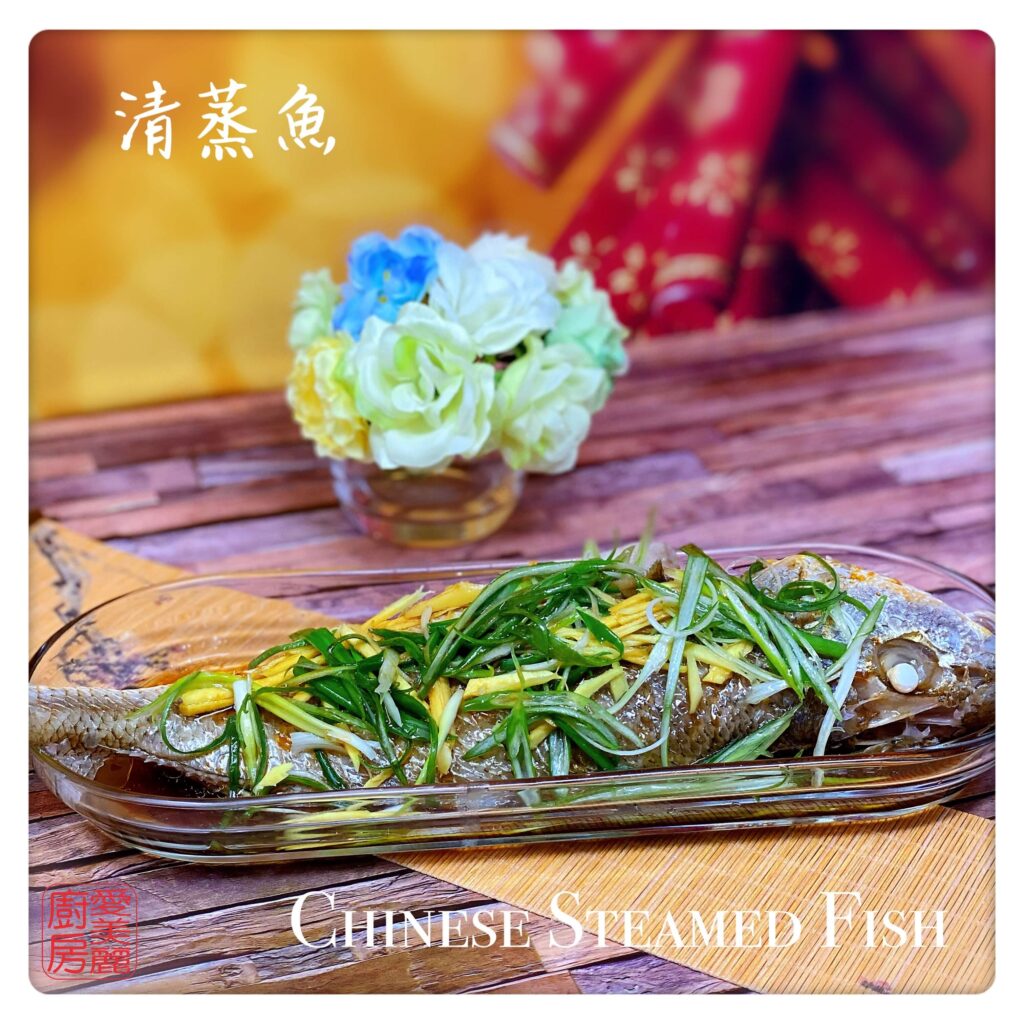
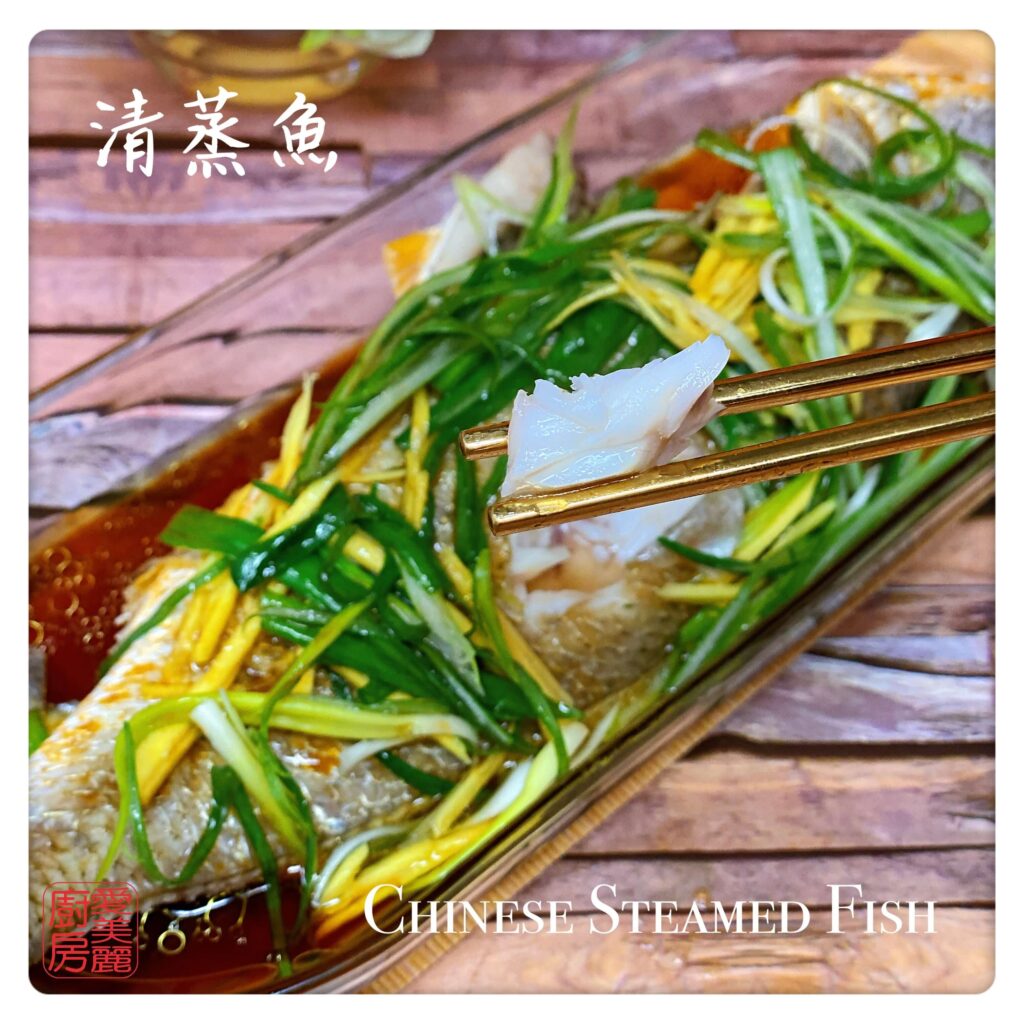
Chinese Steamed Fish 清蒸魚 (qīng zhēng yú) is the most common way that Chinese families prepare fish. It’s easy, practical and most importantly, it preserves the natural taste and texture of the fish without eating it raw. The most important aspect of a good steamed fish is choosing a fresh fish. Although frozen fish are a good option for those who don’t have fresh fish readily available. A good way to get rid of the frozen taste in fish is to soak it in some salty water (1 tsp salt with 1-2 litres water) for 15 minutes. Still, it’s not common to use frozen fish for steaming. Frying would be a better culinary method for frozen fish. Fried fish will likely have a sauce that will mask the frozen taste.
You can steam all fresh fish and it will likely taste good. Some common types are the cod family of fish. The rock cod may be the most popular cod. It has a bit of bite to it which may be one of the reasons it’s well-liked. Smaller varieties of bass fish are common too because they have a soft and delicate meat with a subtle taste, so it goes well with most seasonings. Carp is also a popular choice. It’s typically more economical because it is farmed and is readily available. Croakers are usually more expensive but are soft and smooth. The yellow croaker in the photos are one of my favorites to steam. You can also steam parts of a larger fish. This recipe is not specific for steaming a whole fish.
During Chinese New Year, there will usually be a steamed whole fish. The word for fish, 魚 (yú) sounds similar to the word 如 (rú) which is commonly used together with the word 意 (yì) to mean “as you wish”. The word fish also sounds the same as the word for abundance, 餘 (yú). There is an auspicious saying used during Chinese New Year, 年年有餘 (nián nián yǒu yú) which means “may you have an abundance every year”. Hence, on the eve of Chinese New Year, many families will make a whole fish with the head and tail. It’s important to have leftovers of this fish. This way, you can bring it into the new year thereby confirming that you will have an “abundance” year to year.
If you’d like more information about interesting Chinese New Year tidbits, take a look at my Chinese New Year 101 post. A great dish to go with the delicate taste of this Chinese Steamed Fish 清蒸魚 would be the Kung Pao Chicken.
Chinese Steamed Fish 清蒸魚
Ingredients
- 450-600 g Whole fish (or a cut portion)
Choose a fish under 900g for best results. - 2 stalk Green onions
- 3 slices Ginger
- 3 sprigs Cilantro
- 2 tsp Corn starch
- ¼ tsp White pepper powder
- 4 tbsp Steam fish soy sauce or light soy sauce
- 3 tbsp Oil
Ingredients to make Steam Fish Soy Sauce:
- 3 tbsp Light soy sauce
- 1 tsp Sugar
- 1 tbsp Water
Instructions
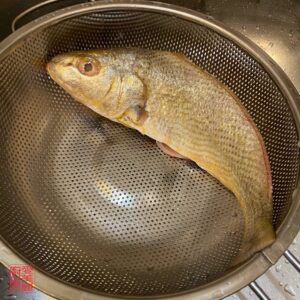
- I bought a cleaned, gutted and scaled yellow croaker from a fish monger. If your fish did not come like this, you will need to remove the scales, make a cut from the chin of the fish down to the end of the belly area. Remove the gills and all the inner organs. Trim the fins as well.
- Rinse the fish and pat dry. If the fish is cold, let it rest at room temperature for 30-60 minutes

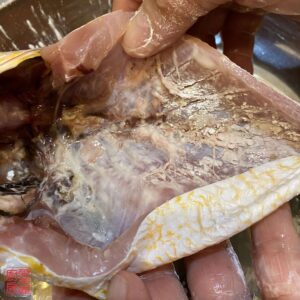
- Take 2 tsp of corn starch and rub on the inside and outside of the fish
- Rub ¼ tsp white pepper to the inside cavity of the fish
- Slice green onions into shreds and soak in water for 15 minutes
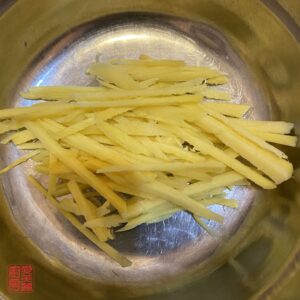
- Slice ginger into thin slivers and set aside
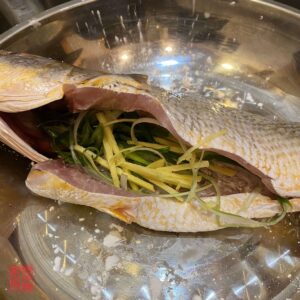
- Place ¼ of the green onions and ginger on the bottom of the steaming plate and inside the fish cavity
the ginger on the bottom will prevent the fish skin from sticking to the plate - Put the fish on top of the green onions and ginger on the steaming plate
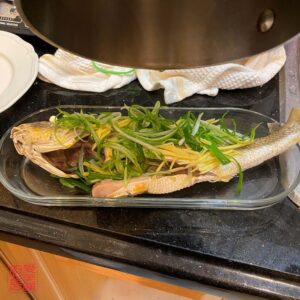
- Prepare the steamer. Place the fish in the steamer when the water is boiling. Steam at high. Refer to the steaming times listed above for reference.
My yellow croaker was perfectly done in 8 minutes - When the fish is almost finished steaming, prepare the hot oil. Heat 3 tbsp oil in a pot on medium-high heat for approx. 2 minutes.
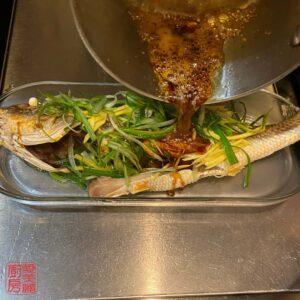
I add the 4 tbsp Steam Fish Soy Sauce to the pot to heat it with the oil. I find that heating the sauce gives it a better aroma. But it’s more common to add it directly to the fish after the pouring of the hot oil onto it. - When the reference time is up, check if the fish is done. To check for doneness: use chopsticks or a fork and try to lift up a piece of the fish meat from the bone. It is done if the meat does not stick to the bones. If the meat still sticks, then steam for another 2 minutes and check again. Another common way is to look at the eyes of the fish. If it looks like the eye sockets are hollow and the eyeball is an opaque white, then it should be done
- When the fish is done, remove it from heat and either pour out the steam water or transfer the fish onto another plate
- Put the cilantro, remainder of the green onions and ginger on top of the fish
- Pour the hot oil onto the fish
- If you did not add the 4 tbsp Steam Fish Soy Sauce in Step 10, then you can do it now
- Serve




Is it ok to skip the hot oil part and only have the steam fish with steam fish soy sauce?
Hi Mdwc, you can skip the hot oil part but the taste and texture will not be the same. The oil helps to give it a smooth texture and dilute the soy sauce somewhat. If you want to reduce the amount of oil, you might want to consider making a dipping sauce on the side that uses less oil and just spoon some on as you eat the fish. I hope that helps. Happy cooking!
May I ask what adding the corn starch does? I've never seen this in other recipes.
Hi Trent, adding corn starch helps with retaining moisture on the fish and gives it a smooth finish. It's quite a common step at restaurants as well at home. But it's an additional step that some might feel unnecessary. However, I think it makes a big difference in the overall texture. If you decide to try it out, let me know if you prefer it with or without the corn starch. Happy cooking!