
Happy Chinese New Year everyone! There are so many customs, superstitions, traditions, stories and food for one of the biggest celebrations of the year for the Chinese. I thought it'd be a good idea to give everyone a quick course. Here's Chinese New Year 101...
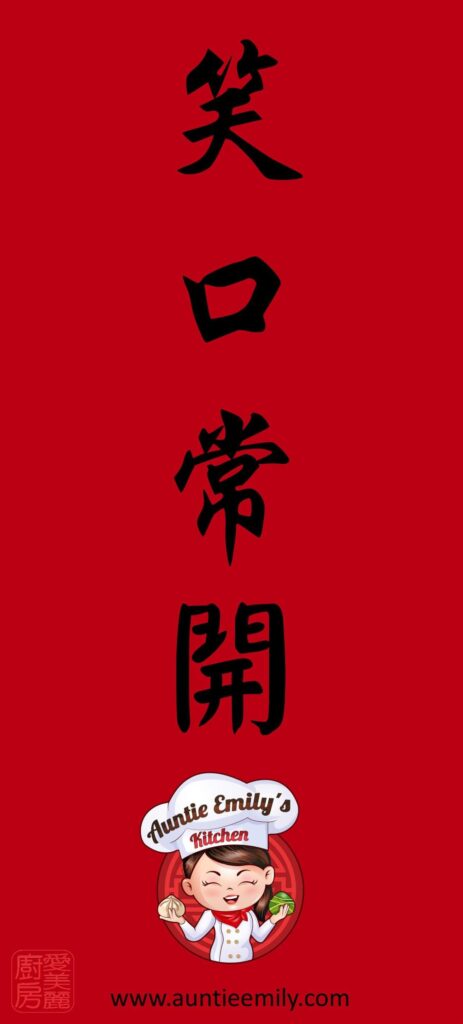
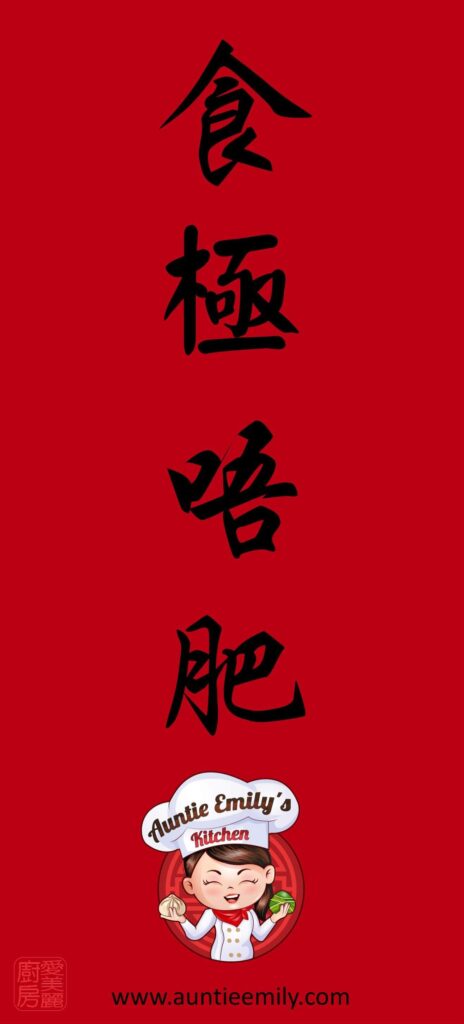
This is truly one of my favourite celebrations of the year. You'll find traditional Chinese New Year decorations, such as the 揮春 (huī chūn/fai chun) in almost every room of the house. An example of a fai chun is the image on the right and also the vertical red banners with auspicious sayings you see below.

Chinese New Year Recipes
Let's start with the food of course! Click on the recipes to read more about the history and how they relate to Chinese New Year.
I'm working on more recipes as you read this, so check back soon for more!
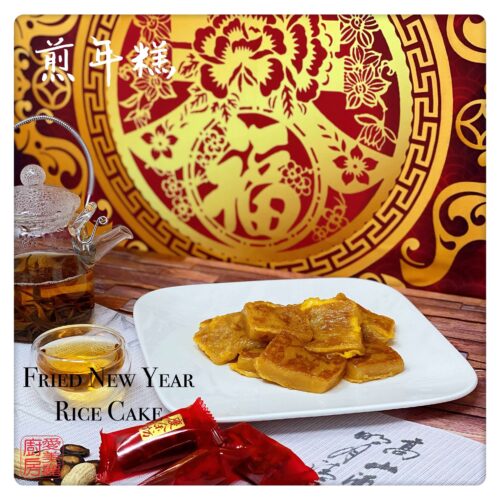
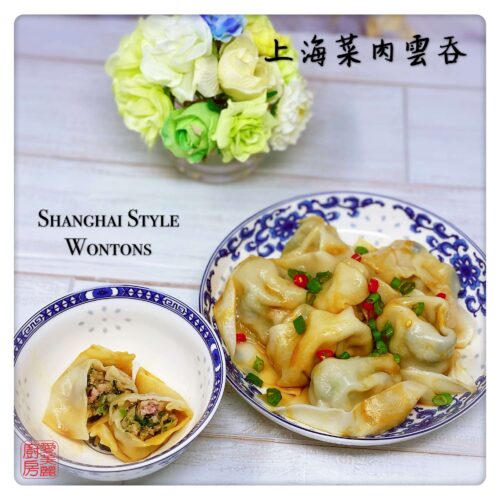
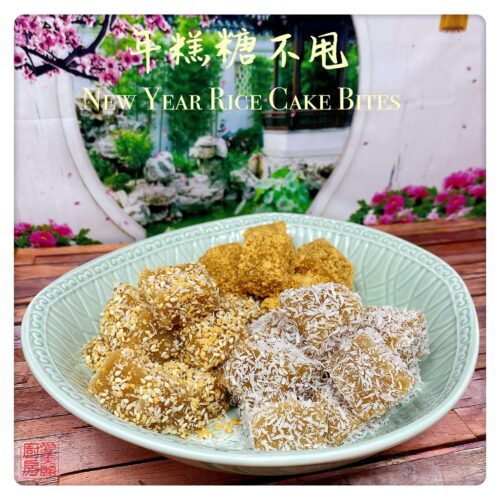

See more Chinese New Year recipes →

When is the 2026 Chinese New Year?
- Tuesday, February 17
Which Chinese zodiac is associated with 2026?
- Horse
- 2025 was the year of the Snake
What is the sequence of the Chinese zodiac?
- Rat, Ox, Tiger, Rabbit, Dragon, Snake, Horse, Goat, Monkey, Rooster, Dog and Pig.
Why is Chinese New Year sometimes called the Spring Festival?
- This is because the festival celebrates both the new year and also the beginning of spring. If Chinese New Year comes early (in January), it means that this year, spring will come early. From what I've experienced, it's usually quite accurate!

Why is my Chinese age older than I really am?
When you’re born, you are already one year old and then you become two years old on Chinese New Year
Here’s an example:
- December 12, 2020: Born = 1 years old
- February 12, 2021: Chinese New Year = 2 years old
- December 12, 2021: Still 2 years old
- February 1, 2022: Chinese New Year = 3 years old
Basically, you only gain an age on the day you were born and then you age annually on Chinese New Year. If you follow this rule, you’ll never forget a loved one’s birthday again as everyone shares the same day! This was practical back in the day when one would have 10 children. Even my Mom, who is one of five children does not know when her actual birthday is.
This calculation of age is known as 虛歲 (xū sùi), which funny enough, means “fake age”.
Why is Chinese New Year on a different day every year?
That’s because most people go by the Gregorian (solar) Calendar and Chinese New Year goes by the Chinese Farmer’s Calendar (農曆), which is also incorrectly known as the lunar calendar. The Chinese Farmer's Calendar is an ancient lunisolar calendar that not only takes into consideration lunar cycles, but also solar cycles, earth cycles and astronomy. Although Chinese New Year is always on the first day of the first month on the Chinese Farmer’s Calendar, because of the other factors, this day can fall on a different day on the Gregorian Calendar.

Why do Chinese people give away money in red envelopes?
It all started 3000 years ago, money was often gifted for weddings, birthdays, and any other special occasion. The word 利是 (lì shì/lai see) had the meaning of profit taking and has now evolved to what we now call the lucky red envelopes. So in actuality, red envelopes are given out anytime of the year.
The word "lai see" is typically used in Hong Kong, most other Chinese people call it 紅包 (hóng bāo/hung bao).
The giving out of red envelopes to children stems from the story of the 壓歲錢 (yā sùi qián/ngaat sui cheen). Legend has it that on the last day of every year, an evil spirit called Sui, preys on sleeping children. It would stroke the child’s head which resulted in permanent disabilities to the child. One new year’s eve, an older couple took turns watching over their only infant child, they had decided to hang 8 coins using a red string over the child’s bed for protection. During the night, they had felt a gust of wind come into the house, which surely meant that the Sui spirit had visited. However, the next morning, their child was fine. They attributed this stroke of luck to the coins hung over the bed, as it probably scared away the spirit and saved their child.
Over the years, this tradition has held up and Chinese parents still give their children money on new year’s eve to be put on their bed. This wards away evils spirits and will bring them good luck.
What are some of the do’s and don’ts for red envelopes?
- You cannot give an odd amount of money, it must be even. Odd amounts are given as a condolence gift.
- Brand new bills are preferable but not a must. Money is money!
- Coins are typically frowned upon for obvious reasons!
- For people in Taiwan, they don't like to fold their money. So you need to get the long red envelopes.
- For Taiwan and Mainland China, you would gift red envelopes to children and elders if you are earning money regardless of marital status.
- For Hong Kong, you would gift red envelopes to children and single people if you are married.
- Upon receiving a red envelope, you must say something auspicious to the giver (see common phrases below).
- When someone gives you a red envelope, it is rude to open it in front of them.
- When you accept a red envelope, take it with two hands as a show of respect.
- You give two red envelopes if you are married (you are also giving on behalf of your spouse) and you give one if you are single, divorced or widowed.

What to do on the days leading up to Chinese New Year (CNY)?
6-7 days before CNY (Feb 10-11, 2026):
- Worship the gods and ancestors.
- Clean the graves of your ancestors and go to the temple.
5 days before CNY (Feb 12, 2026):
- Farmers’ pig slaughter day.
4 days before CNY (Feb 13, 2026):
- Wash clothes and bedding.
- Go shopping for new clothes, firecrackers (if legally allowed), and anything else you might need for the CNY celebration.
- It’s also a tradition to go to the Chinese New Year street markets to buy flowers and decorations.
3 days before CNY (Feb 14, 2026):
- Clean the house to rid it of previous bad luck and welcome new good fortunes.
2 days before CNY (Feb 15, 2026):
- Buy CNY snacks.
- Prepare lucky red envelopes with money.
1 day before CNY/New Year's Eve (Feb 16, 2026):
- The whole family gets together for dinner.
- Chinese people from the Northern region will always have Chinese dumplings as a dish.
- Chinese people from the Southern region will feast on meats like chicken, fish, and pork.
The 15 days of Chinese New Year (CNY)?
Day 1 (Feb 17, 2026):
- Don’t wash hair or bathe.
- Don't sweep the floors until day 6.
- People will come over to your house bearing gifts (see below for gift giving 101) if you are an elder.
- Playing mahjong is a big part of getting together and being noisy is a good way to ward off bad spirits.
- Men will bring their wife and their children to visit his parents. And be sure to bring presents.
- Many people will eat vegetarian on this day, except if there is leftover meat, then that's okay too.
- Do not use needle & thread for the first four days of new years.
Day 2 (Feb 18, 2026):
- Married women will bring their husband and their children to visit her parents. And be sure to bring presents as well.
- It's a day to worship the God of Fortune, 財神 (cái shén/choi sun). And hence we eat wontons that are wrapped in the shape of a gold bullion.
Day 3 (Feb 19, 2026):
- Legend has it that this day is prone to having arguments, so it's a day that people stay home.
- Perhaps after two days of spending time with others, it's a good resting day.
Day 4 (Feb 20, 2026):
- Welcome the Kitchen God, Fire God and other Gods through worship.
- Eat leftover food.
Day 5 (Feb 21, 2026):
- Welcome the God of Fortune by opening window and doors.
- During ancient times, rice is not cooked on this day. So dumplings became a traditional dish eaten on this day.
Day 6 (Feb 22, 2026):
- Businesses will typically re-open from their CNY break on this day.
- You can sweep the floors again.
- Send away the poor spirit to drive away poverty by throwing away old/torn clothes.
- Eat pan-fried savoury crepes, 煎饼 (jiān bǐng).
Day 7 (Feb 23, 2026):
- Happy Birthday! It's everyone's birthday today!
Day 8 (Feb 24, 2026):
- Today is the birthday of the millet, which is an important grain of ancient China. It also represents all the other important harvests like rice, soy and other legumes. And so, on this day, it is a tradition still held by some people to release birds to the wild. This represents a good will gesture in hopes that the birds will not eat the crops. This has further led to people returning fish and other consumable animals to the wild.
- People will eat steamed buns, 饅頭 (mán tou/man tao) today.
Day 9 (Feb 25, 2026):
- Today is the birthday of the Jade Emperor.
- It is the most important day to take a shower as it is a sign of respect.
- A lot of food is cooked to worship the Jade Emperor.
- The Jade Emperor can make wishes come true!
Day 10 (Feb 26, 2026):
- The birthday of the rock.
- Do not move any rocks or stone mills today. And so this translates to not building anything with rocks or stones today.
- Eating the Chinese bun, 饃餅 (mó bǐng/moa bang), today is supposed to bring you luck and prosperity.
- A little bit of trivia: 肉饃餅 (ròu jiā mó/yoke gaap moa), which uses the "moa bang", is the Chinese equivalent to a pulled pork sandwich. It is believed to be the first sandwich ever made, over a thousand years ago. This was also referenced on The Big Bang Theory, check out the clip here.
Day 11 (Feb 27, 2026):
- Fathers-in-Law invite Sons-in-Law to eat leftovers from the feast made for the Jade Emperor on the 9th day.
Day 12 (Feb 28, 2026):
- Setup structures for lantern hanging.
- This day is also the birthday of the rat, but celebrations are not what you think.
- Peanuts are eaten on this day because they represent the eyes and/or ears of the rat, so we roast them and eat them to make the rats blind and deaf.
Day 13 (Mar 1, 2026):
- Glutinous rice balls, 湯圓 (tāng yuán/tong yuen), are eaten today. These rice balls usually have a liquid/soft filling and originate from Southern China.
Day 14 (Mar 2, 2026):
- This day is for worshipping a God that protects pregnant women and prevents miscarriages.
Day 15 (Mar 3, 2026):
- Day of the Lantern Festival.
- Official ending of Chinese New Year.
- There will be a full moon out tonight.
- Hang lanterns.
- Lettuce, dumplings, date cakes, rice cakes are all typical dishes people eat in Northern China.
- In Southern China, they eat pretty much the same as on New Year's Eve.
- Glutinous rice balls, 元宵 (yuán xiāo/yuen siu), are eaten today. These rice balls originate from Northern China and usually have a hard filling like red been paste, sugar, hawthorn or candied dried fruits.
- Nowadays, "tong yuen" from day 13 and "yuen siu" from day 15 are eaten interchangeably.
- A popular event would be to answer riddles hidden inside lanterns.

Gifts during Chinese New Year:
- Fruits are generally acceptable gifts. But no melons. The slang for dying in Cantonese has the same sound as the word for melon, which is "gua". Pears are also unacceptable as it sounds like the word "separation". Peaches symbolize longevity, so it is a very good gift for elderly people. Apples symbolize peace and safety.
- If money is no object, dried abalone, dried sea cucumber, swallows' nest, cordyceps, dried scallops, fish maw or ginseng are all highly regarded gifts.
- Alcohol and cigarettes are also generally acceptable gifts.
- Cakes, cookies, pastries, candies, nuts and teas are all common and well received.
- Of course money is acceptable, just put it in a red envelope.
- Nothing sour or bitter as they symbolize difficulties.
- No shoes because the word for shoe sounds the same as a sigh in Cantonese and sounds like the word "evil" in Mandarin.
- Clocks cannot be gifted because it sounds the same as a funeral.
- Books are not suitable because it sounds like the word for losing.
- Do not give chrysanthemum flowers because they are usually brought to cemeteries.
- Other unacceptable gifts: wallets, umbrellas and hats.
Popular Chinese New Year sayings and what they mean:
Begin the following Chinese sayings with "Wishing you..." In Chinese, this is 祝你 (zhù nǐ/zoke nei).
| CHINESE | MANDARIN PINYIN | CANTONESE PINYIN | TRANSLATION |
| 新年快樂 | xīn nián kuài lè | sun leen fai lok | happy new year |
| 恭喜發財 | gōng xǐ fā cái | gong hei fat choi | wishing you wealth/prosperity |
| 心想事成 | xīn xiǎng shì chéng | sum seung see sing | may all your wishes come true |
| 財源廣進 | cái yuán guǎng jìn | choi yuen guang zhun | money and treasure will be plentiful |
| 萬事如意 | wàn shì rú yì | man see yu yee | all things go well |
| 笑口常開 | xiào kǒu cháng kāi | siu hau seung hoi | smile often |
| 包羅萬有 | bāo luó wàn yǒu | bao law man yao | you will have everything |
| 出入平安 | chū rù píng ān | chuut yup ping on | travel safely |
| 身體健康 | shēn tǐ jiàn kāng | sun tai geen hong | wishing you good health |
| 龍馬精神 | lóng mǎ jīng shén | loang ma jing sun | may you have the energy of a dragon and horse |
| 青春常駐 | qīng chūn cháng zhù | ching chun seung ju | wishing you perpetual youthfulness |
| 快高長大 | kuài gāo zhǎng dà | fai go jeung dai | may you grow up fast |
| 學業進步 | xué yè jìn bù | hok yip zhun bo | may you improve in school |
| 大吉大利 | dà jí dà lì | dai gut dai lay | may you have big luck and big fortune |
| 生意興隆 | shēng yì xīng lóng | sang yi hing loang | may your business boom |
| 年年有餘 | nián nián yǒu yú | leen leen yao yu | wishing you an abundance every year |
Thanks for reading!
I hope you enjoyed Chinese New Year 101. If there's anything more that you would like to know, please leave me a message below and I'll try my best to answer. Or if you have a comment or suggestion, please leave a message below as well. I'd love to hear from you! Happy New Year!