


Singapore Fried Rice Vermicelli 星洲炒米粉 (xīng zhōu chǎo mí fěn) or pronounced “sing chow chau mai” in Canontese is a Hong Kong classic dish. Surprisingly, just like French fries aren’t from France, Singapore fried rice vermicelli aren’t from Singapore! There’s a similar dish called “Char Kway Teow” from Malaysia, also popular in Singapore which may be the reason behind the name.
There are a few different stories as to how this dish was born. I’ve narrowed it down to two more likely stories. The first one is from Malaysia where it’s almost time for a restaurant to close but they get a last minute customer. They’ve run out of ingredients for Char Kway Teow but had some rice vermicelli left, char siu and beansprouts and just fried it altogether. Turns out it was a masterpiece! The problem with this story is that Malaysians don’t typically use curry paste in their spicy fried noodles. They usually use chili paste.
Hence, the second story is more likely. A chef in Hong Kong in the 50’s, wanted to use his leftovers including char siu, beansprouts and rice vermicelli to make something for himself. He added egg, shrimp and curry paste. It smelled so good, everyone wanted some. They asked him what it was and he said, "Singapore fried rice noodles". Although, I don’t think Hong Kong chefs use curry paste in their fried noodles either but this story seems to be more commonly accepted.
Today, Singapore fried rice vermicelli 星洲炒米粉 is one of the most popular dishes at Cantonese restaurants world-wide. This is one of those dishes that you can find everywhere but not many make it well. I’ve had some that were bland; not fried long enough with no “wok hei”; not the right meat, vegetable and noodle ratios.
My Singapore fried rice vermicelli 星洲炒米 recipe will show you how to make the best you’ve ever had. This is definitely a must-try dish if you like it hot! And, it's comparable to the best restaurants. And you’d be surprised that you probably have all the seasonings you need in your pantry already. But to do this, you need a well-seasoned wok that can be heated on high heat. However, if you’re not that picky, you can still make a fairly decent dish using a non-stick fry pan on medium-high heat. I got my wok from Amazon and it's now my most used piece of cooking equipment:
Joyce Chen , Classic Series Carbon Steel Wok Set, 4-Piece, 14-Inch, Charcoal
(As an Amazon Associate I earn from qualifying purchases)
Looking for the full Hong Kong cafe experience? Add a Hong Kong Lemon Tea 港式檸檬茶 or a Hong Kong Milk Tea 港式奶茶 to the meal.
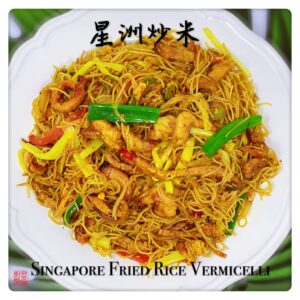
Singapore Fried Rice Vermicelli 星洲炒米粉
Ingredients
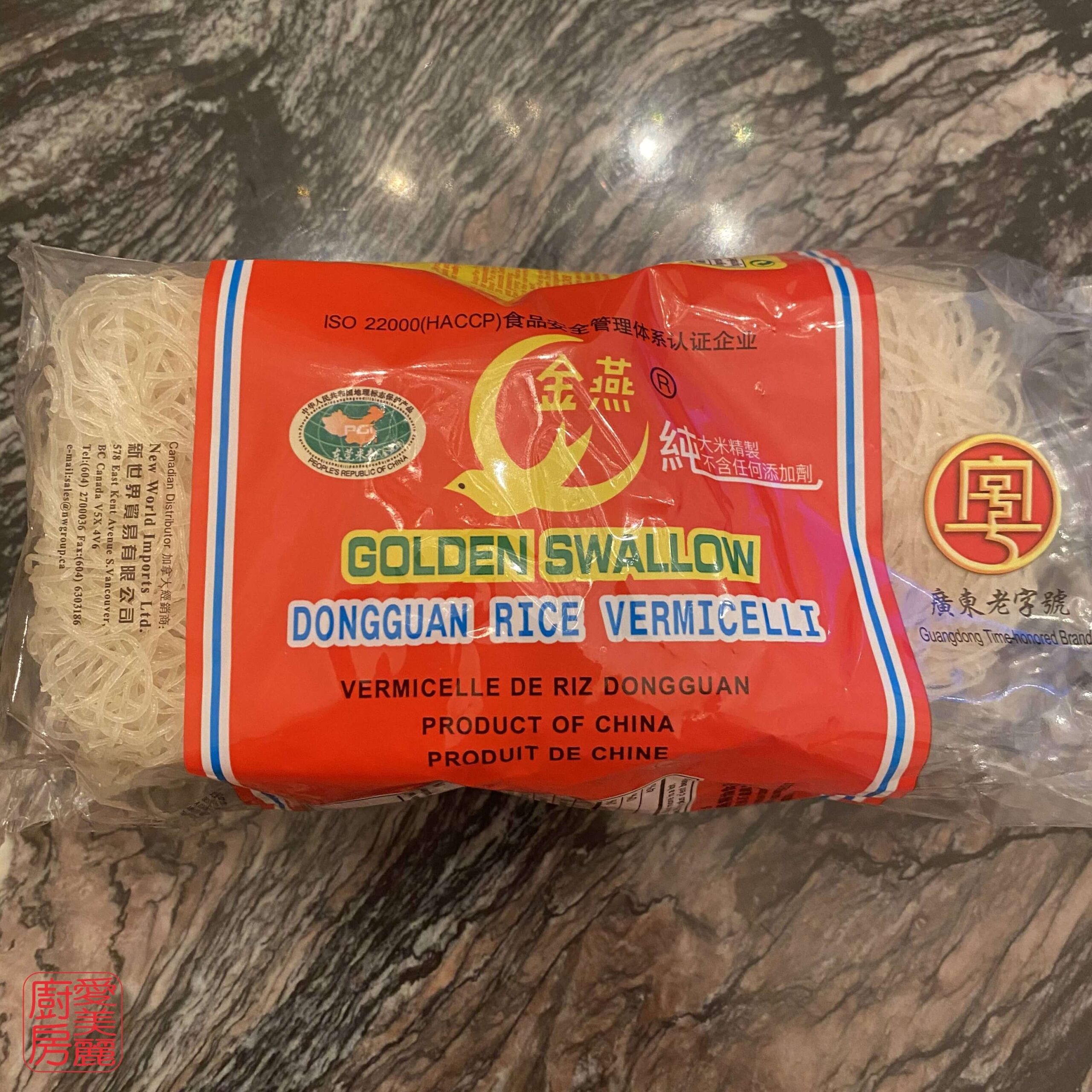
- 225 g Dried rice vermicelli should make approx. 454g cooked vermicelli
- 150 g Chinese BBQ pork (Char siu), thin strips
- 150 g Shrimp or prawns
- 150 g Mung bean sprouts with head and tail removed
- 50 g Chinese chives aka yellow chives
- ½ Onion , medium-sized
- ¼ Green pepper thin slices
- ¼ Red pepper thin slices
- 2 stalks Green onions
- 3 Eggs
- 2 Chili peppers optional
- 2 tbsp Curry paste
- 1 tsp Tumeric powder optional
- 2 tbsp Light soy sauce
- 1 tbsp Shaoxing wine
- ½ tsp Salt
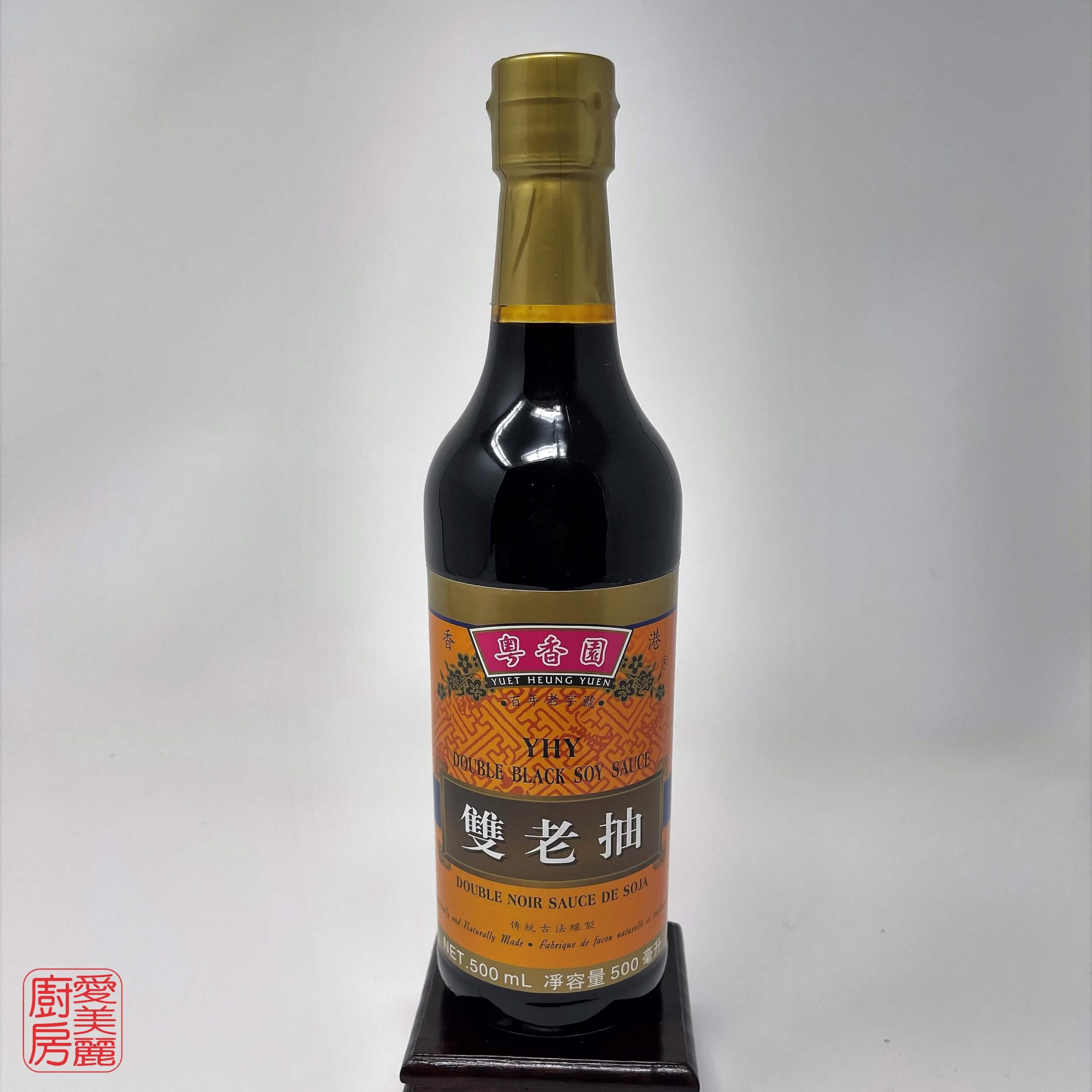
- 1 tsp Dark soy sauce for shrimp/prawns
- 3 tbsp Oil
Instructions
Instructions for cooking rice vermicelli:
Vietnamese rice noodles are more suitable for soup noodles.
Jiangxi rice noodles are quite thick and are also better suited for soup noodles.
I will show you how to process the Jiang Men and Dong Guan types but get the Jiang Men style for best results.
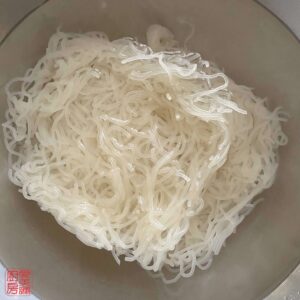
A) For Jiang Men Noodles:
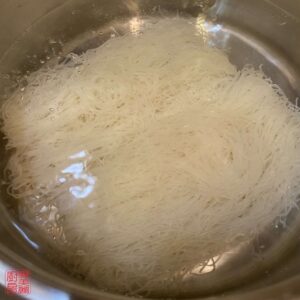
- Bring a pot of water to a boil, add dry noodles to the pot, turn off heat, set timer for 1 minute

- Press the noodles down into the water and loosen them up with chopsticks or tongs
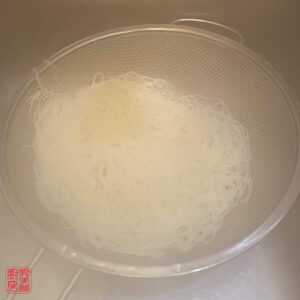
- Once timer goes off, strain the noodles in a colander. Do not rinse with cold water
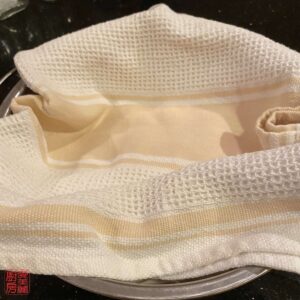
- Place the colander in an airy, cool place and cover with a clean, dry cloth
- Let it sit for 30 minutes and then toss to loosen
- Set aside
This process will give you better results because it requires less time in the hot water so the noodles will not likely break apart.
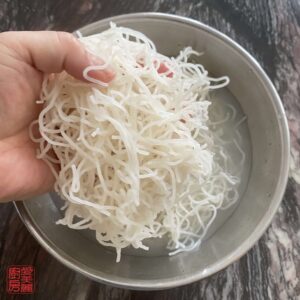
B) For Dong Guan Noodles:
- In a large mixing bowl, place the dry noodles in the bowl and add boiling water
- Wait for 4 minutes
- Use chopsticks or tongs to help loosen the starches to release the noodles
- Keep loosening the noodles until all the noodles have separated. This should take approx. 7-8 minutes
- Strain in a colander and let it air-dry for an hour
- Set aside
Instructions for frying the noodles:
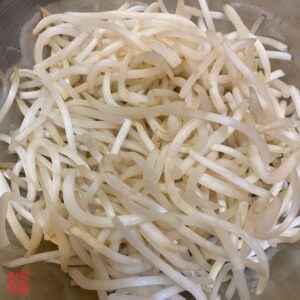
- If you were not able to purchase the mung bean sprouts with the heads and tails removed, then you’ll need to remove them
the 150g refers to the weight of mung bean sprouts with heads and tails already removed - Clean and slice onion, green pepper, red pepper into thin strips
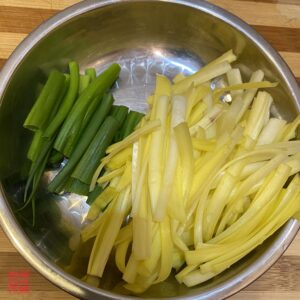
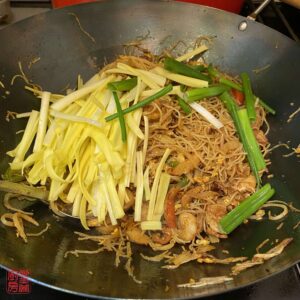
- Cut the Chinese chives and green onions into 10 cm pieces. Put the white parts of the green onions with the sliced onions as they need to be cooked longer
- Cut the Char siu into thin strips
- Beat 3 eggs in a bowl and set aside
- Wash and devein the shrimp, dry and add 1 tsp of dark soy sauce to it, mix well and set aside
The dark soy will help you achieve the “wok hei” taste - Heat your wok to high heat
- Add 1 tbsp of oil to the wok
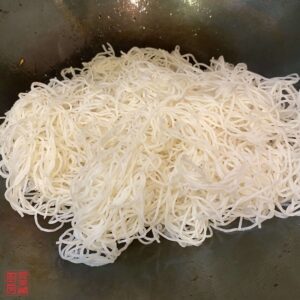
- Add the prepared rice noodles and toss them in the wok for approx. 1 minute. Remove the noodles and set aside
the purpose of this step is to toast the noodles and loosen them - Add 2 tbsp of oil to the wok and reduce heat to medium high
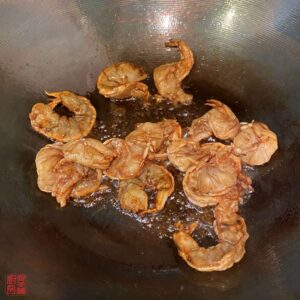
- Add shrimp to the wok and stir fry for 10-20 seconds until they curl up and turn colours. Remove from heat and set aside. Leave the oil in the wok
- Turn heat up to high. Wait 30 seconds
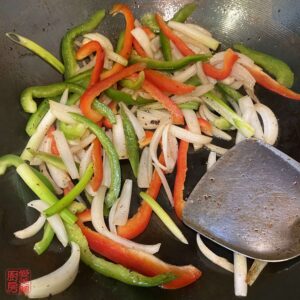
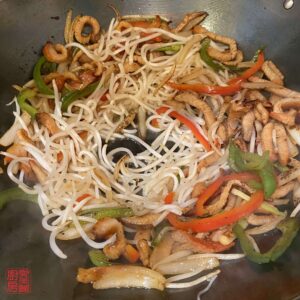
- Add sliced onions, green peppers, red peppers and chilies. Stir-fry until aromatic
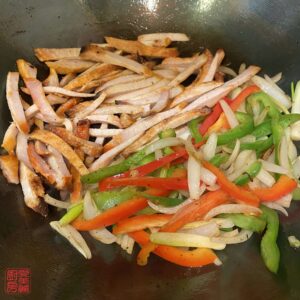
- Add sliced Char siu. Stir-fry for 20 seconds
- Make a well in the middle of the wok or push everything to one side and add beansprouts. Stir fry the beansprouts by itself for around 20 seconds and then mix it with the other ingredients
- Add 1 tbsp cooking wine to the edge of the wok, add ½ tsp salt and stir-fry for 10 seconds
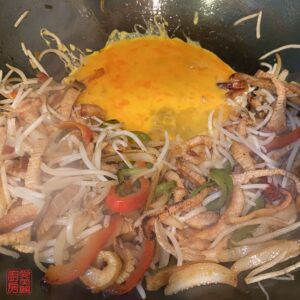
- Make a well in the middle of the wok. Add the eggs in the well. Let it sit for 10 seconds. Then stir-fry everything together
Making a well in the middle will help to gather all the oil in the middle and concentrate the heat there. This will make the egg more aromatic - Add shrimp
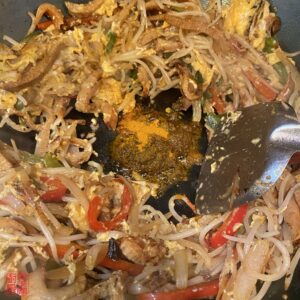
- Make a well again and add 2 tbsp curry, 1 tsp turmeric and 2 tbsp light soy sauce into the well
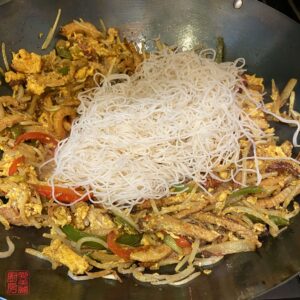
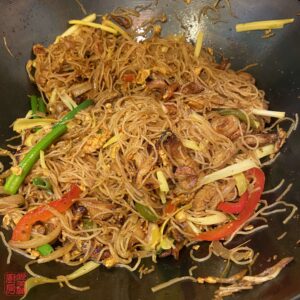
In Cantonese cooking, all sauces should be added on the wok and not on the food to enhance the flavours of the sauce. Adding to the “wok hei” - Add the rice noodles and stir fry with a spatula and chopsticks for best results. Ensure that all the ingredients are mixed well together. Stir-fry for a minute
Be sure not to over-cook as the char siu may become dry - Add Chinese chives, green onions and turn off heat
- Mix well and serve



I wonder what kind of curry to use. The only powder I have is Indian style curry powder, would that be ok? Otherwise Thai curry paste in all colours, but being so clumpy it probably wouldn't handle well in a quick fry situation. Finally, Thai chili paste (aka chili marmelade), not very hot, rather sweet.
Hi Hendrik, you should use your Indian curry powder if it's your preferred curry. I, personally, find Indian curry powder too fennel-rich for me and so I prefer Malaysian curry which I find milder in terms of spice. But of course, the heat level can be adjusted with chilis. Malaysian curry is also the most popular choice in Hong Kong curry dishes. Thai chili paste can also be used. Just add some oil to it either before adding it to the wok (or fry pan) or in the wok (this can also help bring out the aroma of all the spices) and this should get rid of the clumps. Thai chili paste is also usable. Since it's sweeter, you may want to offset the sweetness with some or more fish sauce, soy sauce or salt. I hope this helps. Happy cooking!
So it's: Everything goes! Fine. Malaysian curry I've never seen here in Germany, but I'll still have three versions to test then.
Cheers
I've made a couple different Singapore noodle recipes. This is the best one by far for color, texture, and taste that I want. I think next time I cook it, I will add a little sugar like my family does. Other than that, it came out amazing.