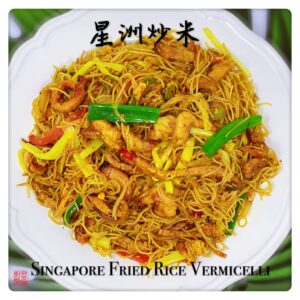
Singapore Fried Rice Vermicelli 星洲炒米粉
Singapore fried rice vermicelli 星洲炒米 (Hong Kong style) is commonly made with bbq pork, shrimp, onions, Chinese chives, chilies, egg and curry paste.You can try a vegetarian version using pressed tofu instead of bbq and shrimp.Chicken or beef can also be swapped for pork.One of my favorite variations is to dice everything up and make a fried rice instead of fried noodles.Chinese chives are very expensive (the ones in this picture cost CAD$2 for only 50 grams) and not always available in the west. You can use Chinese leeks or garlic chives instead.In Malaysian style Singapore fried noodles, they don’t use curry paste, but use a sweet chili paste.
Approximate cost (CAD) $10
Ingredients
- 225 g Dried rice vermicelli should make approx. 454g cooked vermicelli
- 150 g Chinese BBQ pork (Char siu), thin strips
- 150 g Shrimp or prawns
- 150 g Mung bean sprouts with head and tail removed
- 50 g Chinese chives aka yellow chives
- ½ Onion , medium-sized
- ¼ Green pepper thin slices
- ¼ Red pepper thin slices
- 2 stalks Green onions
- 3 Eggs
- 2 Chili peppers optional
- 2 tbsp Curry paste
- 1 tsp Tumeric powder optional
- 2 tbsp Light soy sauce
- 1 tbsp Shaoxing wine
- ½ tsp Salt
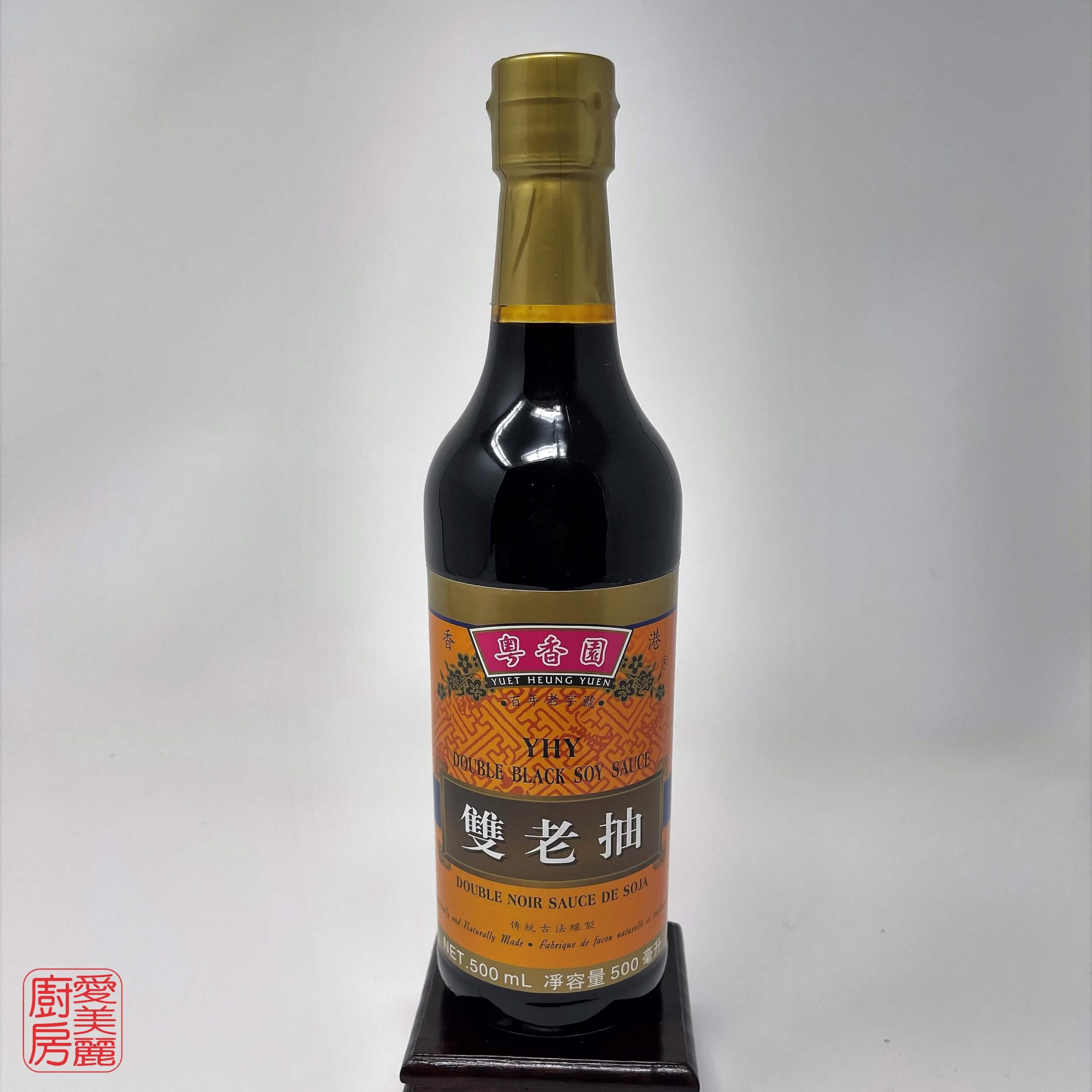
- 1 tsp Dark soy sauce for shrimp/prawns
- 3 tbsp Oil


Instructions
Instructions for cooking rice vermicelli:
Vietnamese rice noodles are more suitable for soup noodles.
Jiangxi rice noodles are quite thick and are also better suited for soup noodles.
I will show you how to process the Jiang Men and Dong Guan types but get the Jiang Men style for best results.
A) For Jiang Men Noodles:

- Bring a pot of water to a boil, add dry noodles to the pot, turn off heat, set timer for 1 minute
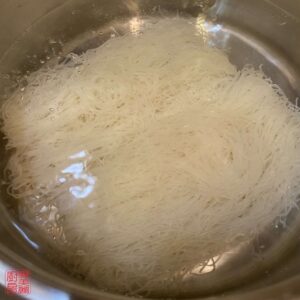
- Press the noodles down into the water and loosen them up with chopsticks or tongs
- Once timer goes off, strain the noodles in a colander. Do not rinse with cold water
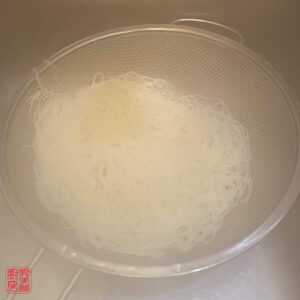
- Place the colander in an airy, cool place and cover with a clean, dry cloth
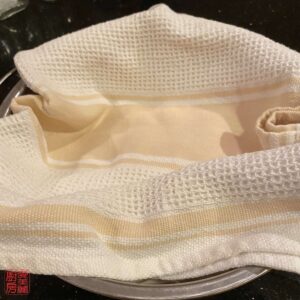
- Let it sit for 30 minutes and then toss to loosen
- Set aside
This process will give you better results because it requires less time in the hot water so the noodles will not likely break apart.
B) For Dong Guan Noodles:
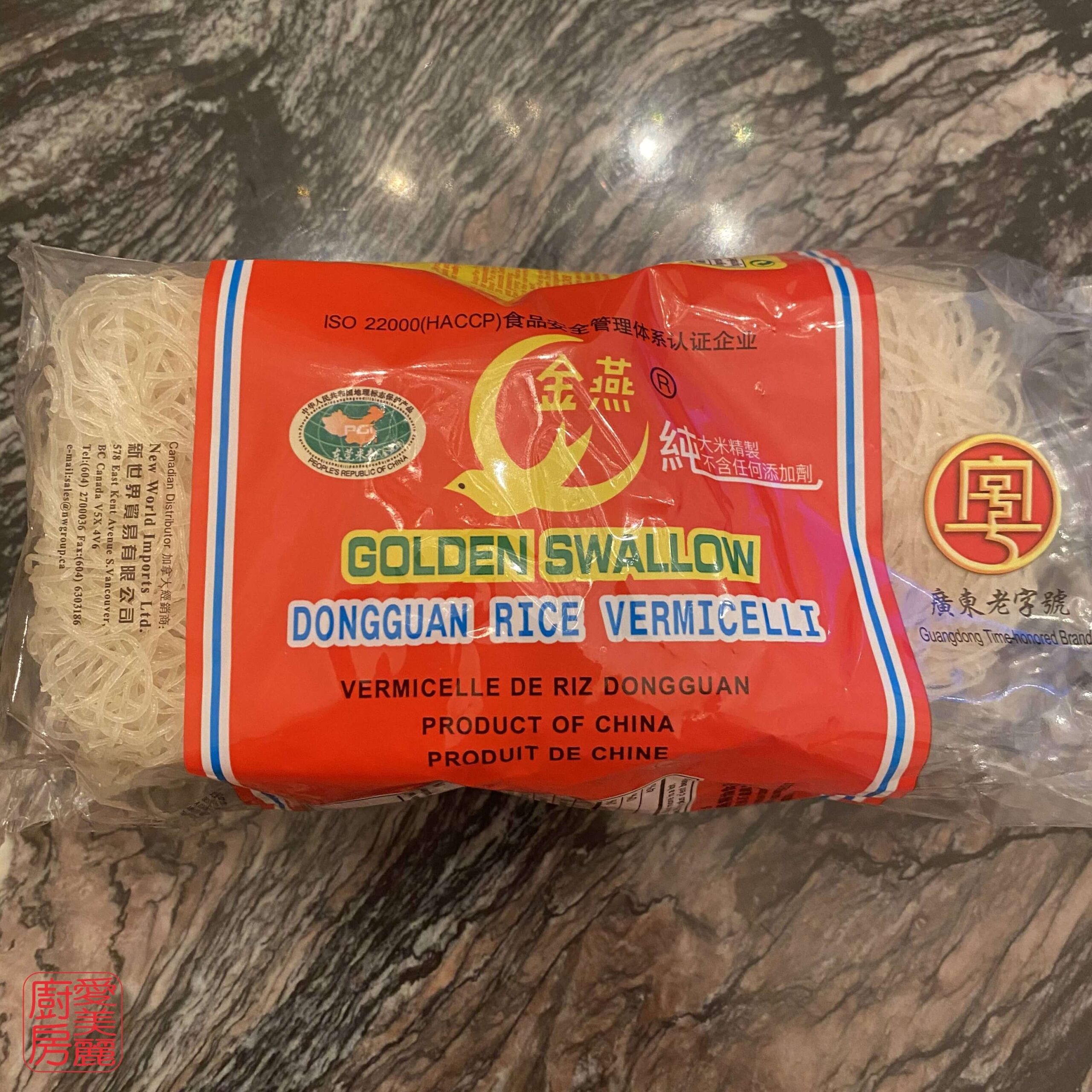
- In a large mixing bowl, place the dry noodles in the bowl and add boiling water
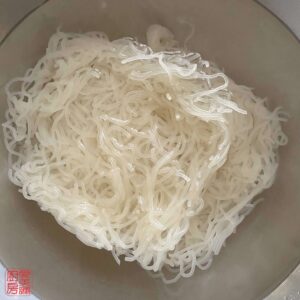
- Wait for 4 minutes
- Use chopsticks or tongs to help loosen the starches to release the noodles
- Keep loosening the noodles until all the noodles have separated. This should take approx. 7-8 minutes
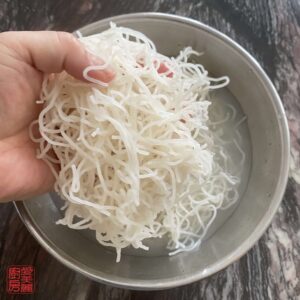
- Strain in a colander and let it air-dry for an hour
- Set aside
Instructions for frying the noodles:
- If you were not able to purchase the mung bean sprouts with the heads and tails removed, then you’ll need to remove them
the 150g refers to the weight of mung bean sprouts with heads and tails already removed 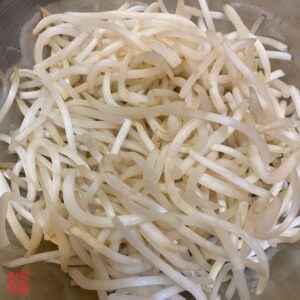
- Clean and slice onion, green pepper, red pepper into thin strips
- Cut the Chinese chives and green onions into 10 cm pieces. Put the white parts of the green onions with the sliced onions as they need to be cooked longer
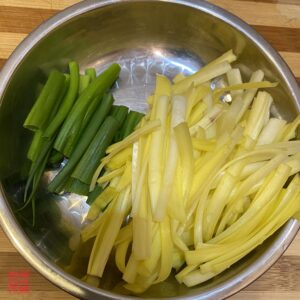
- Cut the Char siu into thin strips
- Beat 3 eggs in a bowl and set aside
- Wash and devein the shrimp, dry and add 1 tsp of dark soy sauce to it, mix well and set aside
The dark soy will help you achieve the “wok hei” taste - Heat your wok to high heat
- Add 1 tbsp of oil to the wok
- Add the prepared rice noodles and toss them in the wok for approx. 1 minute. Remove the noodles and set aside
the purpose of this step is to toast the noodles and loosen them 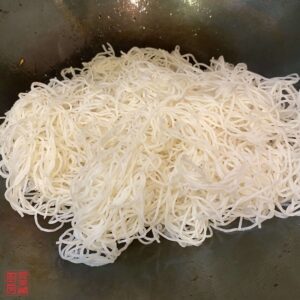
- Add 2 tbsp of oil to the wok and reduce heat to medium high
- Add shrimp to the wok and stir fry for 10-20 seconds until they curl up and turn colours. Remove from heat and set aside. Leave the oil in the wok
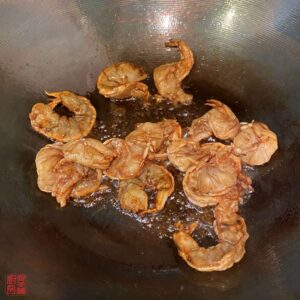
- Turn heat up to high. Wait 30 seconds
- Add sliced onions, green peppers, red peppers and chilies. Stir-fry until aromatic
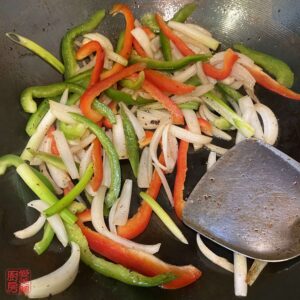
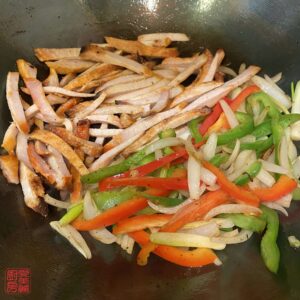
- Add sliced Char siu. Stir-fry for 20 seconds
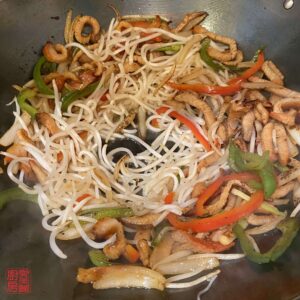
- Make a well in the middle of the wok or push everything to one side and add beansprouts. Stir fry the beansprouts by itself for around 20 seconds and then mix it with the other ingredients
- Add 1 tbsp cooking wine to the edge of the wok, add ½ tsp salt and stir-fry for 10 seconds
- Make a well in the middle of the wok. Add the eggs in the well. Let it sit for 10 seconds. Then stir-fry everything together
Making a well in the middle will help to gather all the oil in the middle and concentrate the heat there. This will make the egg more aromatic 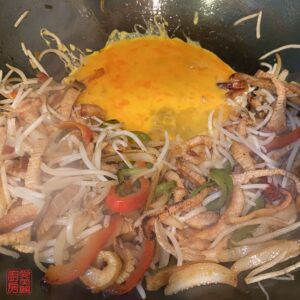
- Add shrimp
- Make a well again and add 2 tbsp curry, 1 tsp turmeric and 2 tbsp light soy sauce into the well
In Cantonese cooking, all sauces should be added on the wok and not on the food to enhance the flavours of the sauce. Adding to the “wok hei” 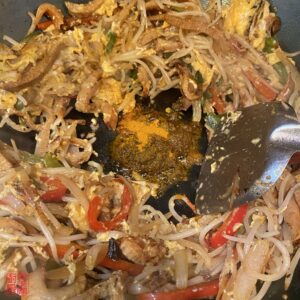
- Add the rice noodles and stir fry with a spatula and chopsticks for best results. Ensure that all the ingredients are mixed well together. Stir-fry for a minute
Be sure not to over-cook as the char siu may become dry 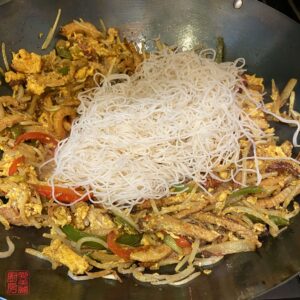
- Add Chinese chives, green onions and turn off heat
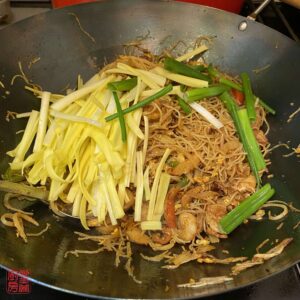
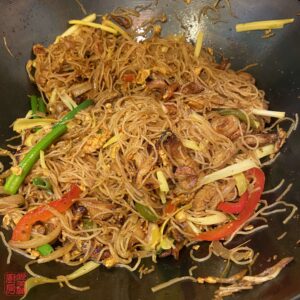
- Mix well and serve
Nutrition
Calories: 538kcalCarbohydrates: 56gProtein: 24gFat: 23gSaturated Fat: 5gCholesterol: 244mgSodium: 1346mgPotassium: 462mgFiber: 3gSugar: 5gVitamin A: 2438IUVitamin C: 65mgCalcium: 126mgIron: 4mg
Tried this recipe?Let us know how it was!