
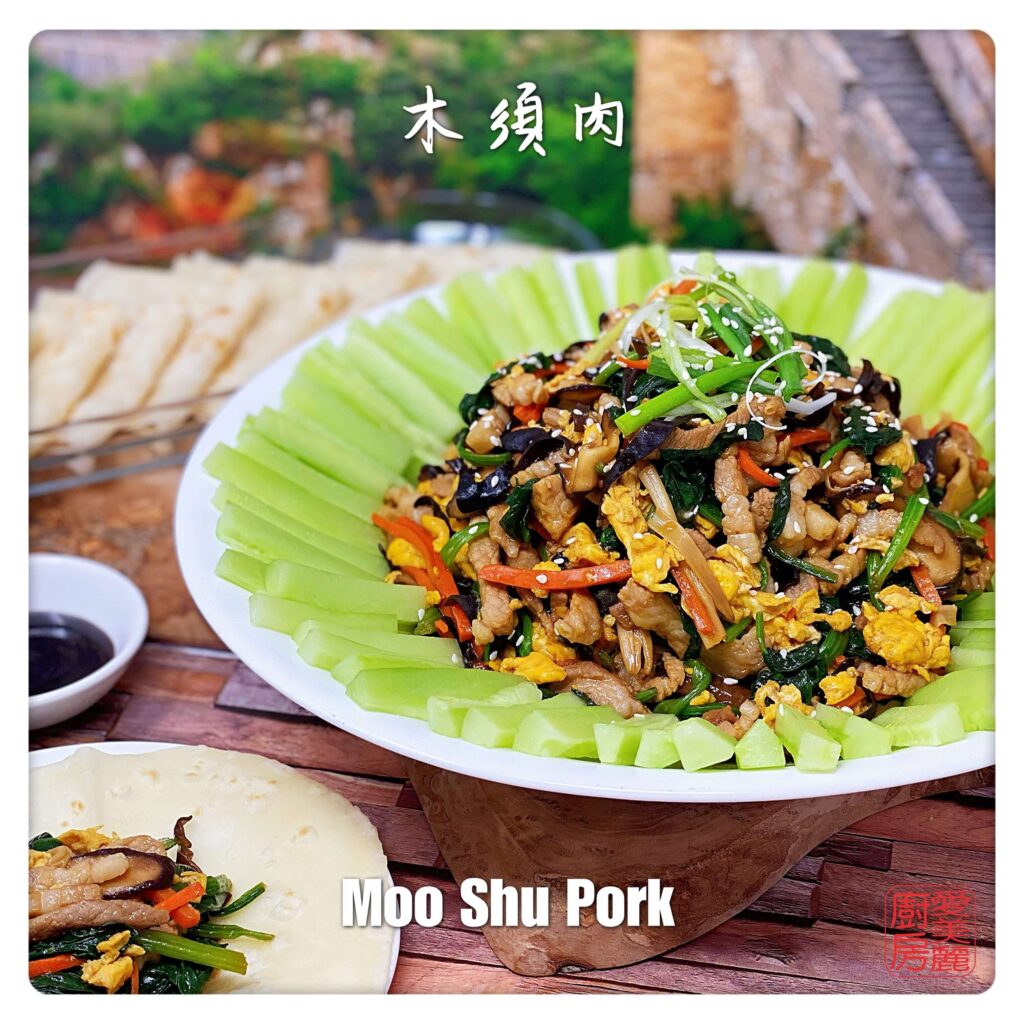
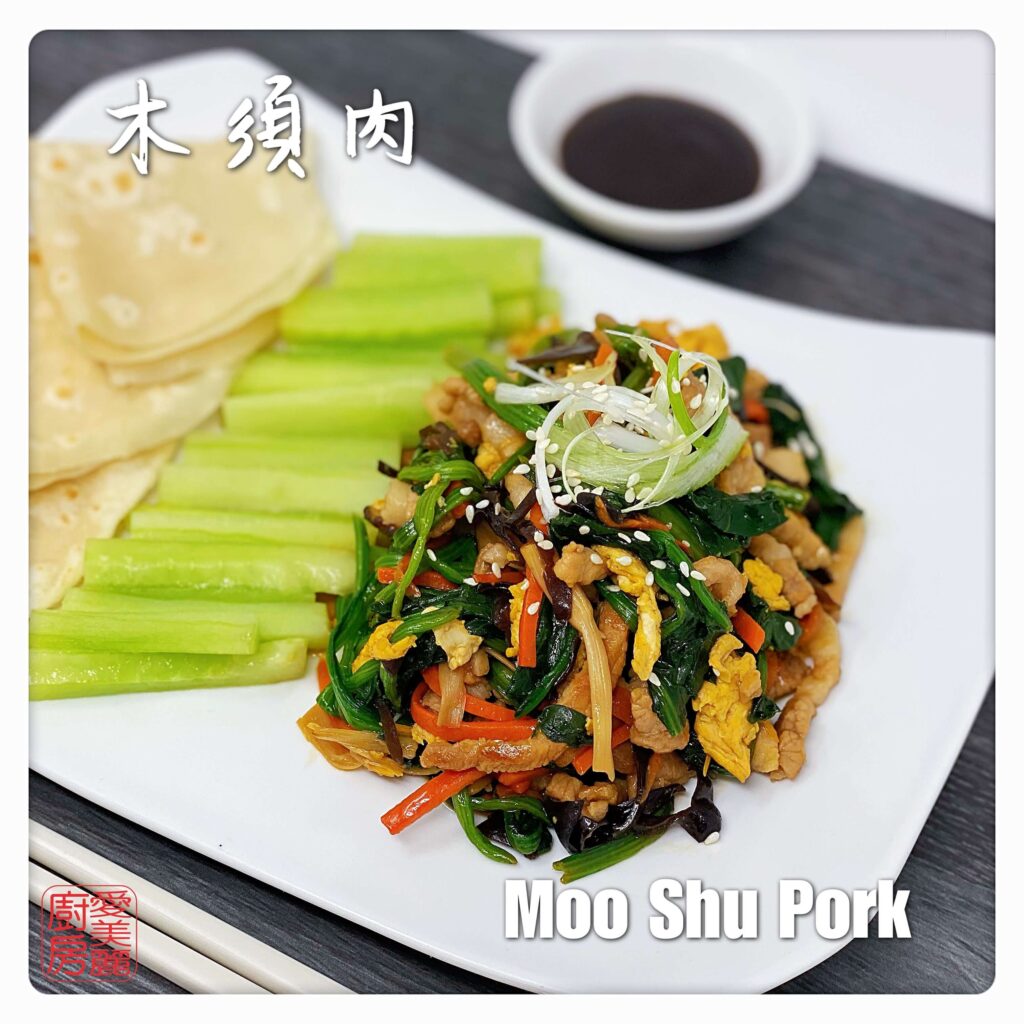
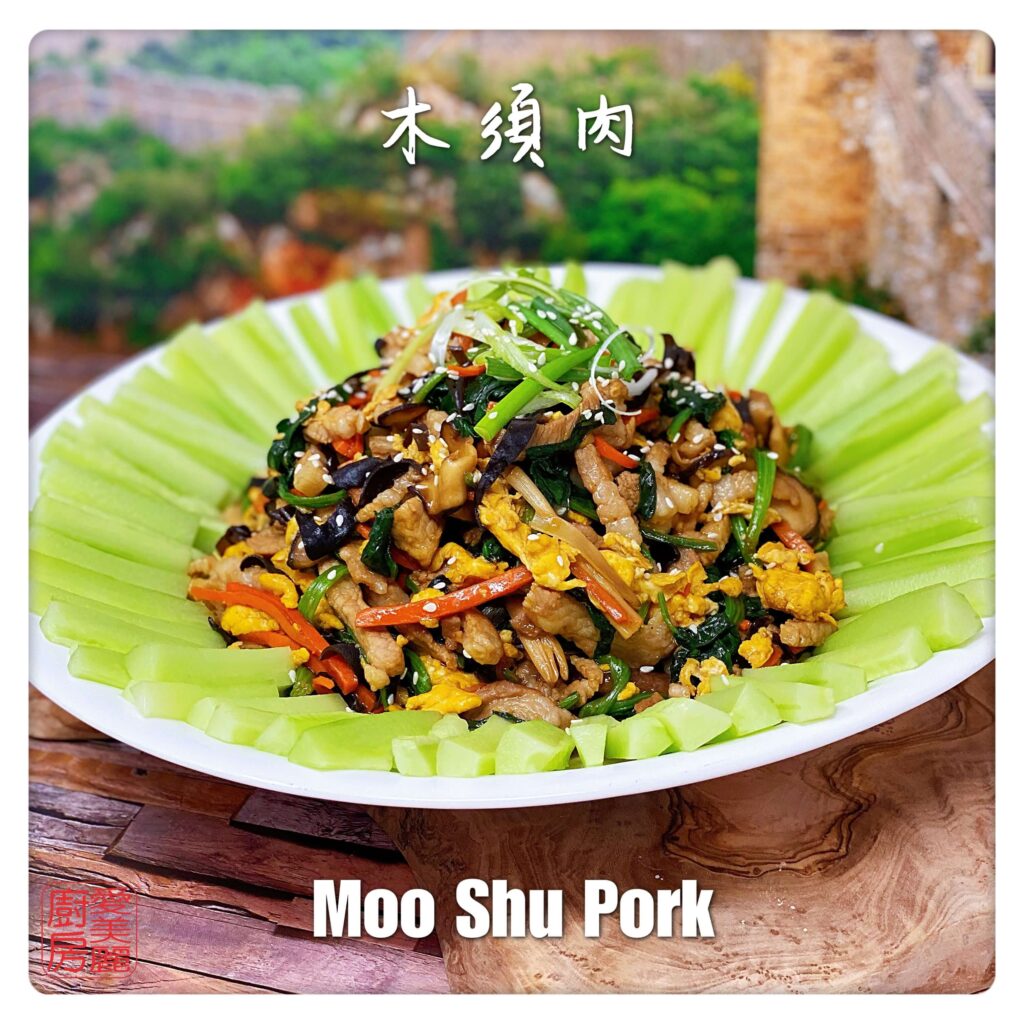

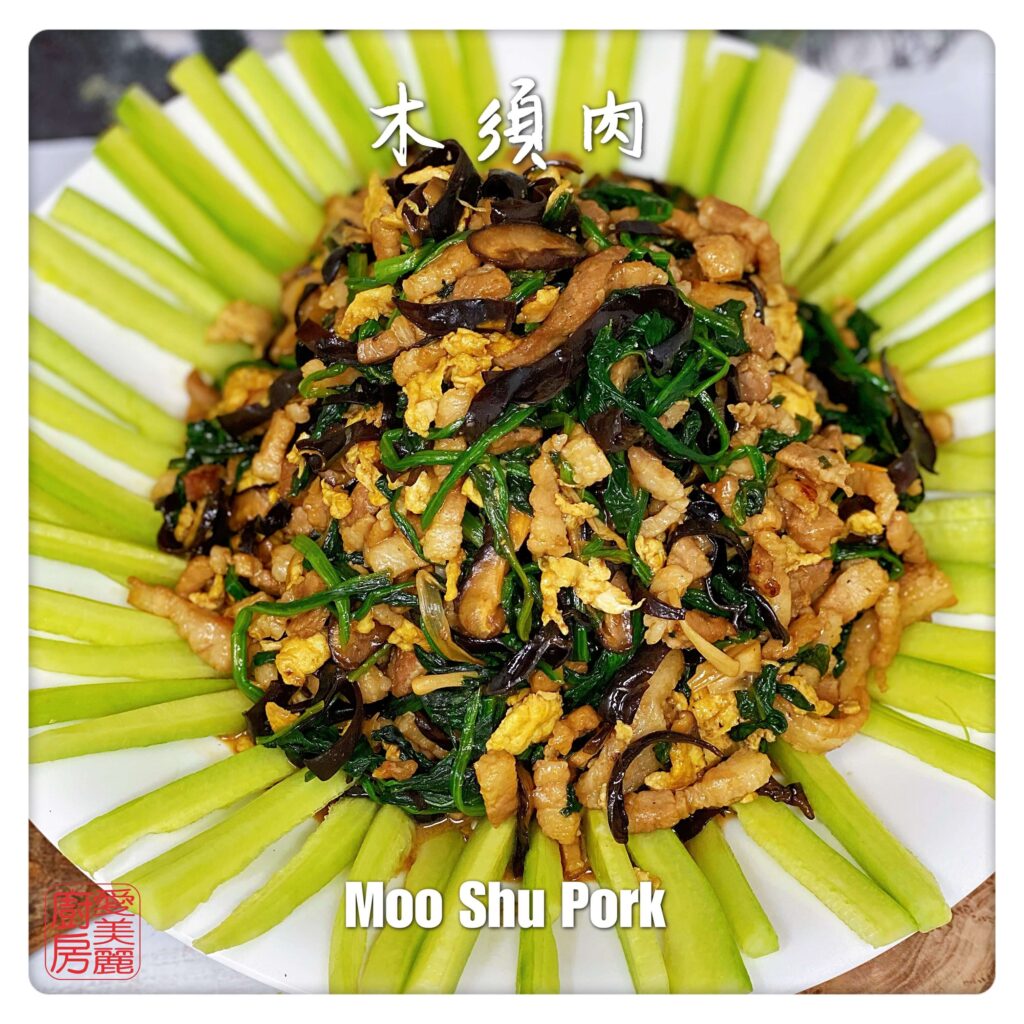
Moo Shu Pork 木須肉 (mù xū ròu) is a Shandong dish that is part of Confucian cuisine. The descendants of Confucius have had a status of perpetual royalty in China since the emergence of Confucianism. Most dynasties, if not all, supported the Confucian Clan so that the lineage of the most important family could live on forever. With this privileged status, the family held numerous dinner banquets for many high ranking officials and dignitaries throughout Chinese history. Consequently, there are books that recorded dishes served at these events. Moo Shu Pork 木須肉 was one of these dishes.
There is a difference in opinion as to the most authentic recipe for this incredibly famous dish. My opinion is not one of the popular ones. However, after doing a lot of reading from Chinese and English sources, I feel pretty confident about my theory. You’ll have to excuse me for geeking out for the rest of this post!
The western version of Moo Shu Pork 木須肉 is basically julienned pork, cabbage, black fungus and egg stir-fried together and wrapped in a Mandarin pancake with hoisin sauce. The current version made in China, Beijing style, uses thick cut cucumbers, pork, black fungus, dried lily flowers and carrots with no pancake. The first time I had Moo Shu Pork 木須肉 was in Hawaii when I was 5. They used pork, spinach, black fungus and egg. I still remember it because I hated spinach but I liked theirs. And wrapping it in a pancake was so fun. I have never been able to find the taste again though.
Some chefs in Shandong say that the folks in Beijing got it wrong. Confucius was from Shandong and Confucian cuisine is the same as Shandong cuisine, which is one of the four main Chinese cuisines. The chefs say that the original ingredients are spinach, bamboo shoots, black fungus, pork belly, dried lily flowers, Shiitake mushrooms and egg. All the ingredients are finely julienned. Since this dish was for the super elitists, finely julienned ingredients fits the scenario. In addition, knife skills and presentation is of utmost importance for Confucian cuisine. So again, the Beijing style of large cuts seems inconsistent.
Another hint is that the original name for this dish was 木樨肉 Mù xī ròu. 木樨 mù xī refers to osmanthus flowers. There is record that the egg resembled osmanthus flowers. It's very plausible that it means the the egg was in very small pieces and mixed through the dish.
As for the Mandarin pancakes, I believe that pancakes were part of the original dish. During festive occasions, especially Chinese New Year, the earliest form of the spring roll was wrapped in a pancake. It wasn't deep-fried. Just various vegetables and meats rolled into a pancake. The Spring Cake/Roll 春餅 (chūn bǐng) is still around today but not as widely known as the deep-fried spring roll. The filling is somewhat similar to that of the Moo Shu Pork. So, I think that the Moo Shu Pork was a fancy form of the Spring Cake/Roll.
To sum up, I believe that due to periods of hardship in China, Moo Shu Pork evolved into a homestyle dish by the time it became popular in Beijing. At one point in time, even eating eggs was a luxury. And so the Moo Shu Pork in China today comes from this home-cooked style. The Moo Shu Pork brought to the west is a better representation of the original Confucian style. Surprise, surprise!! In my humble opinion, although some ingredients and overall taste of the Moo Shu Pork has some western influence, the western Moo Shu Pork is closer to the authentic Confucian banquet dish than its Beijing counterpart.
In my Moo Shu Pork 木須肉 recipe, I try to recreate the authentic version, according to me, while still keeping it delicious. Just like the one I had in Hawaii. I also add raw cucumbers to bridge the two styles. To me, it’s the perfect Moo Shu Pork 木須肉! I think you’ll like it too!
You can also check out my recipe for Spring Cake 春餅 which is the most original form of the spring roll.
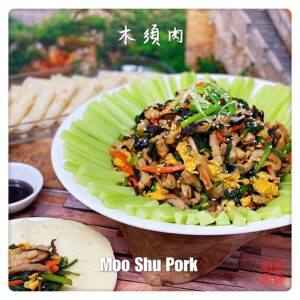
Moo Shu Pork 木須肉
Ingredients
- 450 g Pork belly , julienned
- 400 g Spinach
- 100 g Carrots , julienned
- 15 g Dried lily flowers
- 10 g Black fungus (aka dried wood ears), julienned
- 30 g Bamboo shoots , julienned
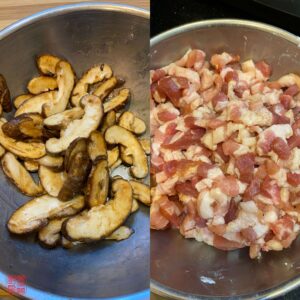
- 6 Shiitake mushrooms , julienned
- 1 Long English cucumber or equivalent , julienned
- 2 slices Ginger (or can be minced)
- 4 Large eggs
- 4 tbsp Oil
- 1 tbsp Light soy sauce
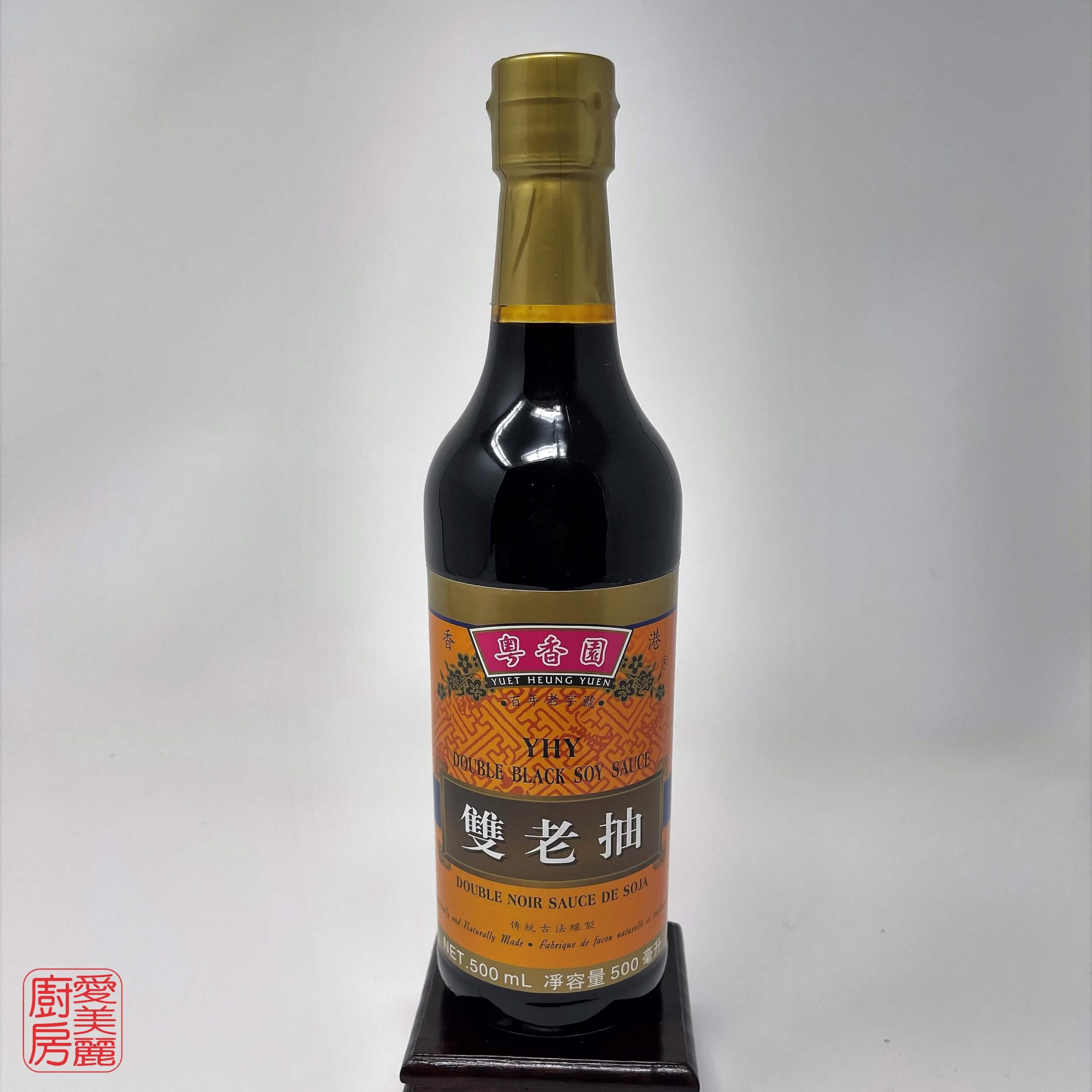
- 1 tbsp Dark soy sauce
- 2 tsp Sugar
- 2 tbsp Shaoxing wine
- ½ tsp White pepper powder
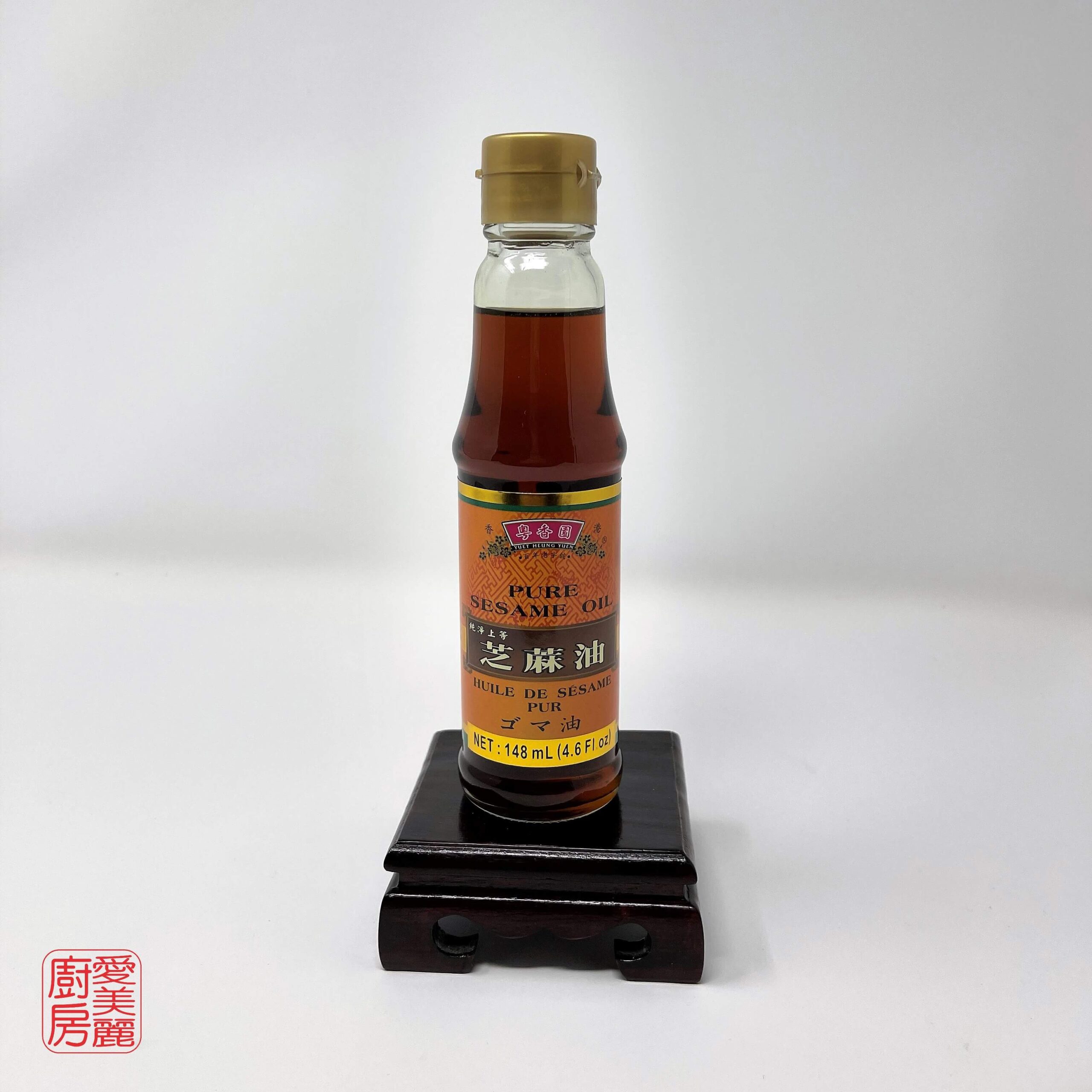
- 1 tsp Sesame oil
- 1 tsp Light soy sauce for pork marinade
- 1 tsp Sugar for pork marinade
- 1 tsp Cornstarch for pork marinade
- 1 tsp Oil for pork marinade
- 1 tsp Light soy sauce for Shiitake marinade
- 1 tsp Sugar for Shiitake marinade
- 1 tsp Cornstarch for Shiitake marinade
- 1 tsp Oil for Shiitake marinade
Instructions
Click here for Mandarin Pancake recipe
- Soak black fungus, dried lily flowers and shiitake mushrooms night before (unless you are using fresh ones)
Black fungus and dried lily flowers only need 30 minutes of soaking. Shiitake mushrooms, depending on their size and thickness may need 1-6 hours of soaking. I usually just soak everything overnight - Prepare 2 pieces of ginger. You can leave it whole, minced or julienned.
I leave it whole so I can easily fish it out at the end - Julienne pork belly, carrots, black fungus, bamboo shoots and shiitake mushrooms
I didn’t add bamboo shoots because I’m not a fan but it is a traditional ingredient in this dish - Marinate pork belly and shiitake mushrooms separately in 1 tsp light soy sauce, 1 tsp sugar, 1 tsp cornstarch respectively. Mix well and add 1 tsp of oil to each and mix again. Marinate for 15 minutes
Marinating shiitake mushrooms can add a lot of overall flavour 
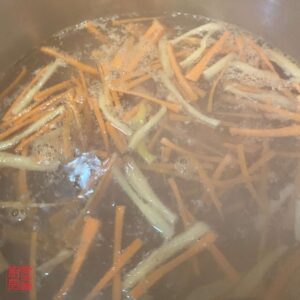
- Boil a pot of water. When water comes to a boil, blanche bamboo shoots, black fungus, carrots, dried lily flowers for 3 minutes. Remove from water and let it cool in a colander. You can use this water to blanche the spinach in step 6
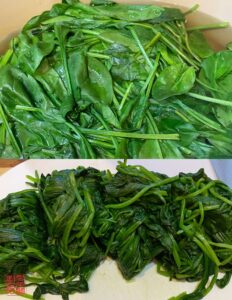
- Wash spinach and blanche in boiling water for 30 seconds. Drain water in a colander. After cooling, squeeze out water and cut into approx. 6cm pieces. Set aside

- Wash soaked lily flowers and squeeze out water. Cut off the hard end, if any, and cut in half
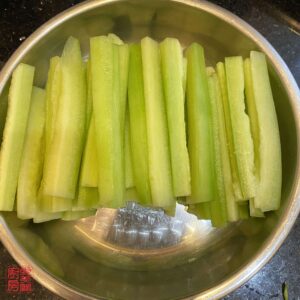
- Peel (optional) and slice cucumbers and set aside
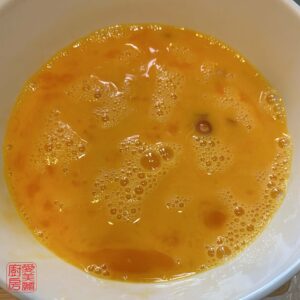
- Beat 4 eggs
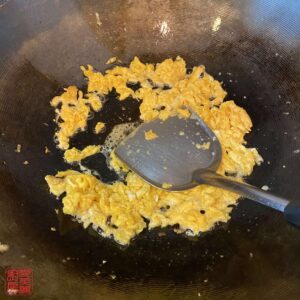
- Heat wok to medium-high heat, add 2 tbsp oil, add eggs. Press down on the egg with a spatula while stirring so that the eggs break apart into small pieces. Remove the egg from the wok and set aside
- Add 2 tbsp oil to the wok, put the heat on high
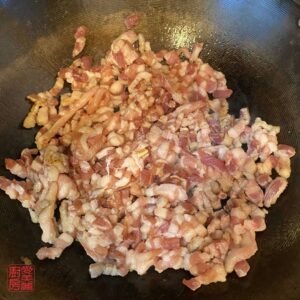
- Add pork belly to the wok. Arrange in single layer and let it sit for 1 minute. Flip it over and let it sit for another minute. Stir-fry for 30 seconds and remove from the wok. Leave the oil in the wok
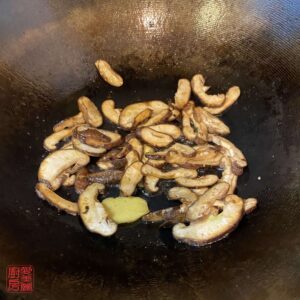
- Add ginger to the wok. After they turn golden colour, add shiitake mushrooms and stir-fry for 30 seconds
- Add the pork back into the wok and stir-fry together for 30 seconds to allow the wok to get hot again before adding the blanched carrots, black fungus, bamboo shoots and lily flowers. Stir-fry for 2 minutes
- Add 2 tbsp Shaoxing wine around the side of the wok. Add 1 tbsp light soy sauce, 1 tbsp dark soy sauce, 2 tsp sugar and ½ tsp white pepper powder. Stir-fry for 1 minute until everything is well mixed
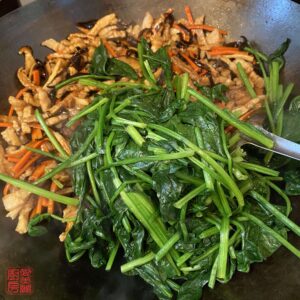
- Add spinach. Stir-fry for one minute
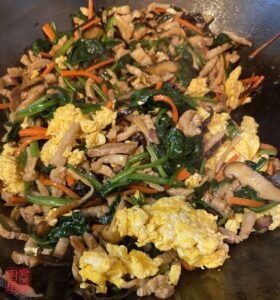
- Add egg. Stir-fry for another minute until everything is piping hot. Turn off heat and add 1 tsp of sesame oil.

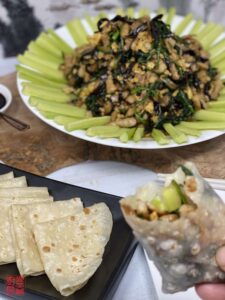
- Put onto serving plate and arrange cucumbers around the plate

- Serve with Mandarin pancakes and Hoisin sauce





Leave a Reply