

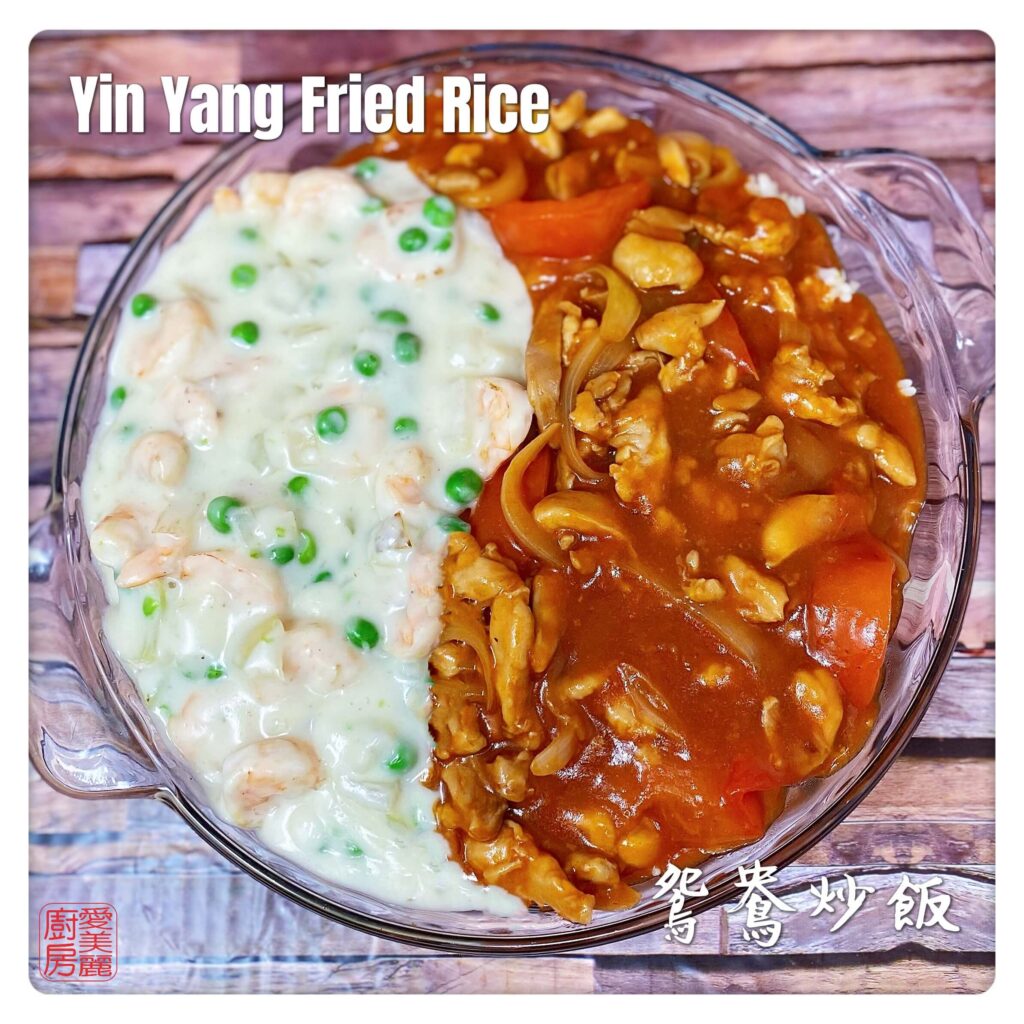
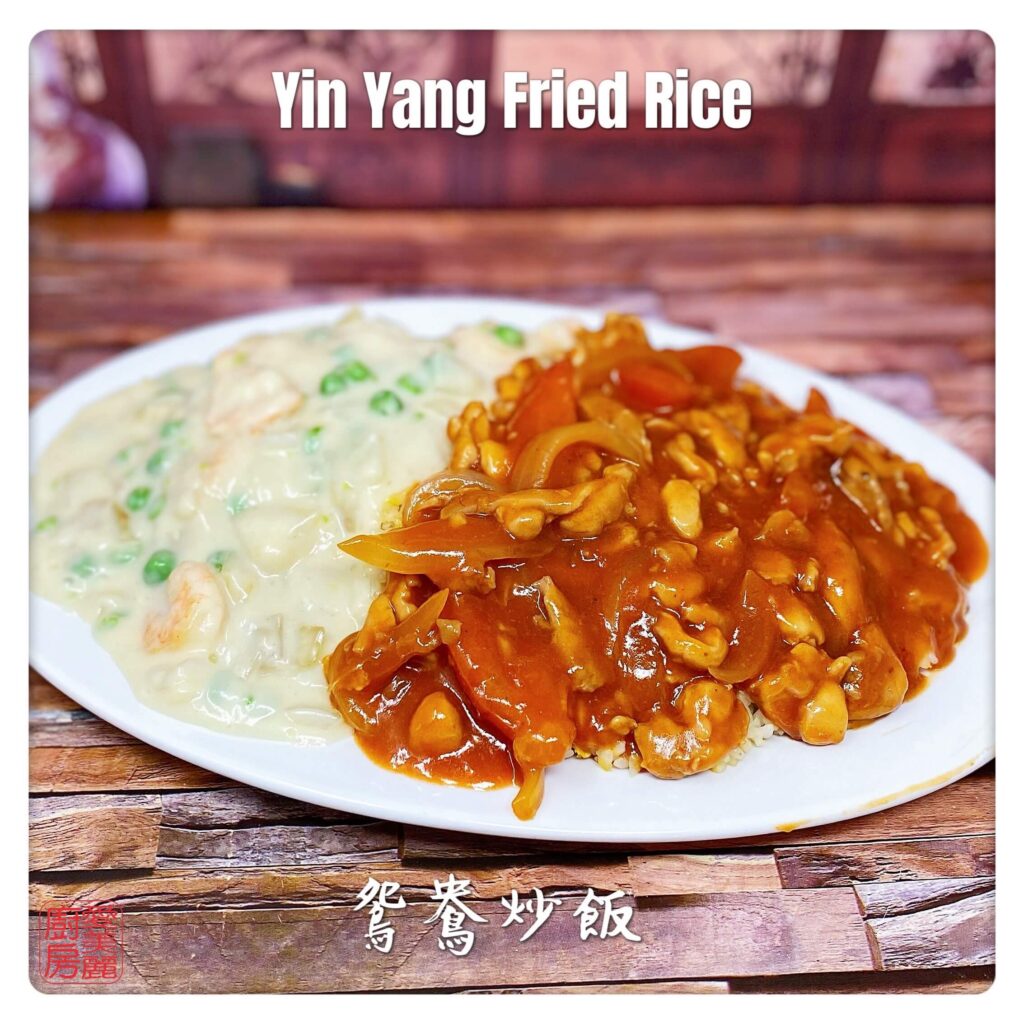
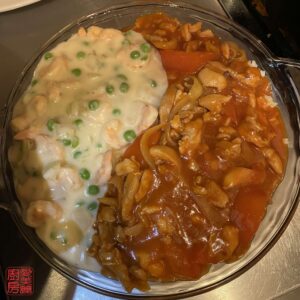
Yin Yang Fried Rice 鴛鴦炒飯 (Cantonese: yuen yeung chao fan) is truly a Hong Kong classic. It combines traditional egg fried rice with a red tomato sauce with chicken and a white seafood sauce with shrimp. It was created in Hong Kong and it represents a truly fusion dish born during British occupancy. Nowadays, you can usually find this dish in Hong Kong cafés and Cantonese restaurants all over the world.
Yin Yang Fried Rice 鴛鴦炒飯 is usually served at Cantonese wedding banquets because of its auspicious name. The Chinese words, 鴛鴦 (Cantonese: yuen yeung) means Mandarin ducks. Mandarin ducks are not only beautiful, they always travel in pairs and they mate for life which every newlywed wishes for…. I think (or at least, I hope)!
Restaurants started making them fancy by making it into a Yin-Yang symbol better known as the Taichi symbol to the Chinese. Consequently, restaurants began calling it 太極鴛鴦炒飯 (Cantonese: tai gik yuen yeung chao fan) to distinguish it from the more casual looking ones you find at Hong Kong cafés. Most people unfamiliar with the Chinese language think that Yin-yang is an English phonetic spelling for 鴛鴦 (Cantonese: yuen yeung) but it’s not. The Chinese for Yin-yang is 陰陽 (Cantonese: yum yeung). So, the English name “yin yang fried rice” refers to the Taichi symbol made with the sauces. The Chinese name 鴛鴦炒飯 (Cantonese: yuen yeung chao fan) refers to the beautiful colours of the Mandarin duck and that good things come in pairs.
In my Yin Yang Fried Rice 鴛鴦炒飯 recipe, I’ll show you how to create this restaurant dish in your own kitchen with minimal effort. You probably have most of the ingredients at your house already! This dish is so delicious, your family will be asking for seconds and thirds!
Looking for more Hong Kong style recipes? Check out my Hong Kong Cafe recipe section. I highly recommend the Hong Kong Style Borscht with Oxtail 牛尾羅宋湯, it's one of my favourite soups!
Looking for a new wok? I got my wok from Amazon and it's now my most used piece of cooking equipment:
Joyce Chen , Classic Series Carbon Steel Wok Set, 4-Piece, 14-Inch, Charcoal
(As an Amazon Associate I earn from qualifying purchases)
Yin Yang Fried Rice 鴛鴦炒飯
Ingredients
Ingredients for fried rice:
- 5 c Cooked rice
- 3 Large eggs
- 1 tsp Salt
- 3 tbsp Oil
Ingredients for red sauce:
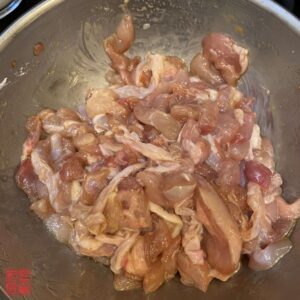
- 250 g Chicken , sliced into shreds
- 1 tsp Light soy sauce for chicken marinade
- ½ tsp Sugar for chicken marinade
- 1 tsp Corn starch for chicken marinade
- 1 tsp Oil for chicken marinade
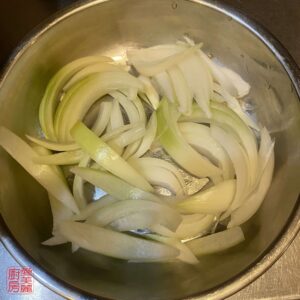
- ½ Onion , thin sliced wedges
- 1 Medium tomato , wedges
- 3 tbsp Tomato paste
- 3 tbsp Ketchup
- 1 tbsp White vinegar
- 1 tbsp Light soy sauce
- 2 tsp Sugar
- 250 ml Chicken broth
- 1 tbsp Corn starch for slurry
- 2 tbsp Water for slurry
- 2 tbsp Oil
Ingredients for white sauce:
- 250 g Shrimp , shelled and deveined
- ½ Onion , diced (large)
- 50 g Frozen peas
- 250 ml Chicken broth
- ¼ tsp White pepper powder
- ½ tsp Salt
- 50 ml Heavy cream or evaporated milk
- 1 tbsp Corn starch
- 2 tbsp Water
- 2 tbsp Oil
Instructions
Instructions for red sauce:
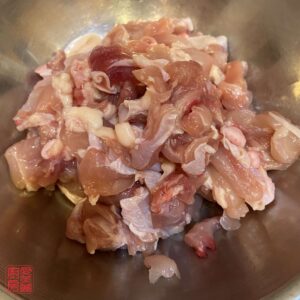
- Slice chicken into shreds

- Marinate chicken with 1 tsp light soy sauce, ½ tsp sugar and 1 tsp corn starch. Mix well, add 1 tsp oil and mix again. Set aside
- Slice ½ an onion into thin wedges. Set aside
You may want to cut the other half into square pieces for the white sauce at this time - Slice tomatoes into bite-size wedges. Set aside
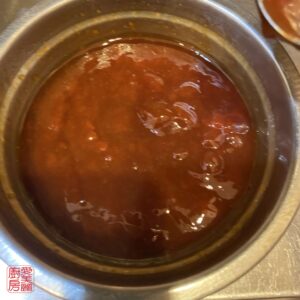
- Combine 3 tbsp tomato paste, 3 tbsp ketchup, 1 tbsp white vinegar, 1 tbsp light soy sauce and 2 tsp sugar in a container. Mix well and set aside
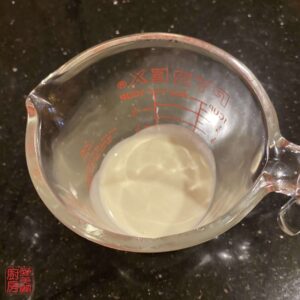
- Combine 1 tbsp corn starch with 2 tbsp water and set aside
You may want to prepare another slurry for the white sauce at this time - In a pan or wok, heat on medium-high heat and add 2 tbsp oil
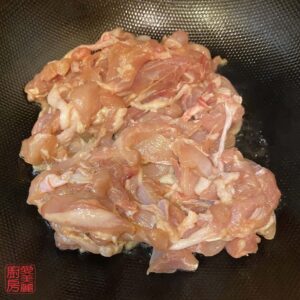
- Add chicken. Arrange in single layer and let it cook for approx. 1 minute
- Flip the chicken over and cook for approx. 45 seconds
- Stir-fry to loosen chicken and remove from heat, leaving the oil
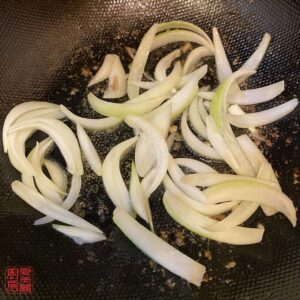
chicken does not need to be cooked through at this time - Add onions and cook for 1 minute
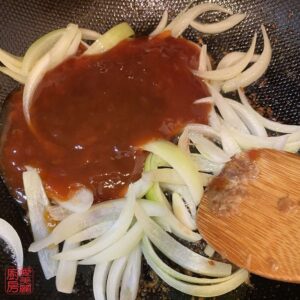
- Add prepared tomato paste mixture. Combine with onions
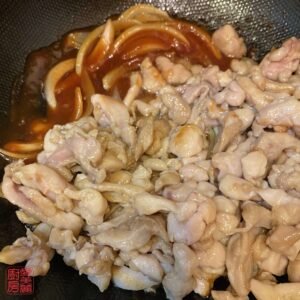
- Add chicken back in
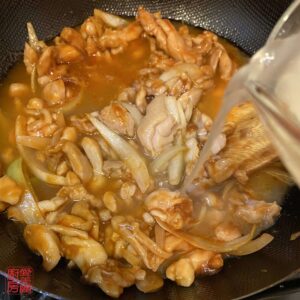
- Add 250ml chicken stock and cover with lid. Bring to a boil
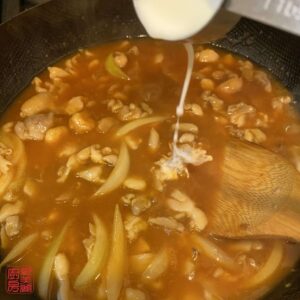
- Stir the slurry and slowly pour into the sauce while mixing
- Mix until sauce thickens
- Taste test and make adjustments if necessary
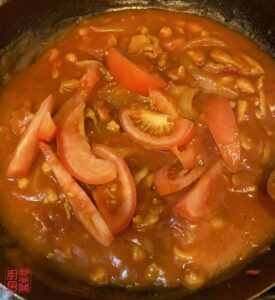
- Add tomatoes

- Cover with lid and cook on low heat for 10 minutes
Instructions for fried rice:
- Beat 3 eggs
- Heat wok on high heat. Wait until wok is at approx. 200˚C or 400˚F
- Add 3 tbsp oil
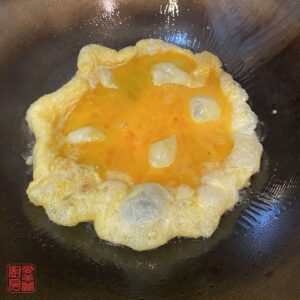
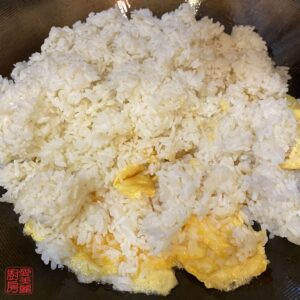
- Add egg and wait 5 seconds
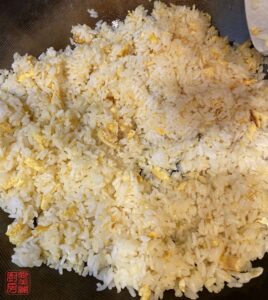
You may also choose to cook the egg by itself and slice into shreds - Add cooked rice and stir-fry with the egg. Break apart the egg with your spatula while incorporating evenly with the rice
Although leftover rice may be easier to fry, freshly cooked rice may also be used if you lay it out to cool on a baking sheet for approx. 1 hour - Sprinkle 1 tsp of salt evenly
- Continue stir-frying until rice is hot and egg is in small pieces

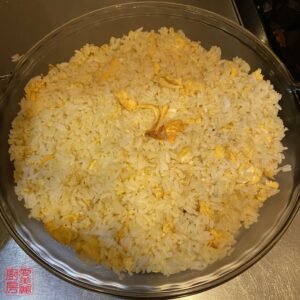
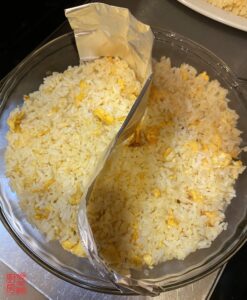
- Place rice into a casserole dish or serving platter
- Cover loosely with aluminum foil to keep it warm
Instructions for white sauce:
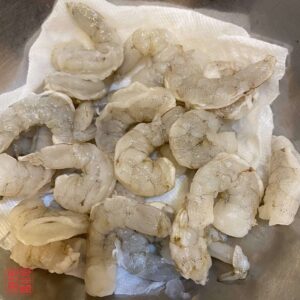
- Dry shrimp with a paper towel
- Add ¼ tsp white pepper powder to the shrimp and mix well
- In a pan, heat using medium-high heat
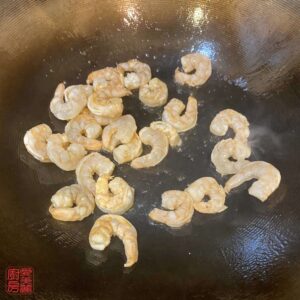
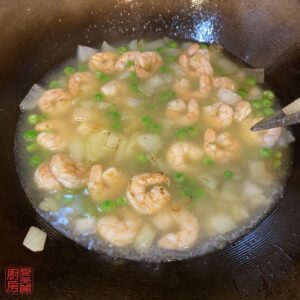
- Add 2 tbsp oil and add shrimp. Fry until shrimp is cooked. Remove shrimp
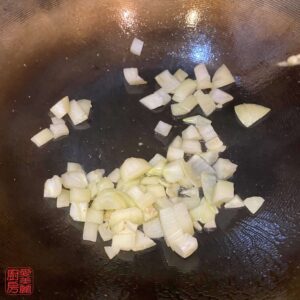
- Add diced onions to the pan. Cook until aromatic
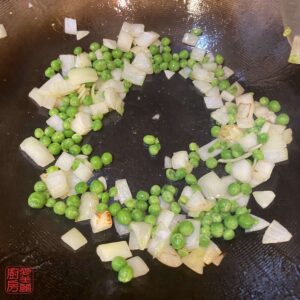
- Add 50g frozen peas. Mix with onions until peas are hot
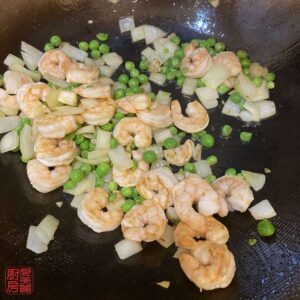
- Add shrimp back in the pan
- Add 250ml chicken stock and bring to a boil
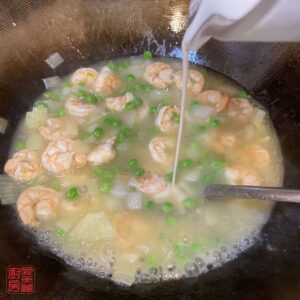
- Mix a slurry with 1 tbsp corn starch and 2 tbsp water. Mix well and slowly pour it in
- Stir with spatula until sauce thickens
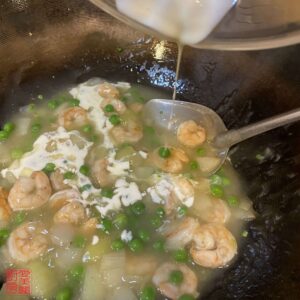
- Add ½ tsp salt and 50ml heavy cream or evaporated milk
- Taste test and make adjustments if necessary
- Set aside
Instructions for assembly:
- Take a piece of aluminum foil and fold it so that it’s at least 5cm or 2” wide. Make an “S” shape with it and place it in the middle of the rice to help make your yin yang symbol

- Use a ladle to spread the white sauce onto half of the rice
- Do the same for the red sauce
- Remove the aluminum foil
- Serve


This is one of my favourite dishes. First time I can remember eating it was at one of numerous Chinese wedding banquets I had to attend as a kid. In Vancouver I find most of the Chinese restaurants (or at least the ones I go to) use Honeymoon fried rice or sometimes Lovebird fried rice (which is closer to the Chinese name) as the English name in menu. Rarely see it listed as Yin Yang fried rice in English.
Hi Anne, sorry for the very late reply. I enjoy this dish as well! Some restaurants like to rename dishes to sound more auspicious. I am ethnically Chinese and I like that more dishes are named phonetically and not just translated. It gives it more clarity. Even my caucasian friends are getting more familiarized with Chinese cuisine and they prefer calling it the Chinese name to avoid any ambiguities. However, on the internet, I see that there are quite a bit of people calling it its original name, Yin Yang Fried Rice. Happy cooking!
Why do some restaurants choose to rename traditional dishes to make them sound more auspicious, and how does this impact the cultural authenticity and understanding of Chinese cuisine among different ethnic groups?
Hi Christina, sorry for the late reply! You have a loaded question that goes beyond food, I love it!
Restaurants rename dishes especially for banquets because in general, Chinese people are superstitious. Banquets are usually held for special occasions like weddings, birthdays, anniversaries... There's usually a menu of 9 or 10 dishes that guests will enjoy. And on this menu, they will try to incorporate auspicious animals like dragons, koi fish, phoenix; gold and silver; also phrases for good health, prosperity and happiness. This kind of auspicious naming is nothing new, the Chinese have been doing it for thousands of years. The reason is simply to eat things that give positive energy. So my answer to the first part of your question is that restaurants rename foods to give their guests a positive vibe which makes the customer want to order it maybe even without knowing exactly what it is. Chinese people want all the luck they can possibly get!
Interms of cultural authenticity, the renaming of foods to make it more auspicious is authentically Chinese. I'm betting we may be the only culture that does this! I am proud of my Chinese ethnicity and I find the auspicious things that my mom makes me do very interesting and endearing. Of course, when I was a kid, I thought it was all so stupid. Now that I have a kid, I try to make these silly things fun and educate him on Chinese culture. We do certain things, not because it makes sense, but it makes our elders happy. And I am happy that they're happy!
I have to admit though, I am jealous of other ethnicities and the names of their food. Everybody knows what terriyaki, perogies, bibimbap and filet mignon are. But nobody understands gulaorou, jiaozi, or chaofan (sweet and sour pork, dumplings and fried rice). There are over 300 dialects in Chinese. We have over 5000 years of civilization and we are the only ancient civilization left in the world. So things get complicated! The 3 food items I mentioned earlier were in Mandarin dialect. In Cantonese dialect, they are gu lo yoke, gao zi, and chau faan, respectively. The earliest Chinese settlers in North America were mainly Cantonese. The names that they gave their dishes were descriptive for practical reasons. But as there are more immigrants from mainland China, there is a big expansion in the library of Chinese cuisine. Just in the category of sweet and sour pork, there's guobaorou, tangcupaigu, and tiansuanrou.
I believe that with time, more people of any ethnicity, will have more chances to try out more Chinese food from different regions of China and then they will gain more understanding of Chinese cuisine.
This is so good. Childhood favourite! I only made the red sauce part since that’s what I had and used canned tomatoes. Still delicious and will definitely make again! Thank you, Auntie Emily! Looking fwd to trying your other recipes 🙂
Hi G, thanks for the 5 stars and for trying my recipe! Canned tomatoes gives a really rich red colour too. I'm glad it gave you a bit of nostalgia! I think you may also like the baked pork chop on fried rice too! Happy cooking!
The renaming is probably due to the English translation back to Chinese. Yin Yang Fried Rice means Lovebirds Fried Rice while Yin Yang can be translated into lovebirds 鴛鴦 or hell-earth 陰陽. Hell-earth usually implies separation by death.
I had no idea the name 鴛鴦 referred to Mandarin ducks and their symbolism of lifelong partnership—that makes the dish's presence at wedding banquets so much more meaningful. It's fascinating how food carries such deep cultural stories.
I had no idea the name 'Yin Yang' came from Mandarin ducks symbolizing lifelong partnership—that adds such a beautiful layer to enjoying this dish at weddings. It makes me appreciate the cultural stories behind food even more. https://aiomnify.app/names/?utm_source=auntieemily.com&utm_medium=blog-comment&utm_campaign=backlink
I had no idea that Yin Yang Fried Rice was traditionally served at Cantonese wedding banquets because of its auspicious name. That's such a beautiful cultural detail that makes me appreciate the dish even more. I'll definitely look for it next time I'm at a Cantonese restaurant!
I had no idea that the name 鴛鴦 (yuen yeung) refers to Mandarin ducks and symbolizes lifelong partnership, making it a wedding banquet staple. That adds such a beautiful cultural layer to enjoying this dish! It makes me curious about other traditional Chinese names and their meanings behind foods.
I had no idea that the name 鴛鴦炒飯 refers to Mandarin ducks and their symbolism of lifelong partnership, which makes it such a fitting dish for wedding banquets. That adds such a beautiful cultural layer to enjoying this fusion classic.
I had no idea that the name 鴛鴦 (yuen yeung) refers to Mandarin ducks symbolizing lifelong partnership—that makes the dish's presence at wedding banquets so meaningful. It's fascinating how food carries such deep cultural stories.
I had no idea that the name 鴛鴦 (yuen yeung) refers to Mandarin ducks and symbolizes lifelong partnership, making it a wedding banquet staple. That adds such a beautiful cultural layer to enjoying this dish—it makes me appreciate the thought behind the fusion of flavors even more.