
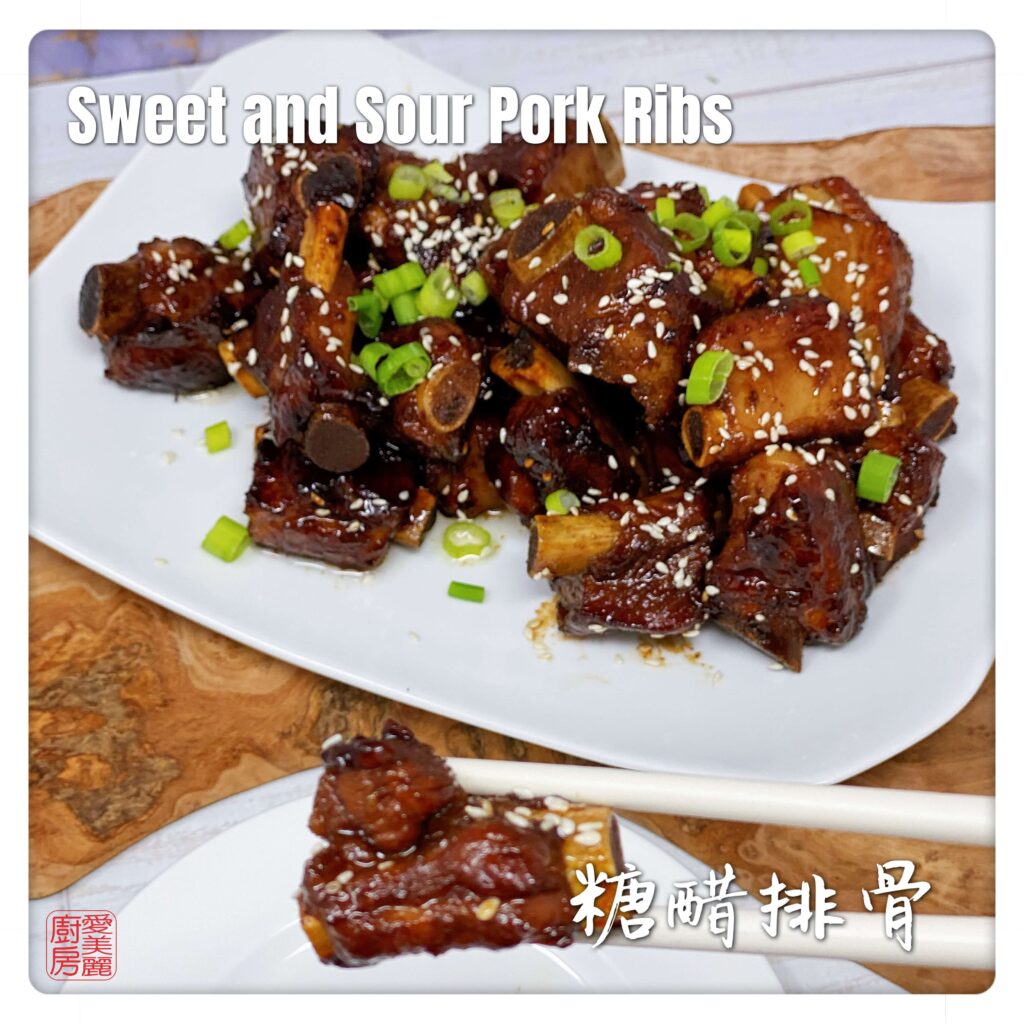
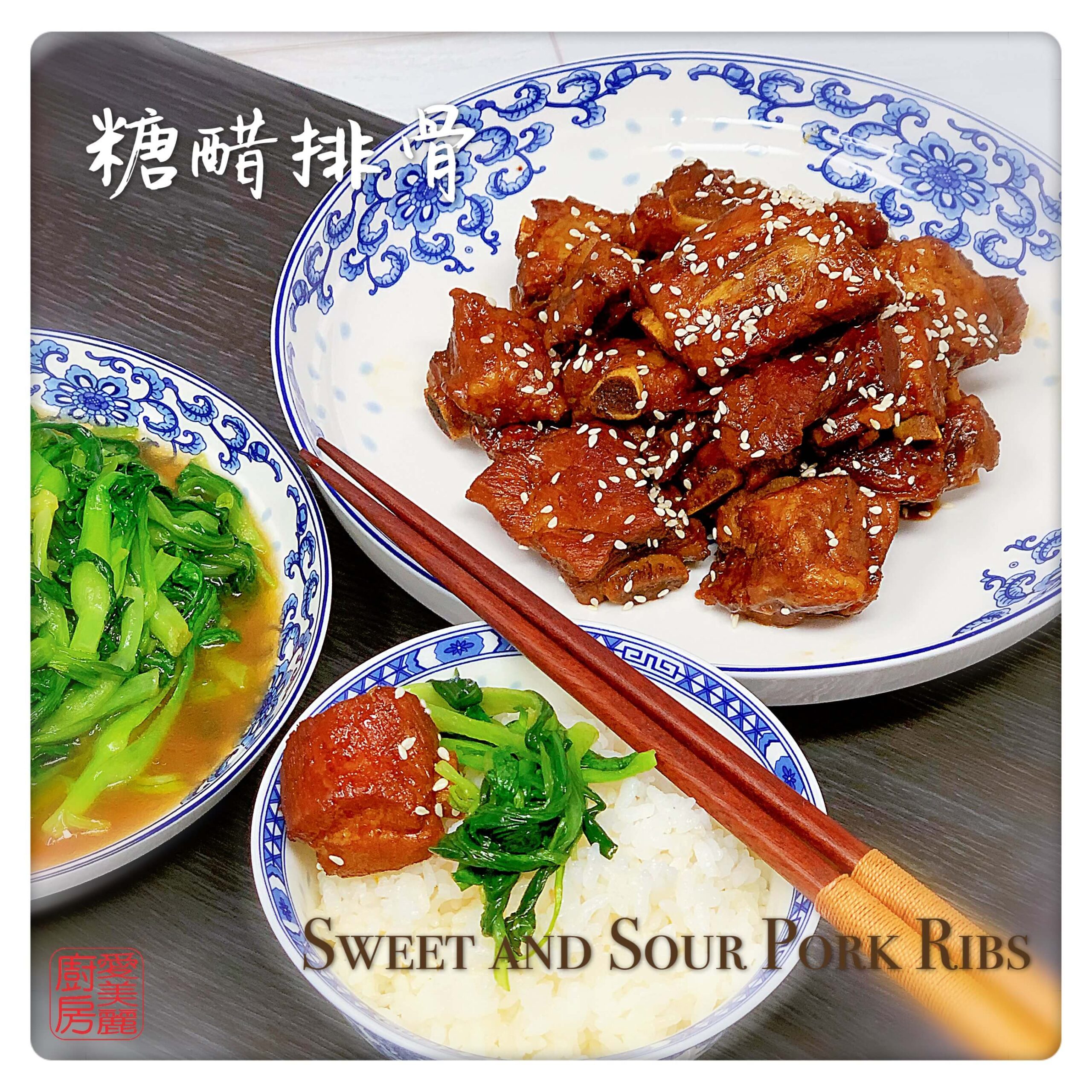
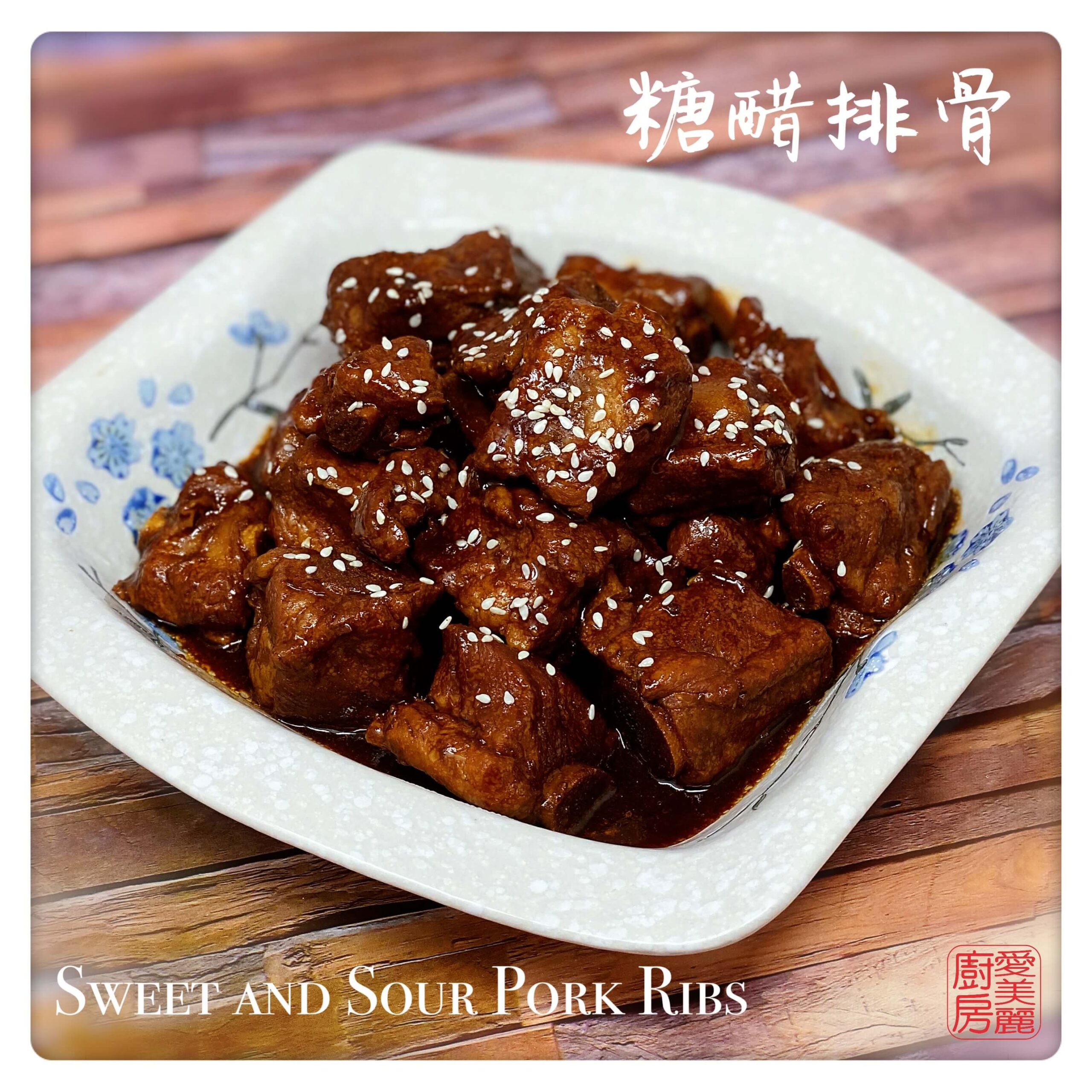

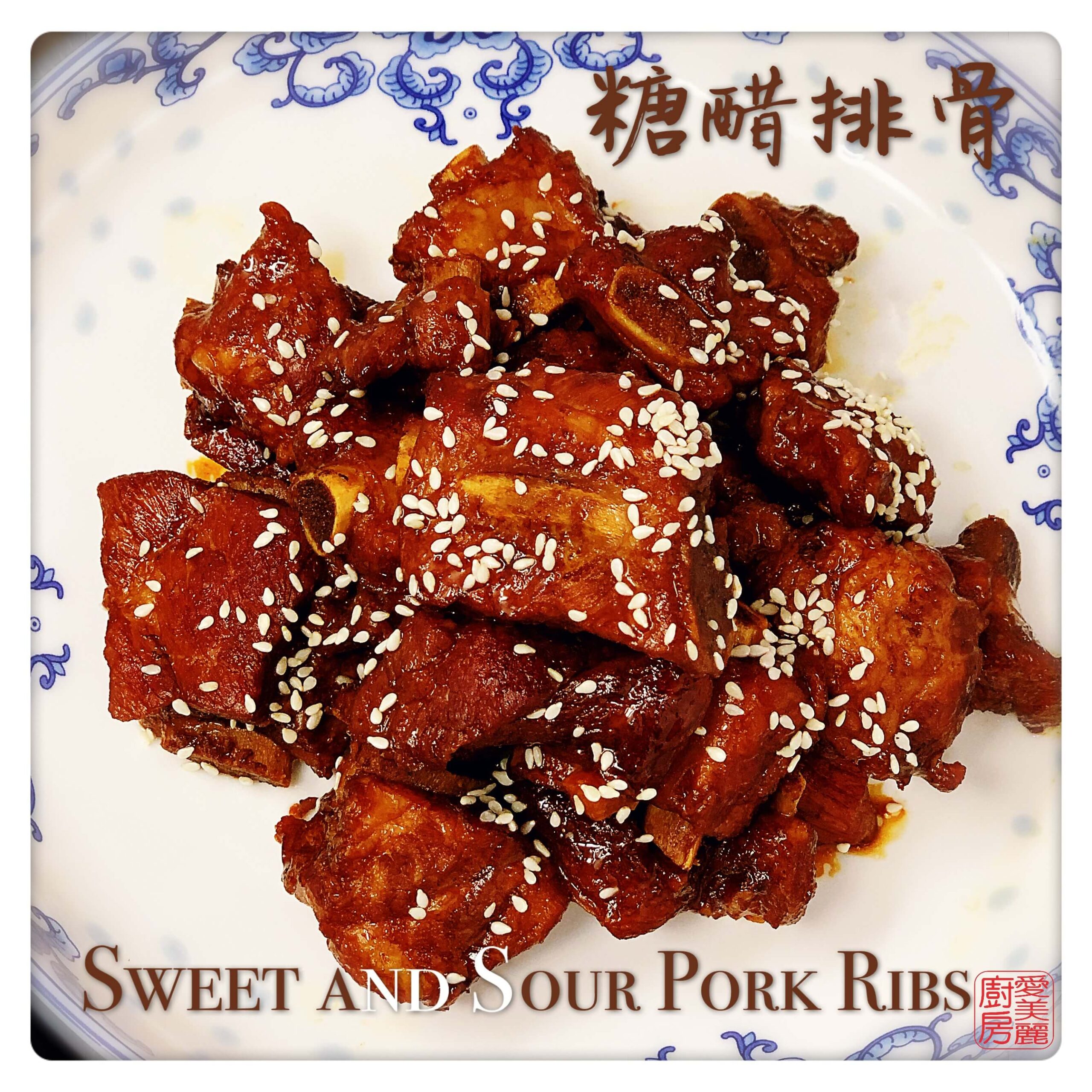
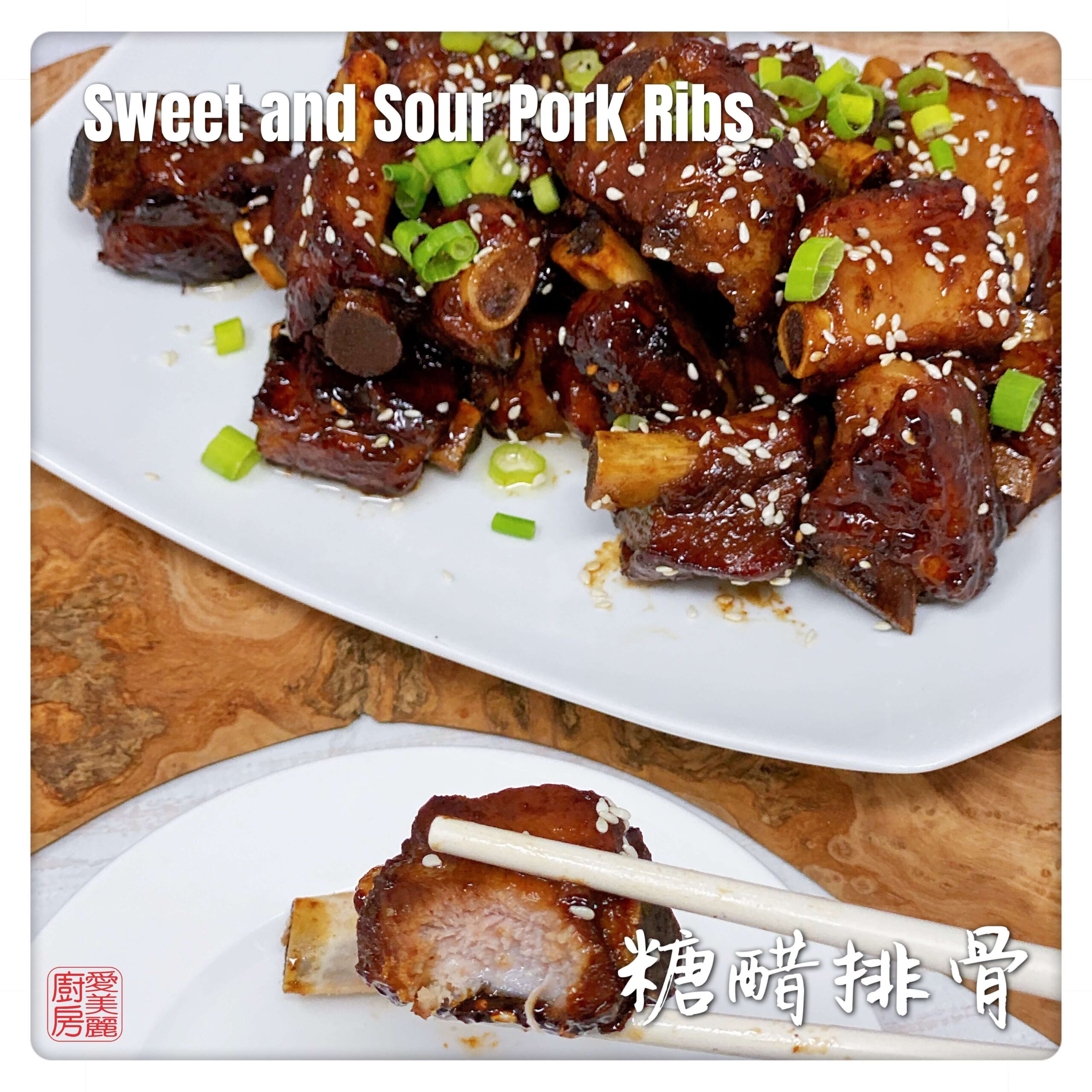
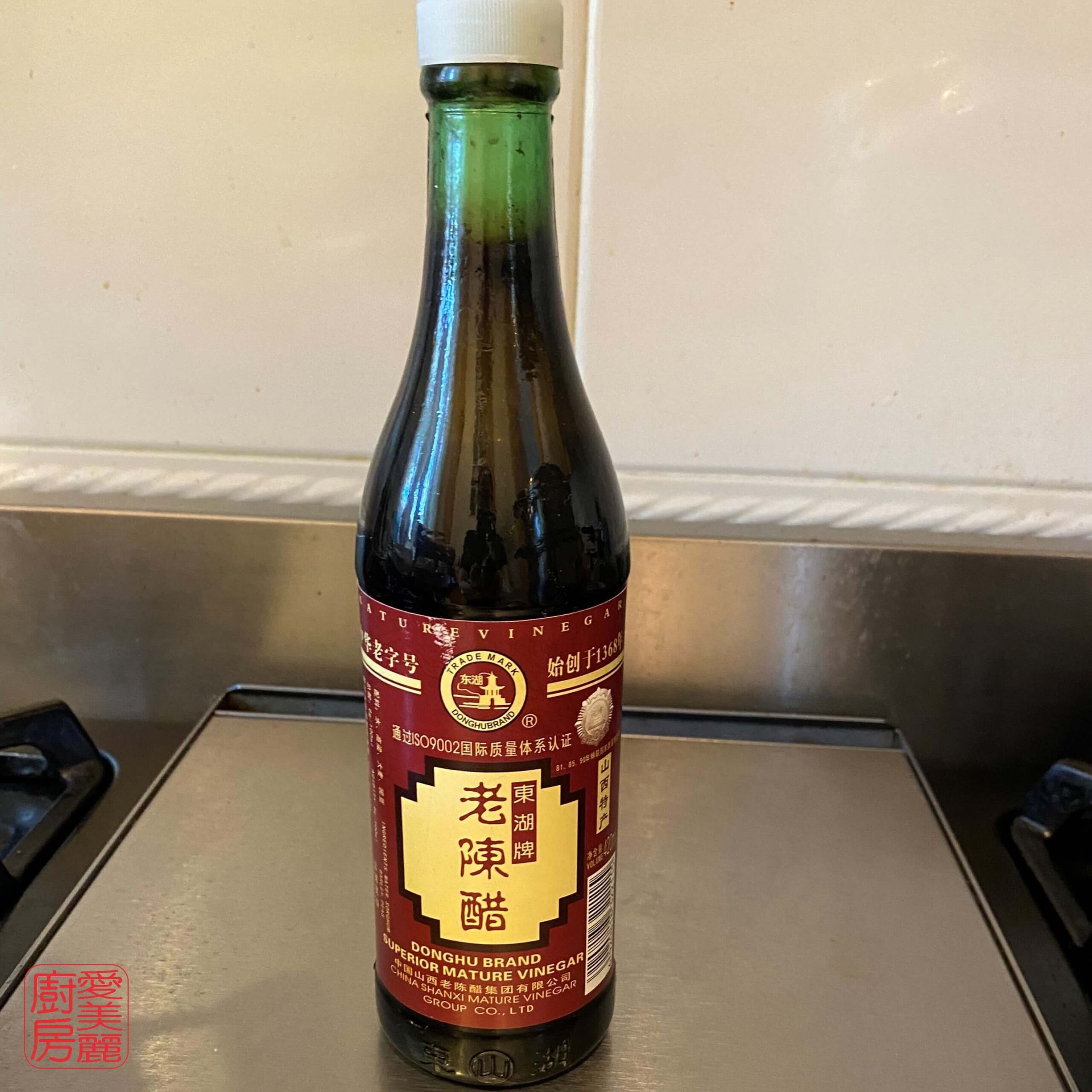
Sweet and Sour Pork Ribs 糖醋排骨 (táng cù pái gǔ) is a very traditional Jiangsu dish from Wuxi in Jiangsu province. This dish may have originated in the late Tang Dynasty or early Sung Dynasty. The sweetness comes from Chinese rock sugar (冰糖 cane) and the sourness comes from mature black vinegar (陳醋). Adding soy sauce gives it a perfectly balanced flavour. The meat on the braised ribs are softened by the acidity of the vinegar which fall off the bone when you bite into it. It goes great with rice or on its own as an appetizer. During ancient times, it was cold dish to go with alcohol. The well-known Cantonese sweet and sour pork evolved from the Sweet and Sour Pork Ribs 糖醋排骨.
Another rib dish from Wuxi is Wuxi Pork Ribs 無錫排骨 (wú xī pái gǔ). Sweet and Sour Pork Ribs and the Wuxi Pork Ribs are different, however, some restaurants have made them interchangeable. Sweet and Sour Pork Ribs is the homestyle version of Wuxi Pork Ribs. This explains why there are so many different versions of Sweet and Sour Pork Ribs.
Traditional Wuxi Pork Ribs are much fancier. They are red from red yeast rice sauce (the sauce from 南乳 nán rǔ) and red vinegar. Red vinegar is traditionally made from soaking red roses in rice vinegar. You then braise it with spices such as peppercorns and cassia bark (Chinese cinnamon), soy sauce and yellow wine. This creates a much more complex combination of flavours for the Wuxi Pork Ribs. Next time you order Wuxi Pork Ribs from a restaurant, you can check if it’s authentic.
Sweet and Sour Pork Ribs 糖醋排骨, on the other hand, is much more basic and easy-going. They are usually dark in colour. And all you need are ribs, rock sugar, soy sauce, black vinegar, Shaoxing wine, ginger and Chinese leeks (or substitute with green onions). There are many ways to make this dish. In my Sweet and Sour Pork Ribs 糖醋排骨 recipe, I’ll show you a simple way of making this dish while still keeping it authentic.
Sweet and Sour Pork Ribs 糖醋排骨
Ingredients
- 2 lbs Pork ribs
- 3 slices Ginger
- 2 stalks Green onions
- 50 g Rock sugar
- 3 tbsp Mature black vinegar 陳醋 (chén cù) 2+1 tbsp
- ½ tsp Salt
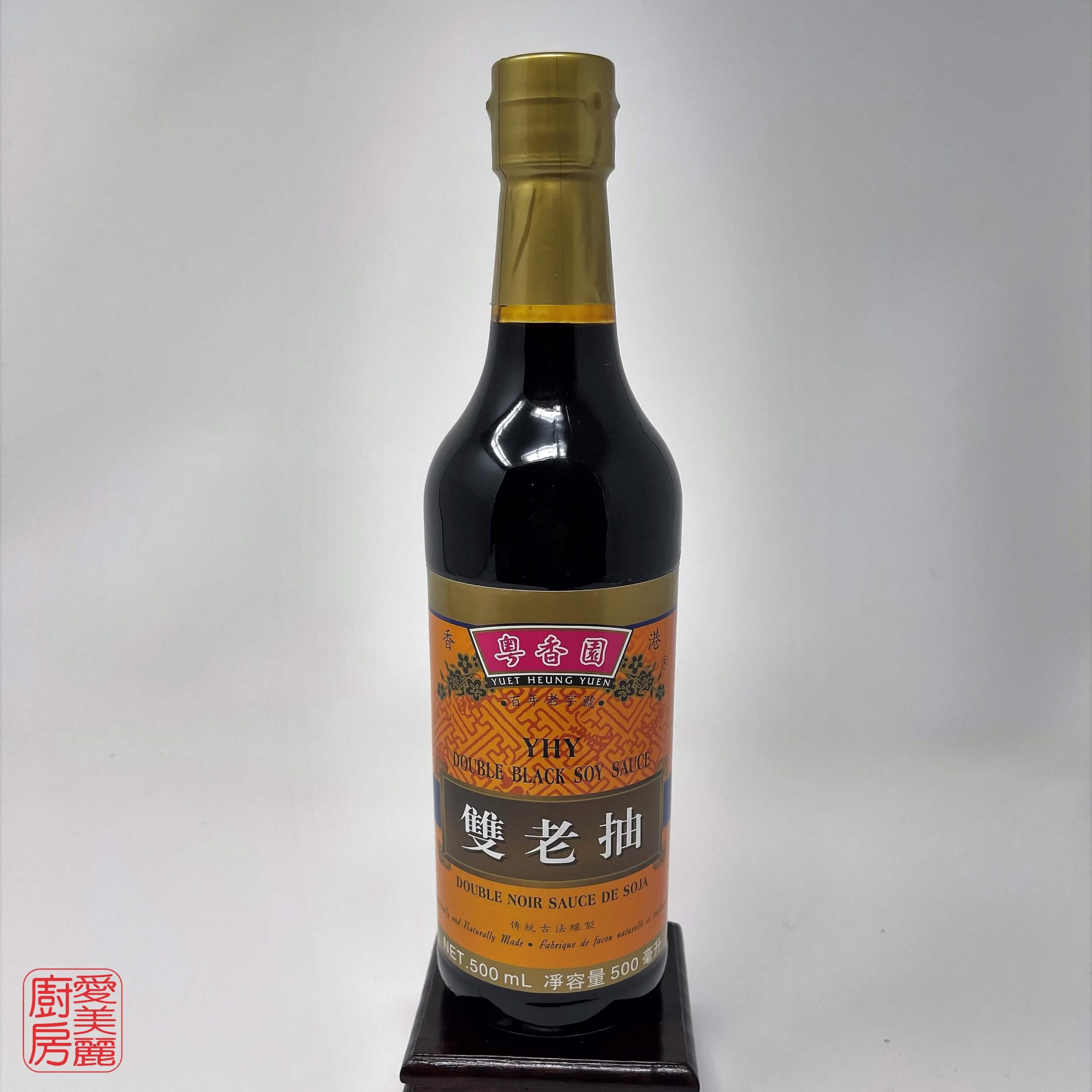
- 1 tsp Light soy sauce
- 2 tsp Shaoxing wine
- 1 tsp Dark soy sauce
- 2 tbsp Oil
- 1 tsp White sesame seeds , toasted
- 600 ml Water
Instructions
- Prepare 3 slices of ginger and 2 stalks of green onions. Keep the white part of green onions in large segments and chop the green parts (for garnish)
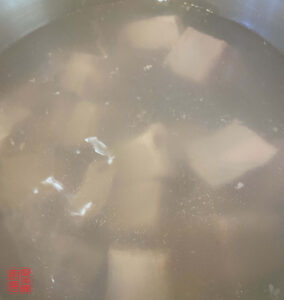
- Put ribs into a pot and fill with water that covers the ribs by approx. 1-2” and bring to a boil

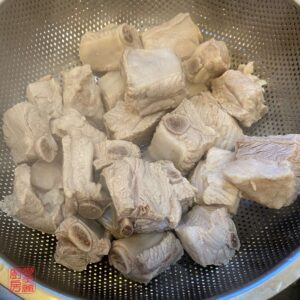
- Once water boils, remove the ribs and place in a colander, give them a rinse with water and let dry. Discard the green onions. Keep the ginger with the ribs.
Remove the ribs by fishing them out instead of pouring the ribs and water into a colander to reduce the risk of getting burned and prevent the impurities in the water from sticking onto the meat 
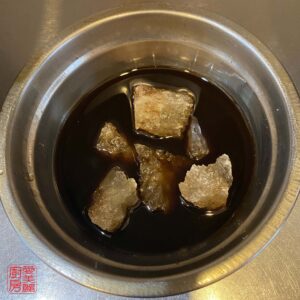
- Prepare the sauce by mixing 2 tbsp mature black vinegar, 50 g rock sugar, ½ tsp salt, 1 tsp light soy sauce and 2 tsp shaoxing wine. Set aside
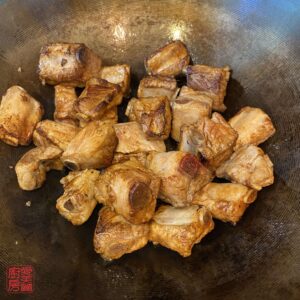
- Heat wok using medium-high heat, add 2 tbsp oil and add ribs
- Stir-fry ribs for 1 minute and add 2 tsp of dark soy sauce. Stir-fry for 30 seconds until the ribs are evenly coated with dark soy sauce
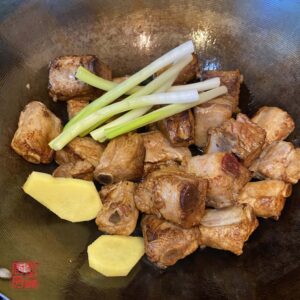
this will give the meat a nice caramelized colour. Traditionally, this is done by caramelizing the rock sugar in oil and then stir-fried with the pork but it’s a bit more work - Add ginger and white part of green onion to wok. Stir-fry with ribs for another 30 seconds
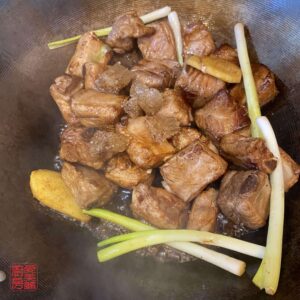
- Add sauce mixture and mix well
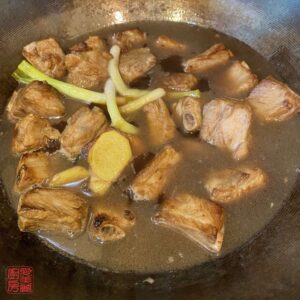
- Add approx. 600 ml of water so that water level almost covers the ribs, turn heat up to high and bring to a boil
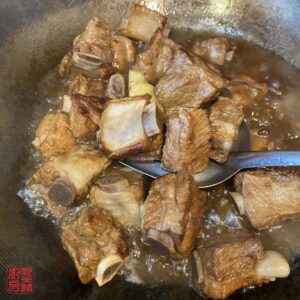
- Reduce heat to medium-low, cover with lid and braise for 30 minutes
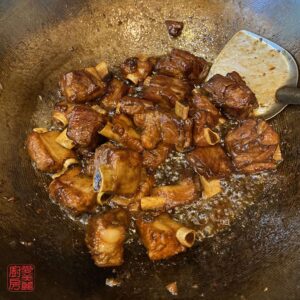
- After 30 minutes, turn heat to high and constantly lift and stir the ribs for approx. 8-10 minutes until the sauce has thickened.
- Taste test and make adjustments. I usually add 1 tbsp of mature black vinegar to enhance the vinegar flavour
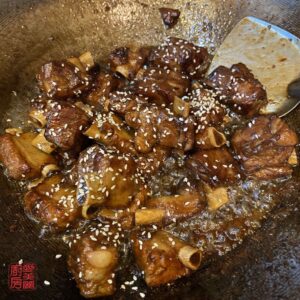
- Sprinkle with 1 tsp toasted white sesame seeds and mix well
- Place ribs onto serving plate. Add some sauce on top, if desired. Sprinkle with chopped green onions.
Note that there may be oil that came out of the ribs during braising. I usually extract the excess oil. Then, I add a little bit of sauce onto the ribs. - Serve


Leave a Reply