

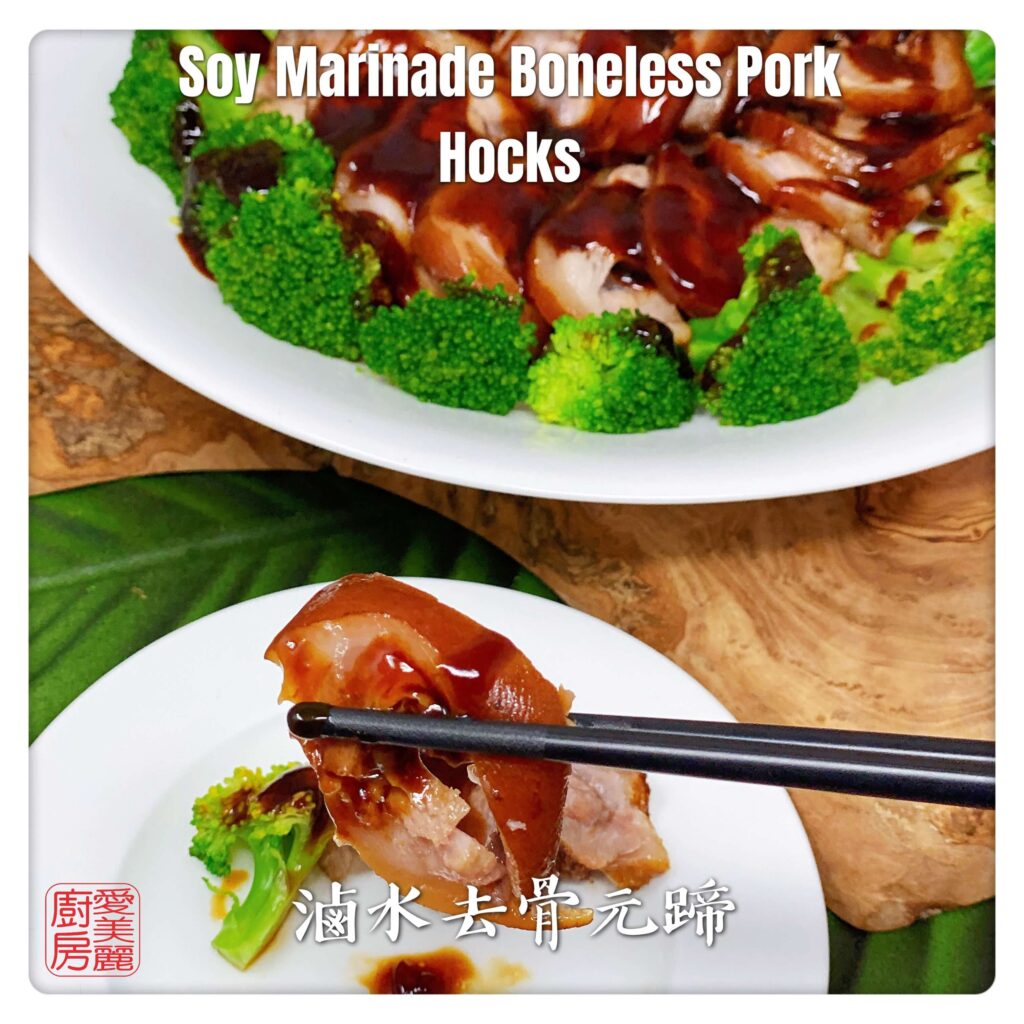
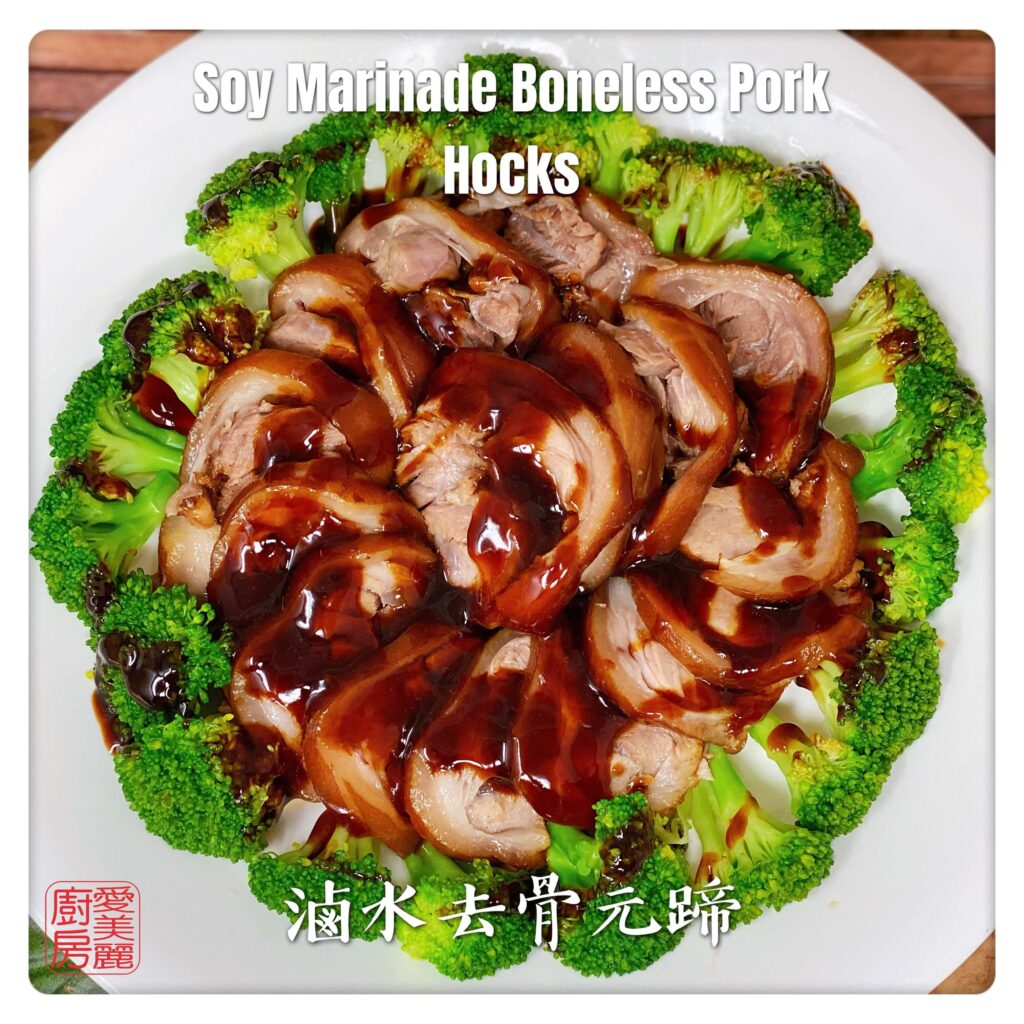

Soy Marinade Boneless Pork Hocks 滷水去骨元蹄 (lǔ shǔi qù gǔ yuán tí) is a Cantonese dish. Making it boneless is obviously more convenient to eat and can become a fancy looking dish when you want to impress. My experience is that your family or guests will eat more if it’s boneless, which could be a good or bad thing I suppose.
In Western butchery, or maybe just in Canada, the pork hock is the section under the knee (or elbow). There is no labeling to distinguish between the fore (front) hock or hind (back) hock. I will use human anatomy to compare for simplicity purposes.
In Chinese butchery, the fore pork hocks are different from the hind pork hocks. They are separated into 2 parts respectively. The lowest part of the fore leg is the 豬手 (zhū shǒu) or “pork hand” (pork trotter or knuckles). I think of this part as the wrist to the fingers. Above the wrist is the 前蹄膀 (qián tí bǎng) or 豬肘子 (zhū zhǒu zi) which is the forearm part. The lowest part of the hind leg is the 豬腳 (zhū jiāo) or “pork feet” (pork trotter or knuckles) which is the ankle to the toes. Above that is the 後蹄膀 (hòu tí bǎng ) which is the shin. Both the forearm and the shin parts can be call 元蹄 (yuán tí). This is the part I used for this dish.
The front hock is meatier and has more tendons than the hind hock. Hence the fore hock is usually more expensive and is more collagen rich. The hind hock has bigger bones and less meat. It’s more suitable for making soup than an actual meat dish. So, if you can find boneless pork hocks, it will most likely be from the fore hock rather than the hind hock. It’s a bit confusing, but understanding this will help you choose the most suitable cut of meat.
It may be surprising, but pork hocks do not have much fat on them. It’s mainly skin, tendon and muscle meat. The layer of skin and the tendons are full of collagen which is great for skin, muscles and joints. This is why it’s traditional for new mothers and elderly people to consume more pork hocks. For me, since I’ve hit middle-age, I think I should start consuming more collagen-rich foods. Hopefully, I can slow-down the aging process. Be prepared for more collagen-rich recipes!
Pork hocks are a very traditional and popular Chinese ingredient cooked in many different ways. Braising it in a soy marinade is a very common and easy way of cooking pork hocks. In braised methods, we try to keep the integrity of the skin but the meat should be very tender and moist. In my Soy Marinade Boneless Pork Hocks 滷水去骨元蹄 recipe, I’ll show you how to do just that. It’s delicious, impressive and easy!
Looking for more easy recipes that will impress your friends and family? Try my Steamed Winter Melon with Pork 瑤柱豬肉片釀冬瓜. Or how about my "Almost" Peking Duck 簡易片皮鴨... it can't get much easier than this!
Soy Marinade Boneless Pork Hocks 滷水去骨元蹄
Ingredients
- 2 Boneless pork hocks , approx. 1100 g (skin on)
- 6 slices Ginger
- 1 stock Green onion , flattened
- 2 tsp Salt
- 6 cloves Garlic , rough chopped or leave whole
- 2 Shallots , rough chopped or leave whole
- 1 tbsp Oil
- 2 Star anise
- 4 Bay leaves
- 1 Small cinnamon stick
- ½ c Light soy sauce
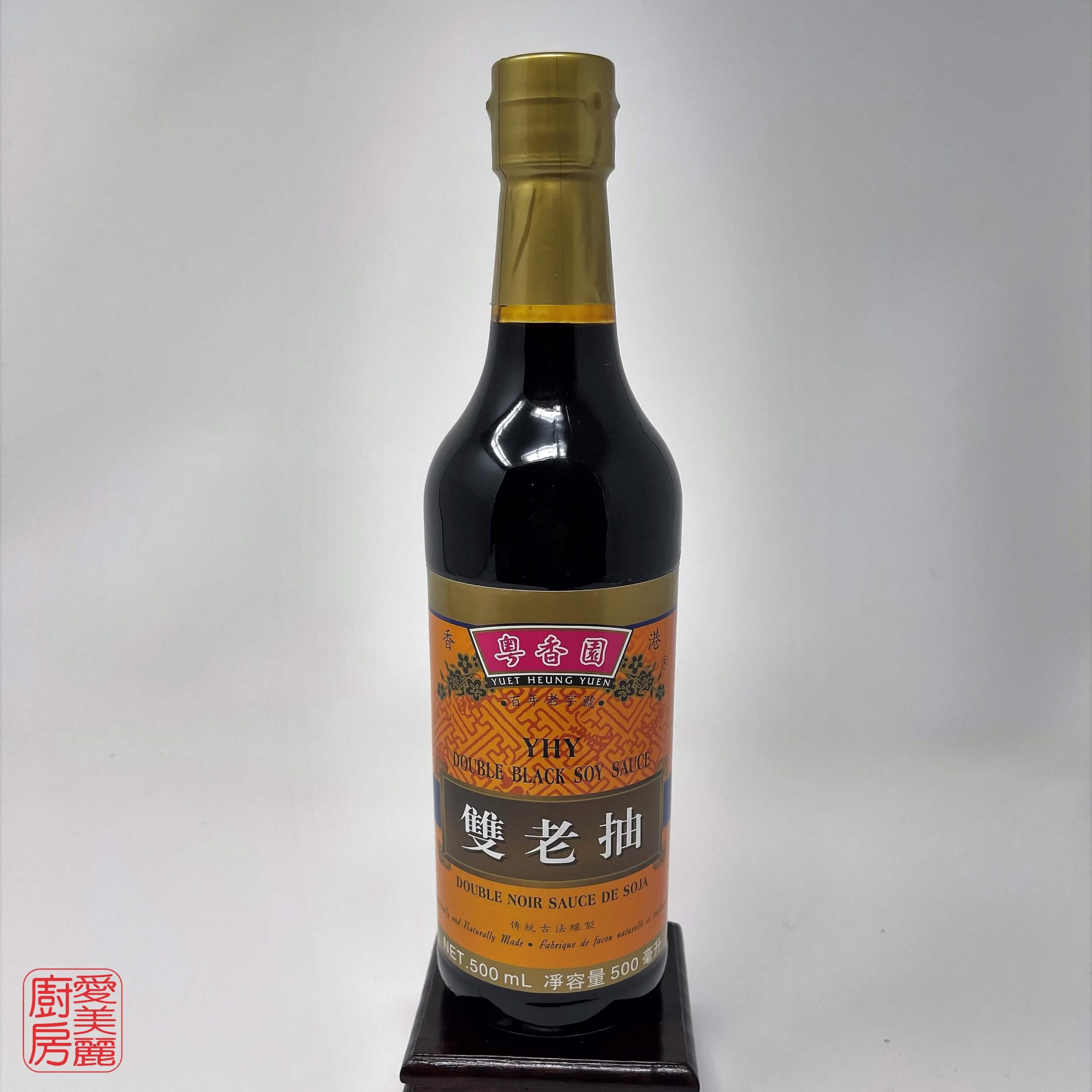
- ½ c Dark soy sauce
- 2 tbsp Shaoxing wine
- ½ tsp White pepper powder
- 40 g Rock sugar
- 1 L Water
- 2 tsp Cornstarch for slurry
- 1 tbsp Water for slurry
Instructions
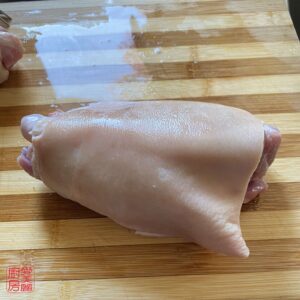
- Remove hairs still on the skin of the ham hocks

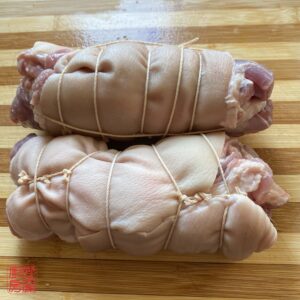
- Roll the ham hocks with skin side out and tie it together with butcher string
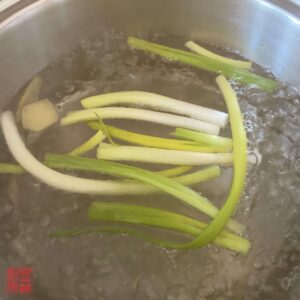
The tighter you can tie it, the nicer your cross-sections will look. The ends will be a bit messy, but they make a good snack while you assemble your dish at the end! - Bring some water to a boil.
The water should be abundant enough so that when you put your ham hocks in, it won’t bring the temperature down by too much. - Add 2 tsp salt, 2 slices of ginger and the green onions to the water
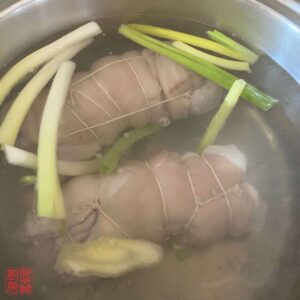
- When the water boils, put the ham hocks in. Let it parboil for 15 minutes. During the 15 minutes, when the water starts to boil again, turn the heat down to medium
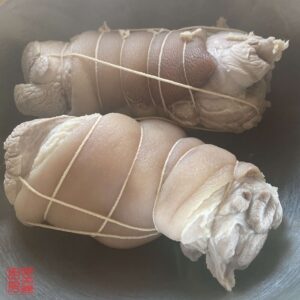
- Remove the ham hocks and submerse in some ice water or cold water for 2 minutes. Remove from water and let it rest
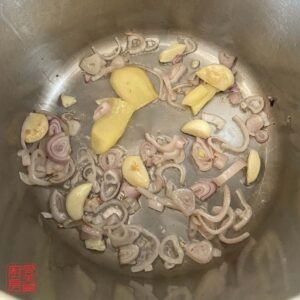
- Prepare braising liquid by adding 1 tbsp oil to a pot. Add 4 slices ginger, 6 cloves garlic, 2 shallots and fry until aromatic
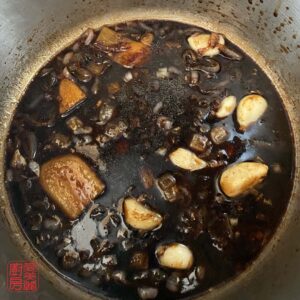
- Add ½ c light soy sauce, ½ c dark soy sauce, 2 tbsp Shaoxing wine, ½ tsp white pepper powder, 40 g rock sugar, 2 star anise, 4 bay leaves and a small cinnamon stick
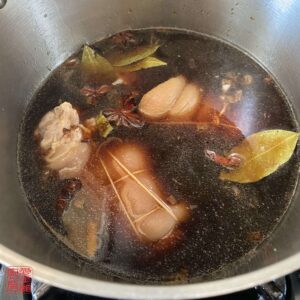
- Add ham hocks and approx. 1 L of water (the water should cover the ham hocks)
- Bring the mixture to a boil and then reduce the temperature to low. Braise for 2 hours. Stir occasionally
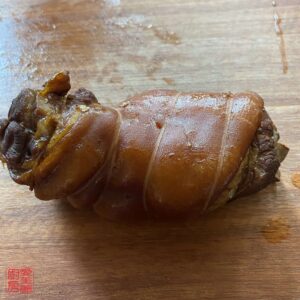
- Remove the ham hocks and let cool
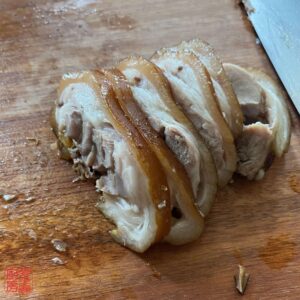
- Remove butcher’s string and slice to your desired thickness
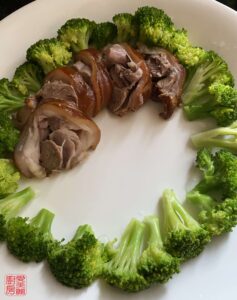
- Arrange on serving dish

- Take approx. 1 cup of the braising liquid and put into a pot. Bring to a boil. Lower heat to low
- Taste the braising liquid and make adjustments. Add salt and/or sugar if necessary
- Combine 2 tsp cornstarch and 1 tbsp water. Mix well and slowly add to the pot. Stir until thickened
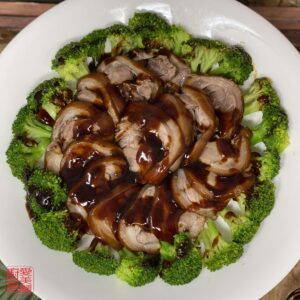
- Pour the sauce onto the sliced ham hocks
- Serve




Leave a Reply