

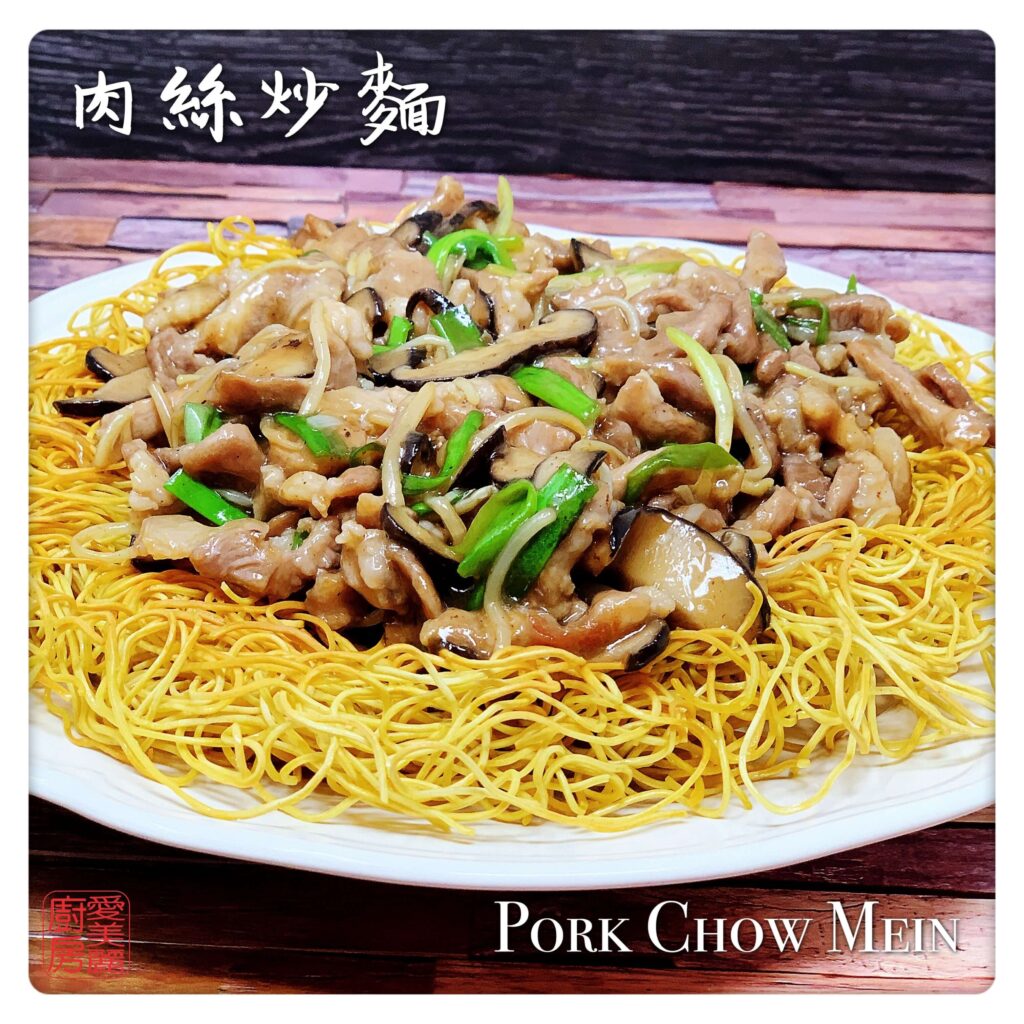
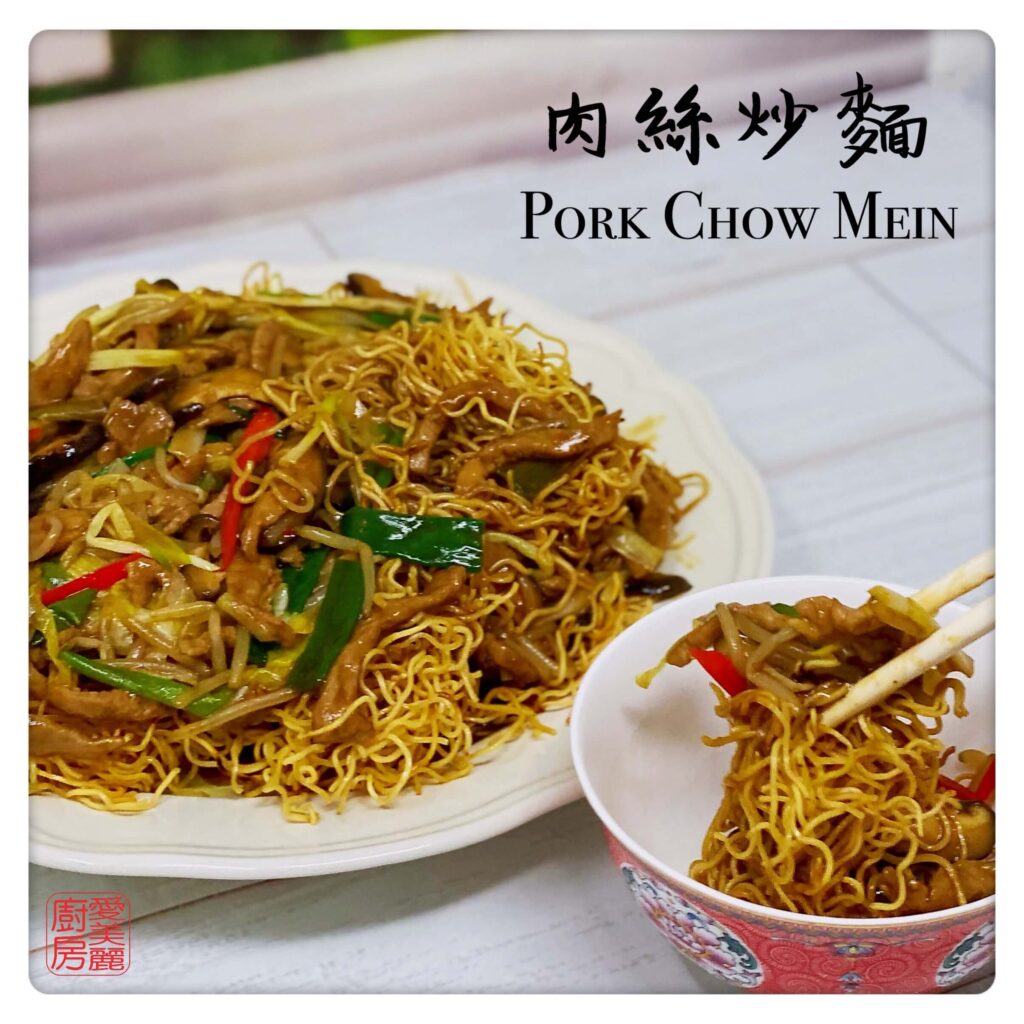

Pork Chow Mein 肉絲炒麵 (Cantonese: yoke see chow meen) is a popular chow mein dish in Cantonese cuisine. There is some confusion in chow mein dishes in general for many westerners. I’m going to try to unravel some of its history so that you can understand the modern evolution of the chow mein.
First of all, the name “chow mein” is a name from the Taishan dialect. People from Taishan, Guangdong were amongst the first to immigrate to the western countries. They're the first to open American-Chinese restaurant and “chow mein” was a big hit. The first chow mein dishes were not crispy though. They were made with egg noodles fried with meat and vegetables which was the traditional Cantonese way of making it.
At which point the chow mein became crispy is debatable. A very likely story is that the idea came from Shanghai merchants travelling to Hong Kong in the early 1950’s. They went to a high-end Cantonese restaurant and asked the chef to first fry the noodles on both sides until crispy and then pour a saucy concoction of meat and vegetables on top. This was obviously much tastier than its predecessor! There is a Shanghai counterpart which is the crispy egg noodles with sugar and vinegar. They call this “yellow on two sides 兩面黃” (liǎng miàn huáng).
This new style became an instant hit and then the Cantonese restaurants in Guangzhou started making it too. Thereafter, if you want your chow mein crispy, you have to ask for “yellow on two sides 兩面黃.”
The crispy chow mein became so popular, it became the default. Most restaurants in China don’t make it the original way anymore. But if you like it the old way, you can order another type of Cantonese noodle, called the “yee meen 伊麵”. It’s a fried egg noodle that is spongier, and still made the traditional way. It goes well with lobster dishes.
In my Pork Chow Mein 肉絲炒麵 recipe, I’ll show you how to make “yellow on two sides 兩面黃” noodles and the sauce that you pour over it. It’s pretty easy to make and sure to be a hit with your family!
I was able to achieve "wok hei" (hot wok aroma) using my perfectly seasoned wok. If you're interested, I got my wok from Amazon and it's now my most used piece of cooking equipment:
Joyce Chen , Classic Series Carbon Steel Wok Set, 4-Piece, 14-Inch, Charcoal
(As an Amazon Associate I earn from qualifying purchases)
For more Cantonese classics, try my Cantonese Spring Rolls 廣東春捲 or Hong Kong Curry Chicken 港式咖喱雞 recipes.
Pork Chow Mein 肉絲炒麵
Ingredients
- 200 g Pork , shredded
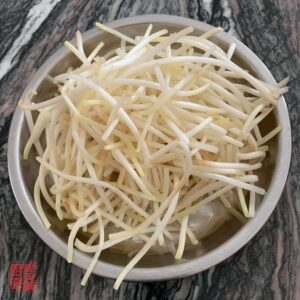
- 100 g Bean sprouts , with tops and bottom removed
- 300 g Egg noodles
- 4 Shiitake mushrooms , sliced
- 50 g Chinese chives , cut to 5 cm pieces
- 2 stalks Green onions , cut to 5 cm pieces
- 1 Chili , finely sliced
- 1 tsp Sugar
- 2 tbsp Light soy sauce
- 1 tsp Dark soy sauce
- 1 tbsp Oyster sauce
- 2 tbsp Shaoxing wine
- 250 ml Broth or water
- 6 tbsp Oil
- 1 tbsp Cornstarch for slurry
- 2 tbsp Water for slurry
Ingredients for pork marinade:
- 1 tsp Light soy sauce
- ½ tsp Sugar
- 1 tsp Corn starch
Ingredients for shitake mushroom marinade:
- ½ tsp Light soy sauce
- ¼ tsp Sugar
- ½ tsp Corn starch
Instructions
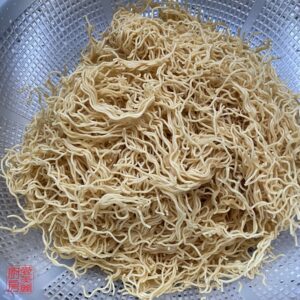
- Process noodles as per packaging and let it dry in colander. It must be dry to the touch when you start to fry it.
If you’re in a hurry, consider using a hair dryer and paper towels to dry the noodles 
- Slice pork into shreds, marinate with 1 tsp light soy sauce, 1 tsp sugar and 1 tsp cornstarch. Mix well and set aside
- Remove the tops and bottoms of the beansprouts and set aside
- Slice shitake mushrooms into shreds, marinate with ½ tsp light soy sauce, ¼ tsp sugar and ½ tsp cornstarch. Mix well and set aside
- Cut green onions and Chinese chives into 5 cm pieces. Separate the green parts and the white parts of the green onions and set aside
- Combine 2 tbsp light soy, 1 tsp dark soy, 1 tbsp oyster sauce and 1 tsp sugar and set aside
- When noodles are dry, heat wok to high heat and add 3 tbsp of oil
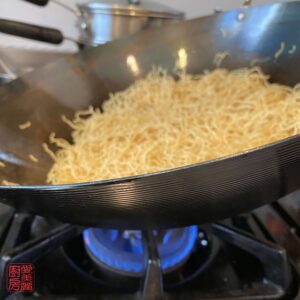
You can also use a non-stick pan using medium-high heat - Add noodles to wok. Move them around for a 30 seconds to evaporate any water still in the noodles then spread them out in an even layer in the wok.
- Turn the heat down to medium-high and let the noodles sit for 1-2 minutes or until the underside turns golden. Tilt the wok around to get even cooking
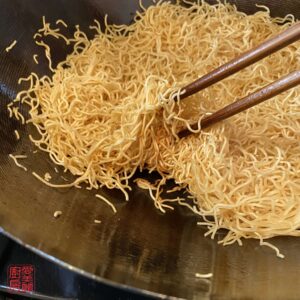
Depending on the oil absorption of the noodles, you may need to add more oil if your noodles are starting to burn - Once the underside is golden, flip the noodles over
- Add 1 tbsp oil around the wok and let it slide down to the bottom
- Let the noodles fry for another 2 minutes
- If the noodles are not crispy yet, turn the heat up to high and let it cook for another minute on each side.
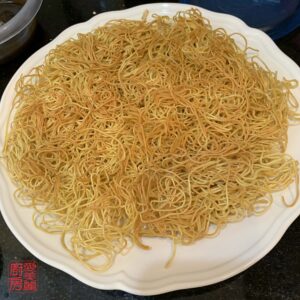
For some types of noodles, if you cook it for too long, it may become hard and chewy. If that happens, you’ll need to add some water to make it soft again - Once the noodles are crispy, put them onto a serving plate and set aside
- Clean off any residual noodles in the wok, turn heat to high and add 2 tbsp oil
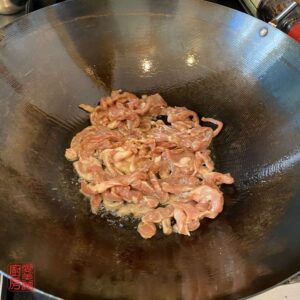
- Add the pork to the wok, spread into a single layer and let it cook for 30 seconds
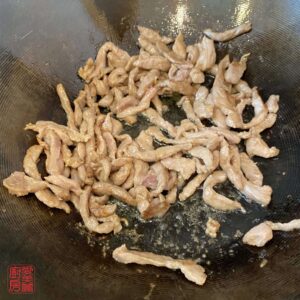
- Flip the pork over and cook for another 30 seconds
- Stir-fry the pork for another 30 seconds and remove it from the wok
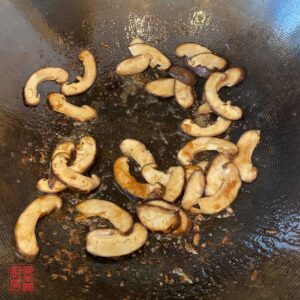
- Add the shitake mushrooms to the wok, stir-fry for 30 seconds and move it to the side of the wok
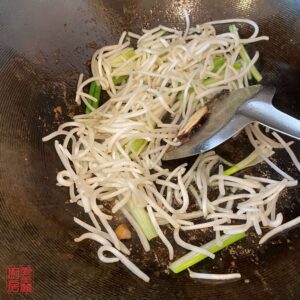
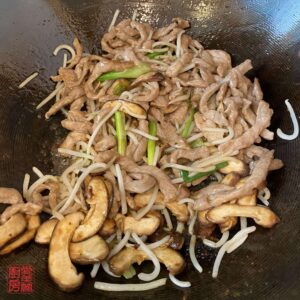
- Add beansprouts and chilis, stir-fry with shitake mushrooms for 30 seconds
- Add pork back into the wok
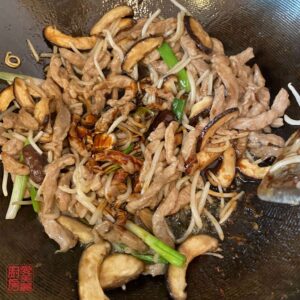
- Add combined sauce to the wok and stir-fry for 10 seconds, add 2 tbsp Shaoxing wine and mix well
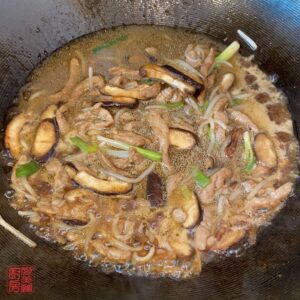
- Add 1 cup of water or broth and turn heat down to medium-high, cover with lid and let the mixture come to a boil
- Combine 1 tbsp cornstarch with 2 tbsp water, mix well and add to the wok when the contents begin to boil
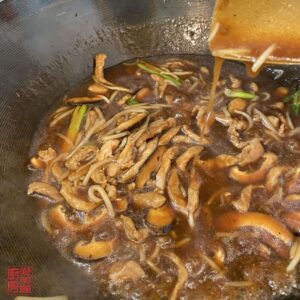
- Mix until the sauce thickens
Make more slurry if the sauce is not thick enough - Add Chinese chives and the rest of the green onions to the wok, mix well and turn off heat
- Pour the contents onto the noodles
- Serve




The chow mein tasted fantastic! I will definitely be making it again
Hi Jen, thanks for trying out my recipe and letting me know it was fantastic! lol Happy cooking!