
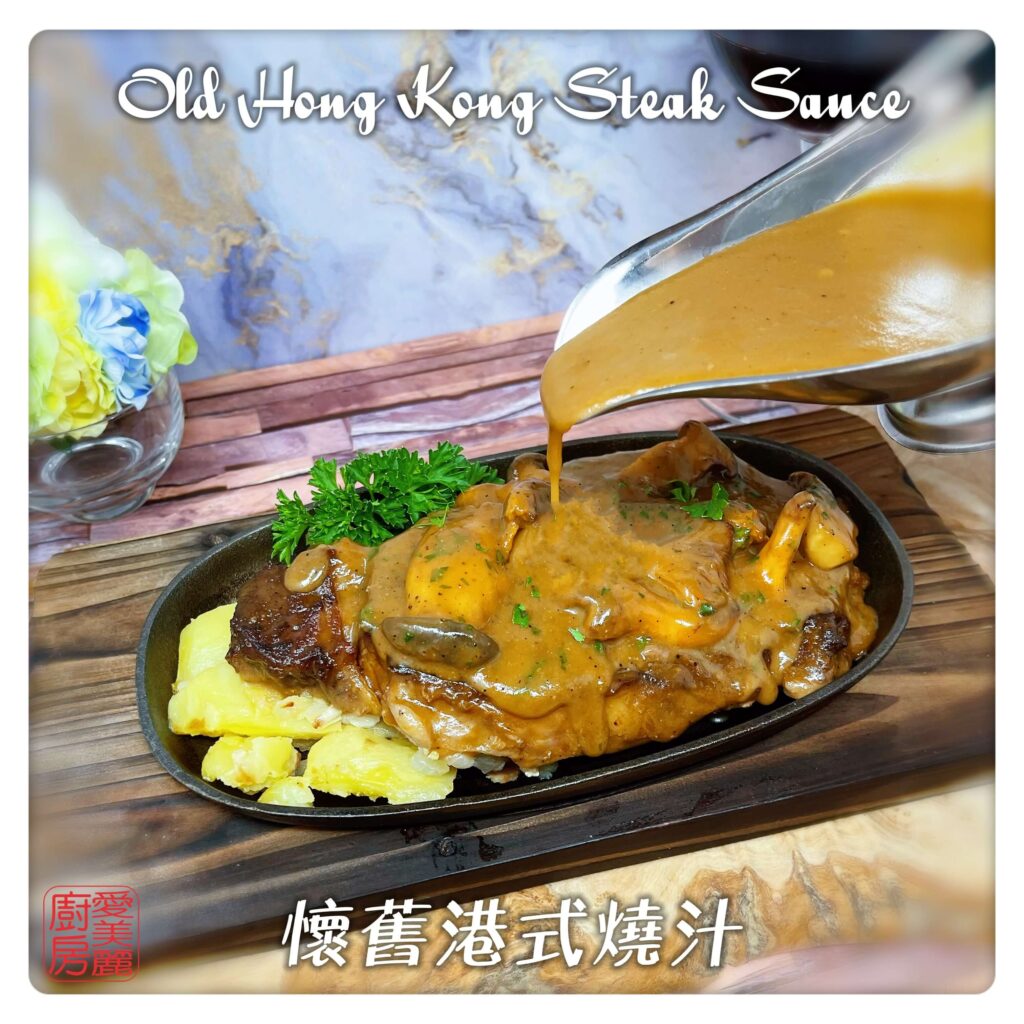


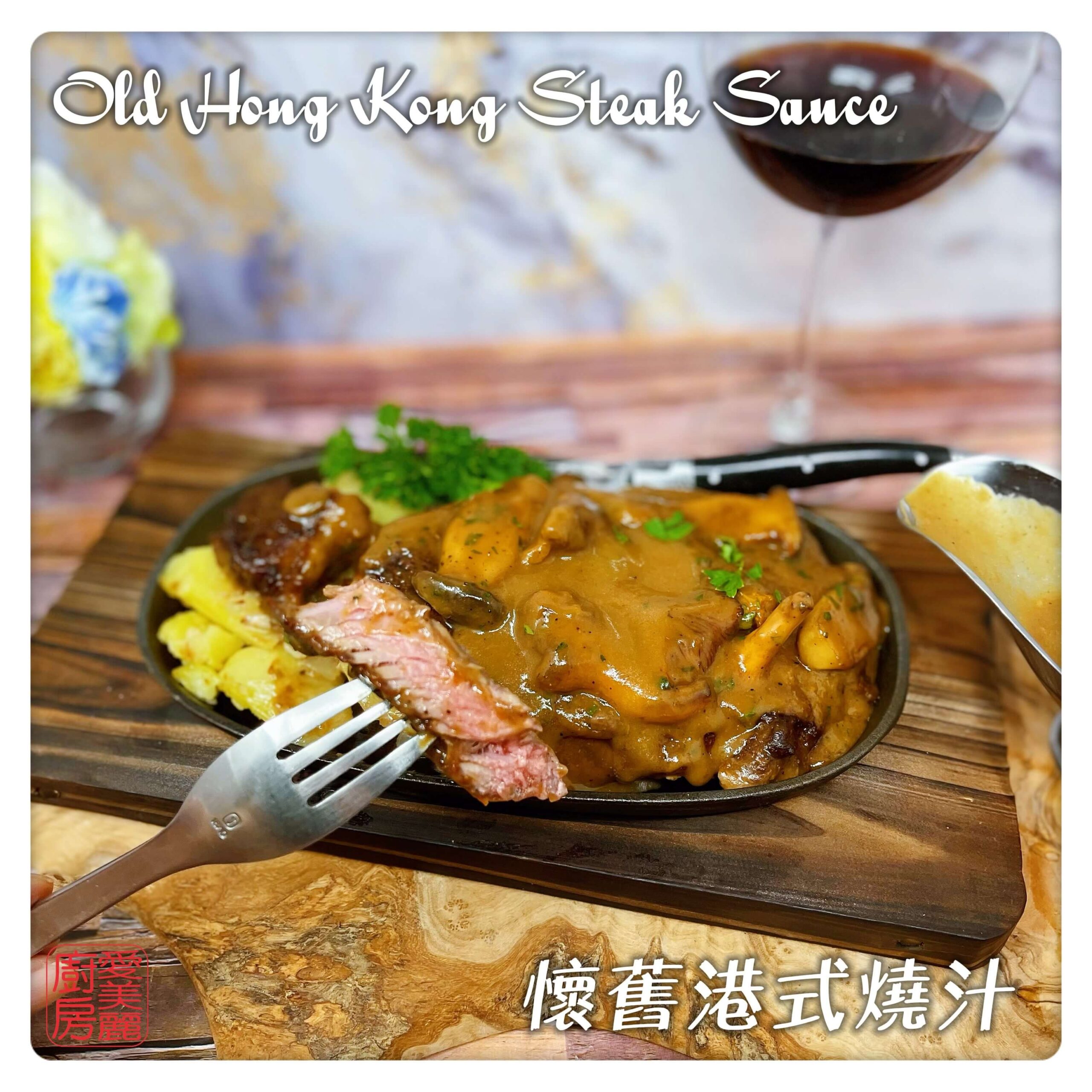
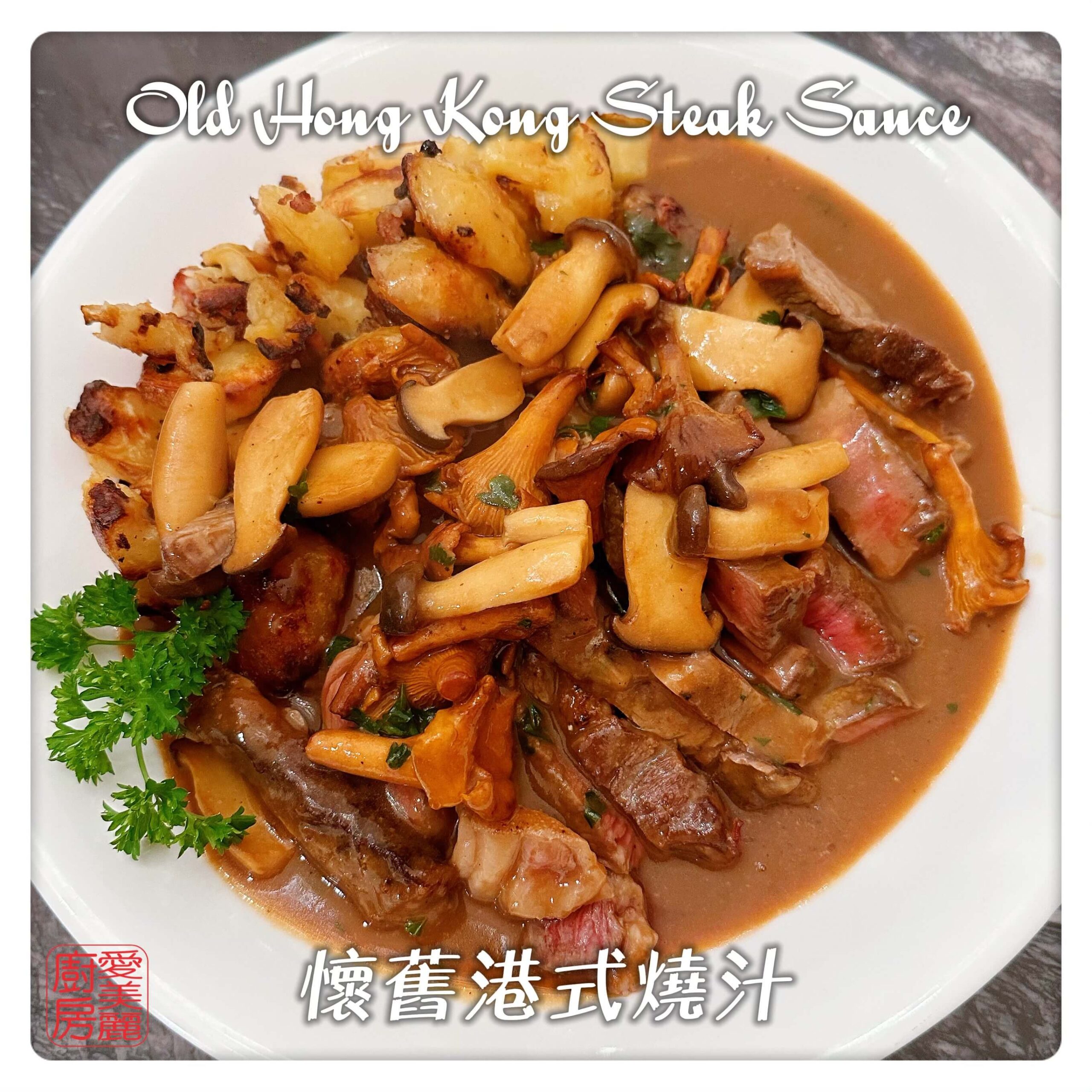
Old Hong Kong Steak Sauce 懷舊港式燒汁 (Cantonese: wai gow gong sik siu zup) is NOT a sauce you’d find at your nearby Hong Kong Café 港式茶餐廳 (gong sik cha chaan teng). The words, 燒汁 (siu zup) literally translates to “roasted sauce”. Although on Hong Kong café menus, 燒汁 is “gravy”, it’s really not the same. REAL 燒汁 is rarely found, not even in Hong Kong!
To make real 燒汁, you need to use the traditional French method of roasting all the ingredients before making a brown stock, hence the name. Roasting helps to heighten the aroma and give the sauce a complexity that no artificial seasoning mix can replace. The brown stock is then condensed to make a sauce, then finished with heavy cream and Cognac. They replace crème fraiche with heavy cream because Chinese people don’t really like tartness in sauces. So, red wine was removed from the recipe as well. This very luxurious sauce also uses stock to make the stock! It’s pretty much the equivalent to the French Espagnole sauce (yes, it’s name is “Spanish sauce” and you wouldn’t find it in Spain) with a Chinese flair.
I think we all generally think of Hong Kong Cafés as serving economical fusion food. So, expectations are usually not too high. But it wasn’t always like this. Most people have forgotten the old Hong Kong steak houses 港式扒房 (gong sik pa fong). They started opening up in Hong Kong and Macau in the late 1930’s. These were expensive restaurants that catered to the wealthy Chinese with Chinese palettes and westerners as well. They offered quality western foods that were not cheap. And surprisingly, Hong Kong was not the birthplace of this Old Hong Kong Steak Sauce 懷舊港式燒汁! It was Shanghai!
The history of steak houses in China goes back to around the 1800’s in Shanghai. Almost every western country and Japan occupied parts of China. Shanghai, the most advanced and bustling city of China was not spared. The westerners brought their chefs to cook for their own people in their own restaurants and employed Chinese kitchen staff. These Chinese workers learned to cook western foods and eventually opened their own restaurants in Shanghai. When the Japanese invaded, many of these restaurant owners moved to Hong Kong where it was relatively safer and still had a good flow of westerners due to the opium trade and subsequent British occupation. So they reopened their restaurants in Hong Kong. Hence, most western fusions foods in Hong Kong were first brought there by these Shanghainese people.
The majority of these steak houses have now closed. Sunning Restaurant 新寧餐廳 in Causeway Bay, Hong Kong is one of the last ones still around. It opened in 1948 in Hong Kong but has since undergone change in ownership. I have read mixed reviews recently, but it’s good to see that they are still in business. Another fusion restaurant (not a steak house) that has had a long history is Tai Ping Koon Restaurant 太平館 which opened in Guangzhou in 1860 and then moved to Hong Kong in 1937. Tai Ping Koon still has 4 restaurants in Hong Kong.
Unfortunately, due to economic pressures and changes in consumer demands, it's unrealistic to not cut corners. Traditional recipes are more labour-intensive than powdered artificial flavours that are cheap and quick. I’m not sure how many of these old steak houses and cafés still follow old recipes, but I’m sure there are still some out there in Hong Kong and Macau. I’ll be looking for them the next time I go (soon, I hope).
In my Old Hong Kong Steak Sauce 懷舊港式燒汁 recipe, I’ll show you the traditional way to make this rich, flavourful sauce. It’s definitely not a quick and easy sauce, but it is really delicious! You can taste the difference that time and effort can make. I’ll also reveal the ingredient that gives this sauce the “je ne sais quoi” (the X factor) that makes the taste linger in your mouth. Give this sauce a try the next time you make steak. You’ll get an idea of the level of sophistication that Chinese chefs had when making western cuisine a hundred years ago.
Check out my other sauce recipes:
For more Hong Kong style dishes, check out my Hong Kong cafe recipe section.
Old Hong Kong Steak Sauce 懷舊港式燒汁
Ingredients
Ingredients for concentrated brown stock:
- 900 g Beef bones with meat (beef ribs work well)
- 1 Medium onion
- 1 Large carrot (approx. 200g)
- 3 stalks Celery
- 1 bulb Garlic
- 2 Bay leaves
- 1 L Beef or chicken stock (or water)
- ½ tsp Ground black pepper
- 1 tsp Salt
- 1 tbsp Oil
Ingredients for sauce:
- 2 tbsp All-purpose flour
- 30 g Butter (approx. 2 tbsp)
- 2 tbsp Madeira wine or Cognac
- 2 tbsp Heavy cream
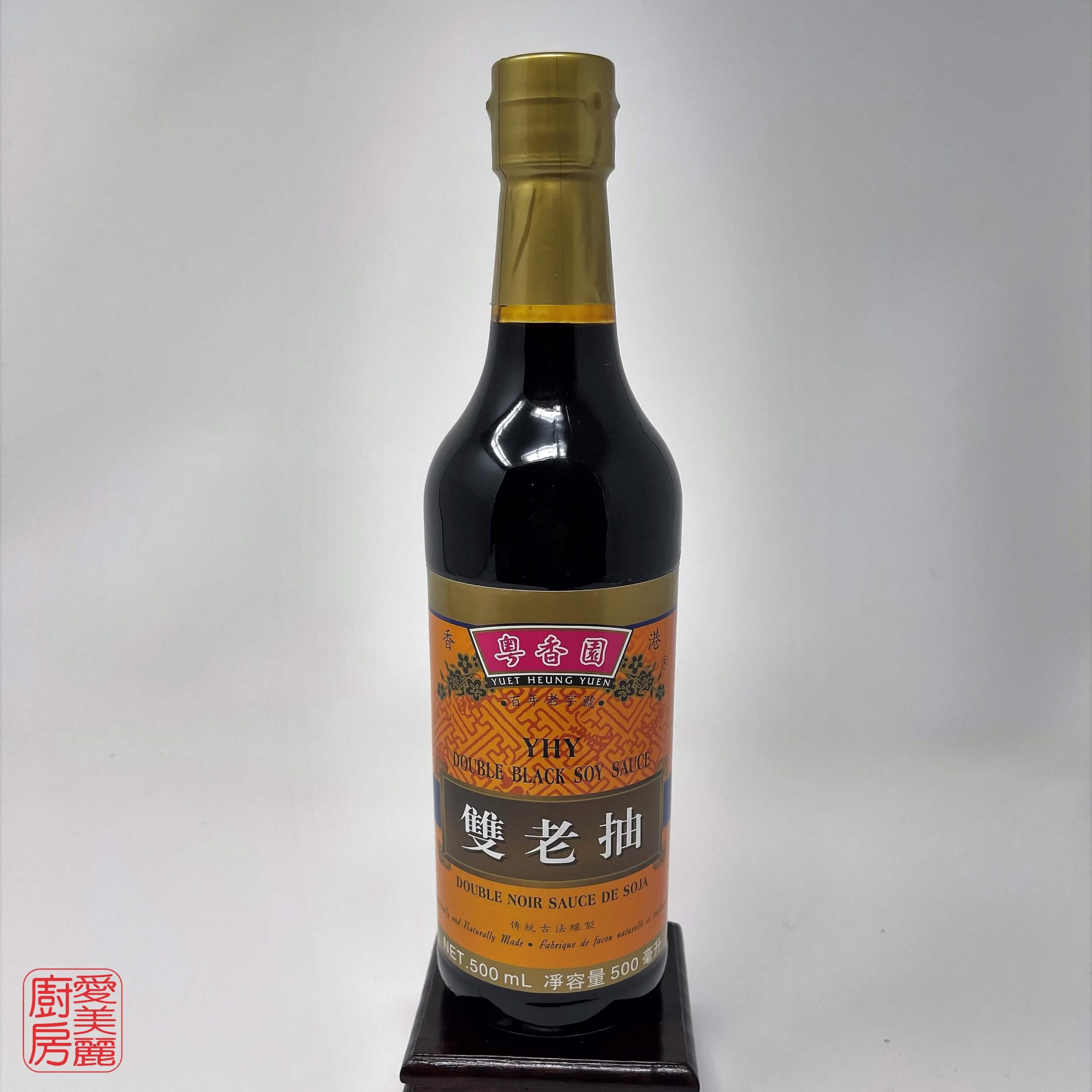
- 1 tsp Light soy sauce
- ½ tsp Dark soy sauce
- 500 ml Concentrated brown stock
- 150 g Chanterelle mushrooms (optional)
- 150 g Mini abalone mushrooms (optional)
- 2 sprigs Italian parsley for garnish (optional)
Instructions
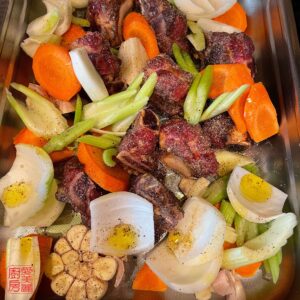
- Rinse off any bone fragments and impurities from each piece of beef bone.
Beef ribs work well for this recipe. If your beef bone doesn’t have much meat on it, add some beef shank to give more beef flavour to the stock - Dry off beef bones and/or beef pieces and place into a roasting pan
- Cut carrot, celery and onions into 1”-2” pieces and place into roasting pan
- Slice a bulb of garlic in half horizontally and place into roasting pan
- Add ½ tsp ground black pepper, 1 tsp salt and 1 tbsp oil into the roasting pan and mix well

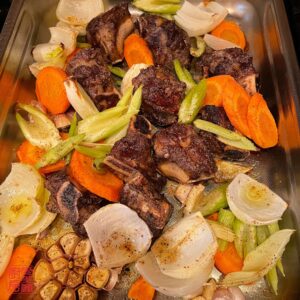
- Put the roasting pan in the oven on broil and roast for 15-30 minutes, turning them over when they brown on one side
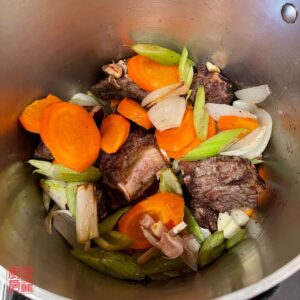
each side may take 8-15 minutes to brown depending on your oven - Once the ingredients have all browned nicely, pour the entire contents into a stock pot
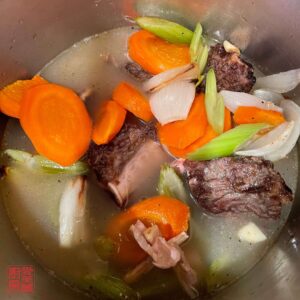
- Add 1 litre of beef or chicken stock and 2 bay leaves
I prefer chicken stock since it has a more neutral flavour. Sometimes beef stock can be on the sweet side. You can also use water. However, using stock to make stock adds to the flavour complexity of the sauce - Bring the stock to a boil and turn the heat down to medium to create a full simmering boil (in between simmer and boil). Let cook for 2 hours Give it a mix every 30 minutes to make sure it’s not evaporating too quickly. You want to evaporate ½ of it after 2 hours.
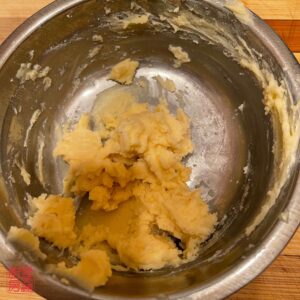
You may want to cook it longer, perhaps 6 hours and using more liquid to really get all the flavour out of the ingredients. But I usually just use the ingredients a second time with another 1L of stock or water to make a weaker stock that I use for soup noodles - In a bowl, make a roux paste by combining 2 tbsp all-purpose flour and 30g butter, mix until it’s well mixed and set aside
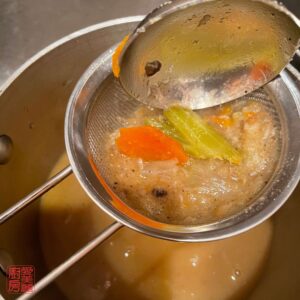
- Use a sieve to extract 500ml of the concentrated brown stock you just made and put it in a pot
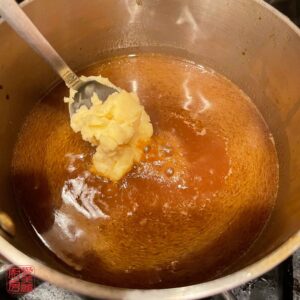
- Bring the concentrated brown stock to a simmer and add the roux paste
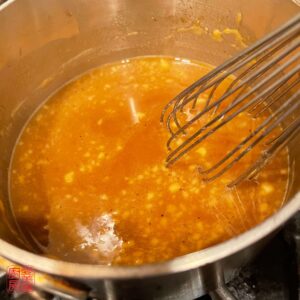
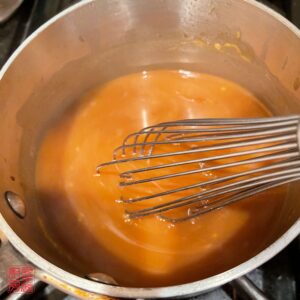
- Use a whisk to mix well
- Whisk until the stock becomes thickened and smooth
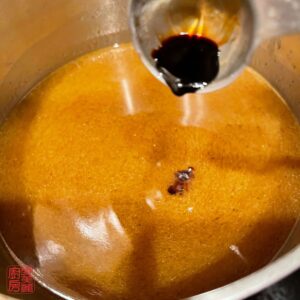
If the sauce is not thick enough, make more roux paste and add into the sauce. - Add 2 tbsp Madeira wine, 1 tsp light soy sauce and ½ tsp dark soy sauce. Cook until the sauce simmers and taste test.
Add dark soy if you want the sauce to be darker. Add light soy sauce if you want it saltier. The Madeira wine will give the “je ne sais quoi” factor to your sauce. Your family and guests will not likely be able to guess what the flavour is. Cognac is the traditional ingredient that has a stronger taste and greater price tag. - Add 2 tbsp heavy cream and mix well. Turn off heat
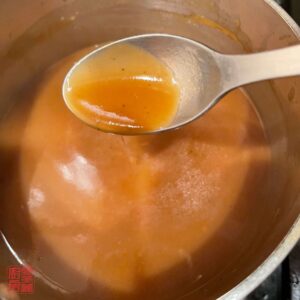
- Now your stock has become a sauce and is ready to use
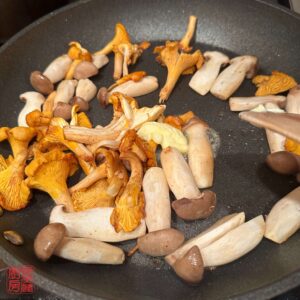
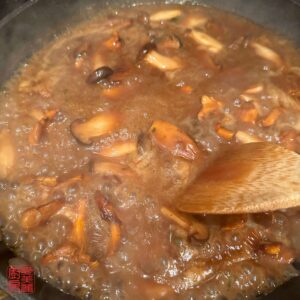
- If you’re adding mushrooms to your sauce, sauté some mushrooms in a pan.
- When the mushrooms soften, add the sauce and mix well
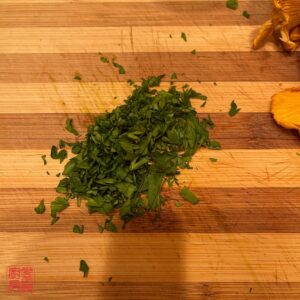
- Chop some parsley for garnishing
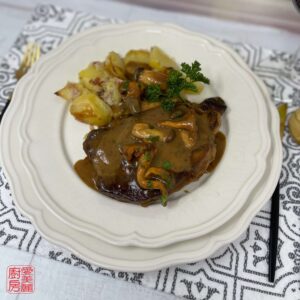
- Pour on top of steak, potatoes and or pasta. Sprinkle chopped parsley
- Serve

Leave a Reply