
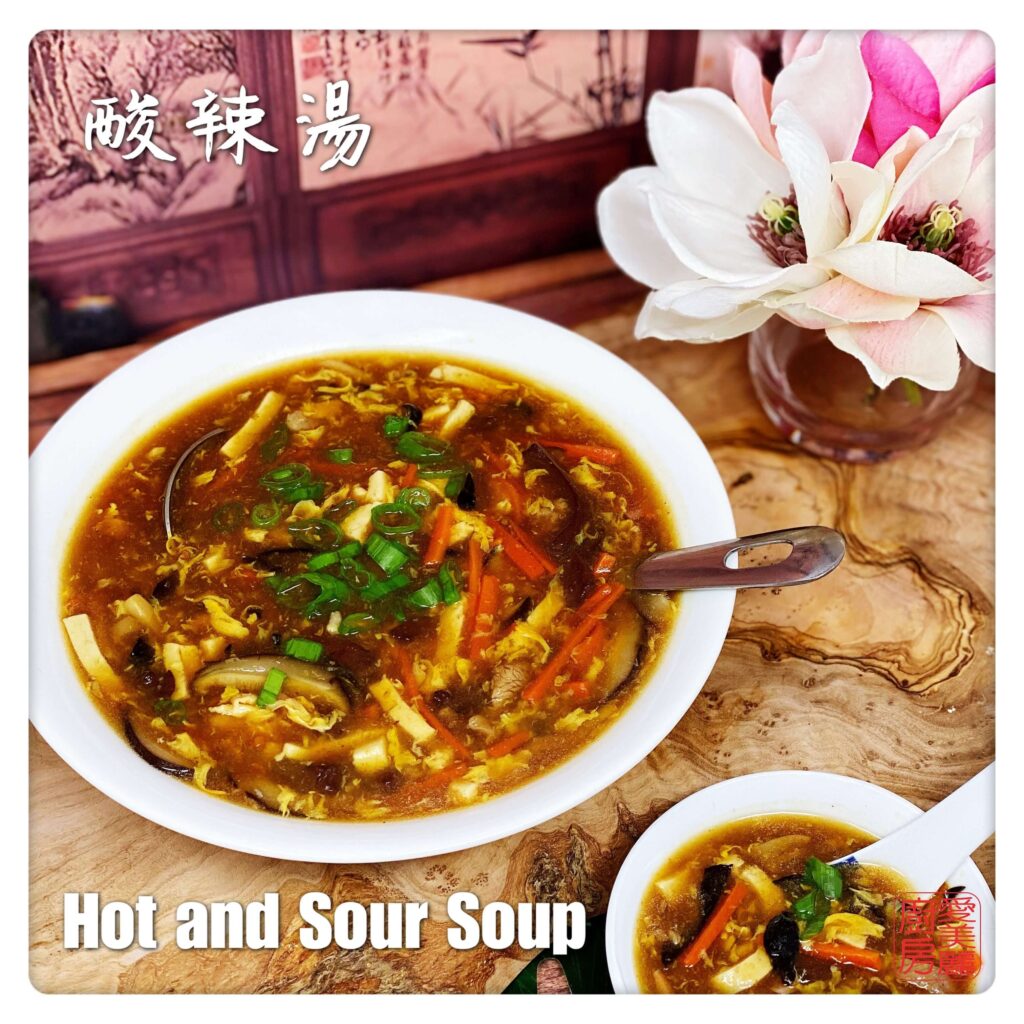
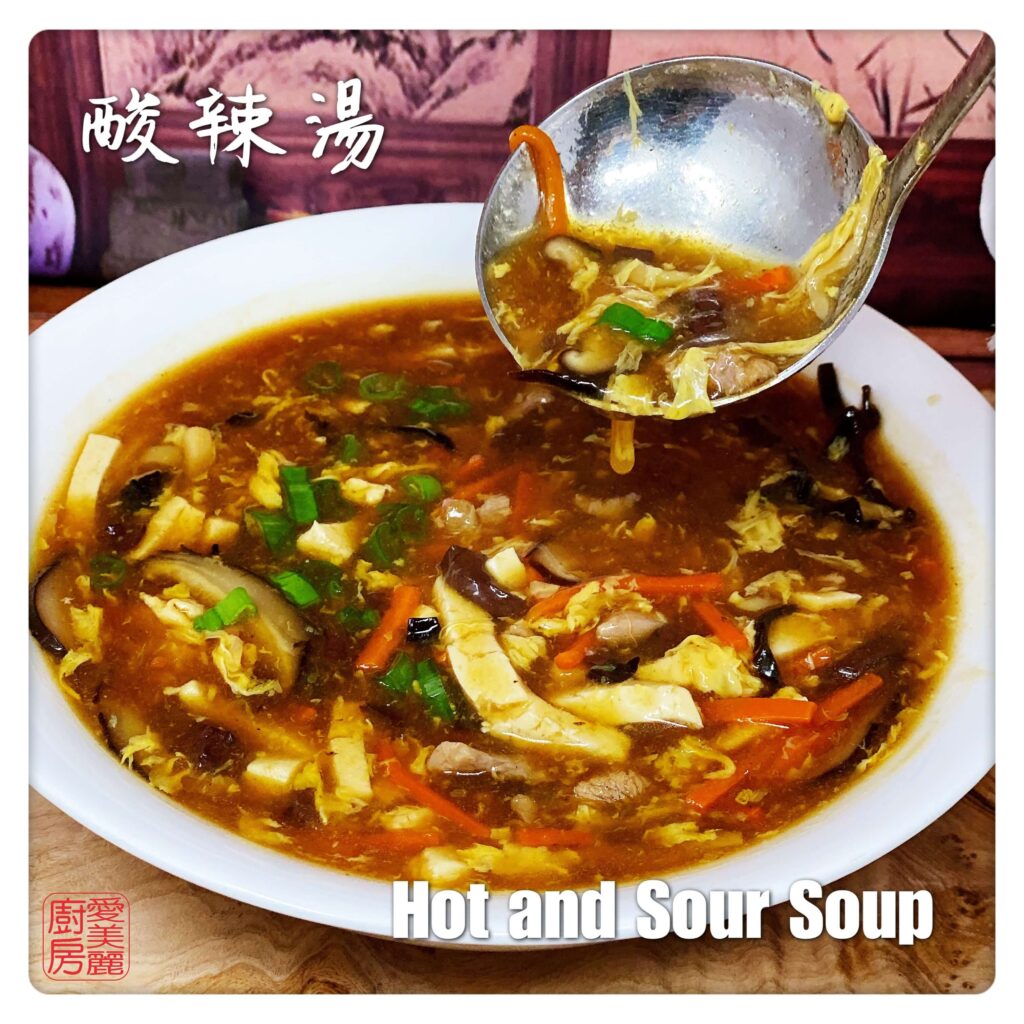
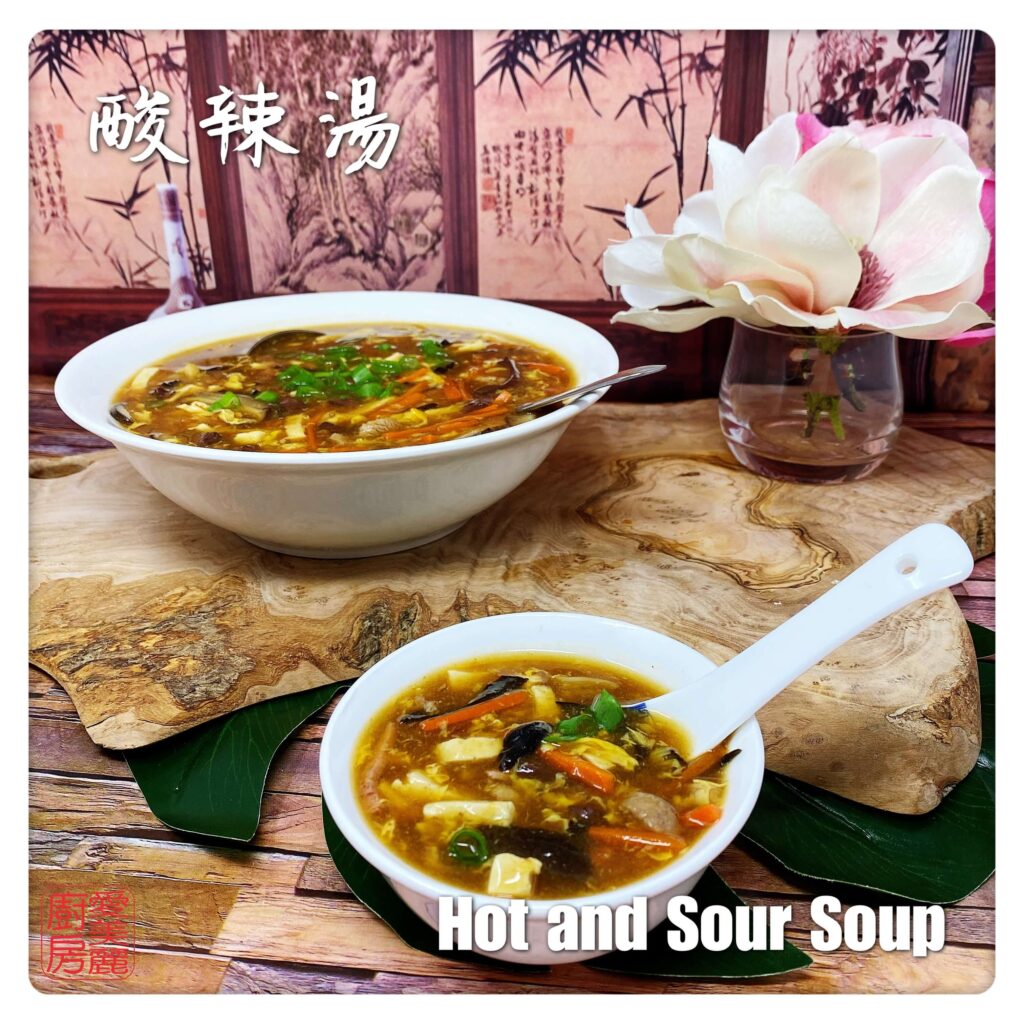
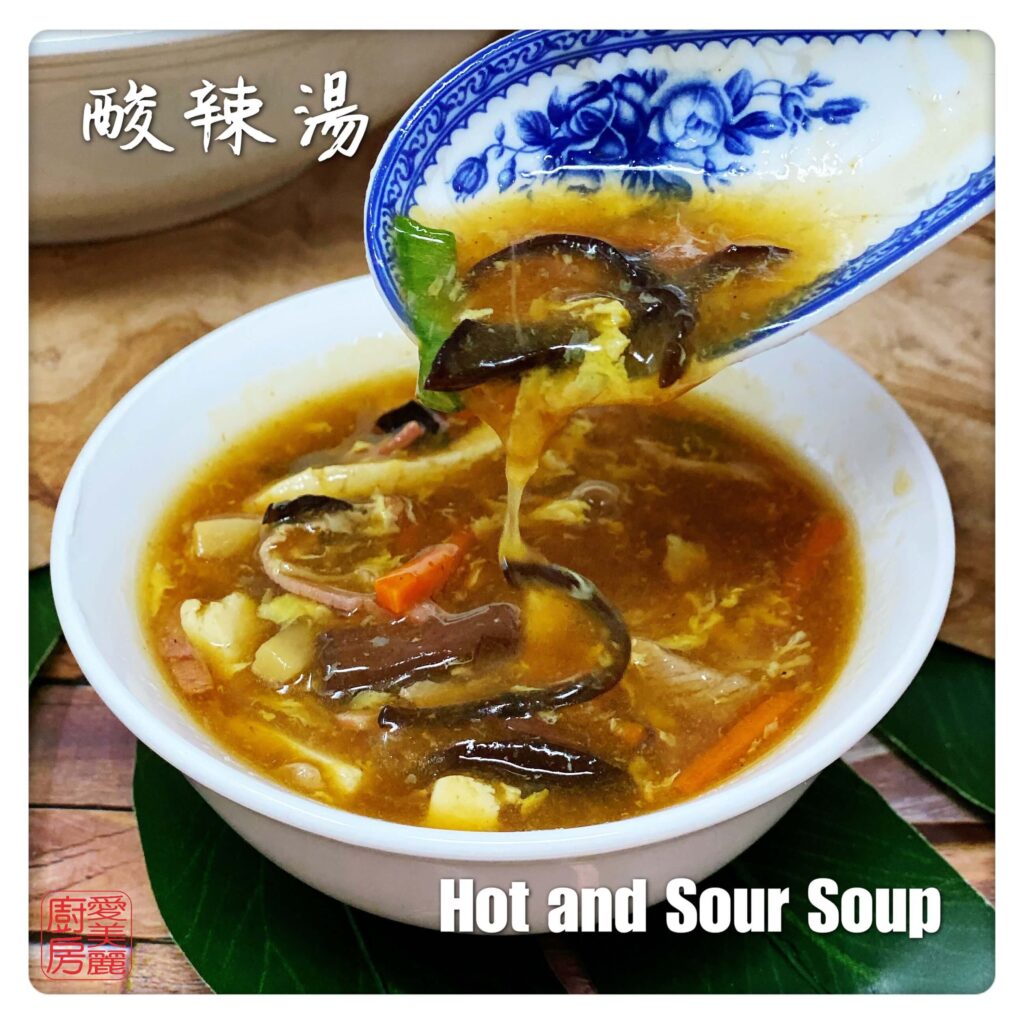
Hot and Sour Soup 酸辣湯 is a dish that needs no introduction. This may possibly be one of the first Chinese soups that was introduced to westerners, besides wonton soup. It is part of Sichuan cuisine and had humble beginnings.
Almost 2000 years ago in China, during the summer when it was hot and humid, peasants couldn’t afford to buy fruits or have anything cold to cool down. This resulted in loss of appetite, lowered energy and weakened immune system. One chef used the most economical ingredients to make a soup that revived the poor people’s health. He used vinegar for digestion; tofu for protein; shiitake mushrooms and black fungus (wood ear mushroom) for immune; duck blood for blood health and white pepper for blood circulation. Other vegetables were also added like carrots, dried lily flowers and bamboo shoots. This concoction was not only good for you but tasted wonderful. The wealthy people soon caught on and added ham, fish maw, abalone and sea cucumbers. And of course, the rest is history!
For those who are looking for an authentic Hot and Sour Soup 酸辣湯, there are two things that separate the traditional and the non-traditional. First of all, in traditional recipes, they never use chilies! Traditionalists don’t consider it Hot and Sour Soup 酸辣湯 if chilies are added. All the heat should come from white peppercorn. This may seem unreasonable, but remember the purpose of this soup. White pepper can warm the digestive system thereby stimulating the digestion. It can also act as a preservative so that the soup didn’t spoil in the hot weather. Secondly, most of the sour should come from white vinegar and then part of it from black spiced vinegar. Adding tomatoes to substitute the vinegar is a very modern take as tomatoes were only available to the wealthy during the late Qing Dynasty which was around 1000 years later.
In my Hot and Sour Soup 酸辣湯 recipe, I’ll show you how to make an authentic version of it and I’m pretty sure it’ll taste better than most restaurants. If you’ve followed some of my posts and recipes, you’ll know that I love Chinese history and I try to make my recipes as close to the original as possible. However, given limitations in ingredients, I also make due with what is available to me. Considering that in Vancouver, I have really good access to Chinese ingredients, I have included many of the authentic ingredients so that you can pick and choose which ones you can get and prefer to add.
This recipe is one that you can really customize to make it the taste you like. Have fun with this one!
Looking for more recipes? Check out my soup section!
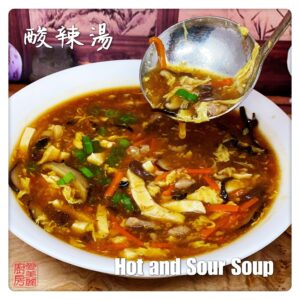
Hot and Sour Soup 酸辣湯
Ingredients
- 100 g Pork blood , julienned
- 100 g Pork , julienned (pork tenderloin is preferable)
- 100 g Tofu , julienned
- 60 g Fresh shiitake mushrooms , julienned
If using dried, approx. 4 mushrooms - 80 g Carrot , julienned
- 20 g Jinhua ham , julienned
- 50 g Bamboo shoots , julienned
- 5 g Dried black fungus , reconstituted, julienned (aka dried wood ear mushrooms)
- 1 Large egg
- 2 tbsp Potato starch (for slurry)
cornstarch, water chestnut starch and sweet potato starch can also be used but potato starch has a lighter texture which I like for this application - 4 tbsp Water (for slurry)
- 1.5 L Broth (chicken broth works well)
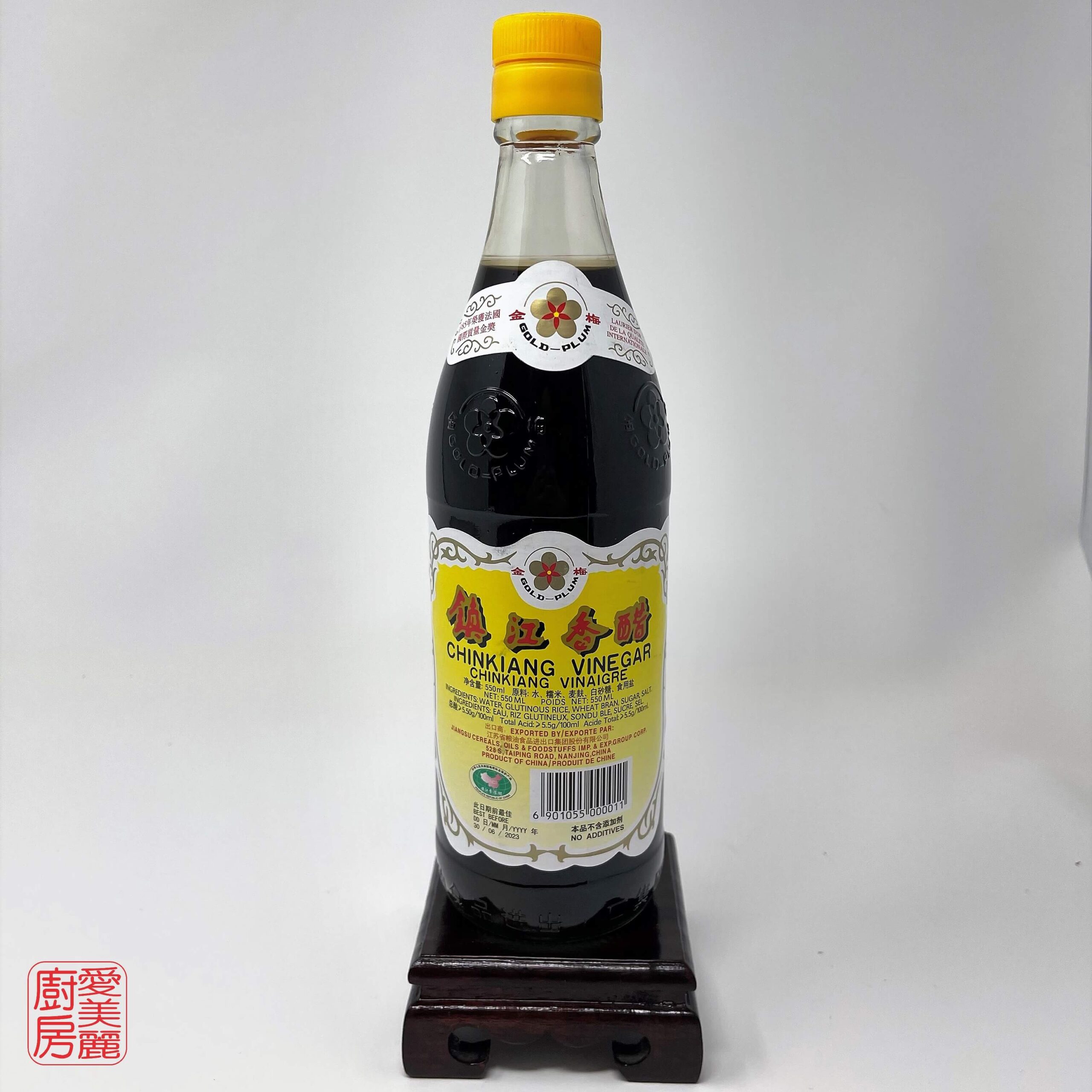
- 1 tbsp Chinese black vinegar (or any black vinegar)
I use Chinkiang vinegar aka Zhenjiang vinegar - 2 tbsp White vinegar
- 6 g Rock sugar
- 1 ½ tsp White pepper powder
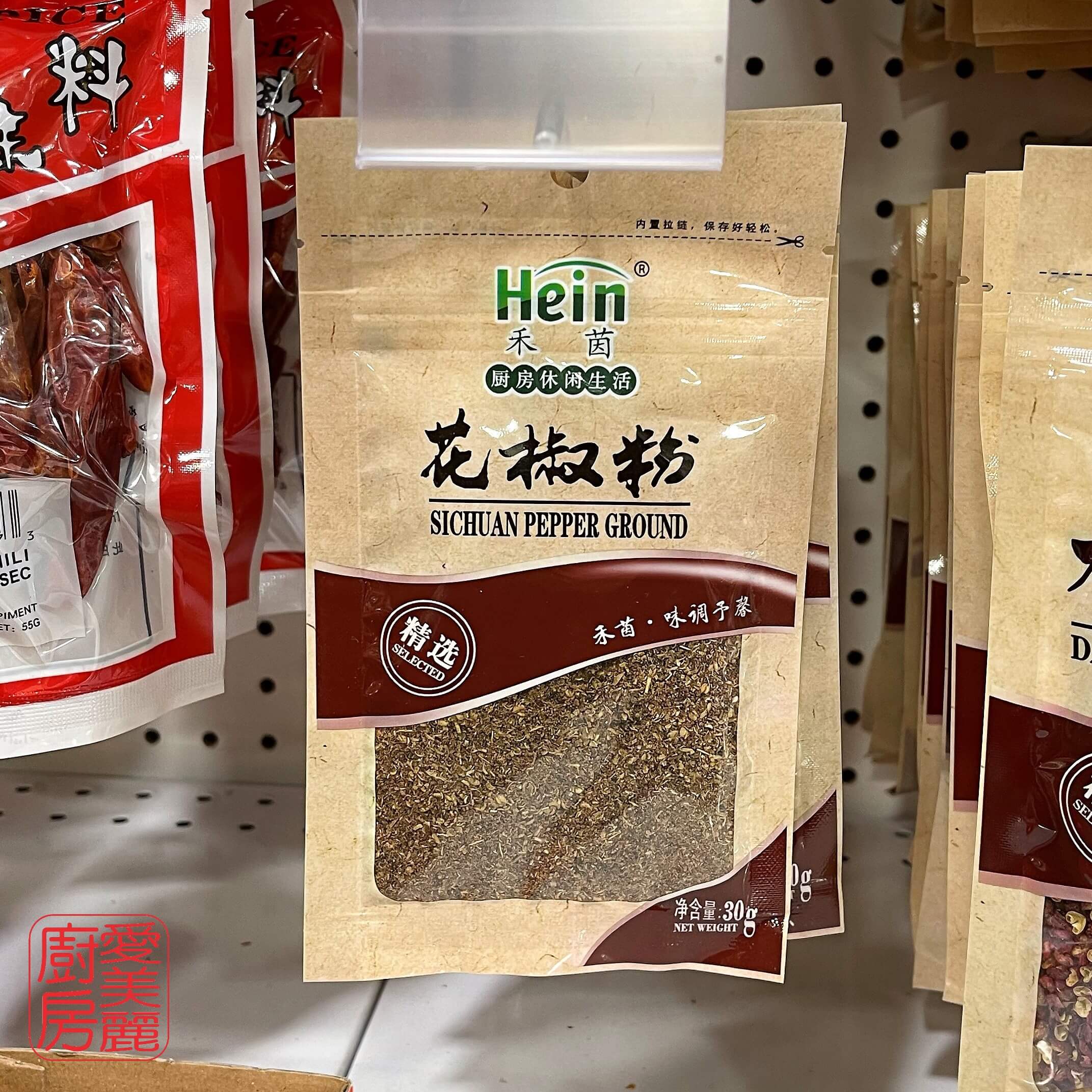
- ½ tsp Sichuan peppercorn powder (optional for added heat but it’s not added traditionally)
- 1 tbsp Rice wine
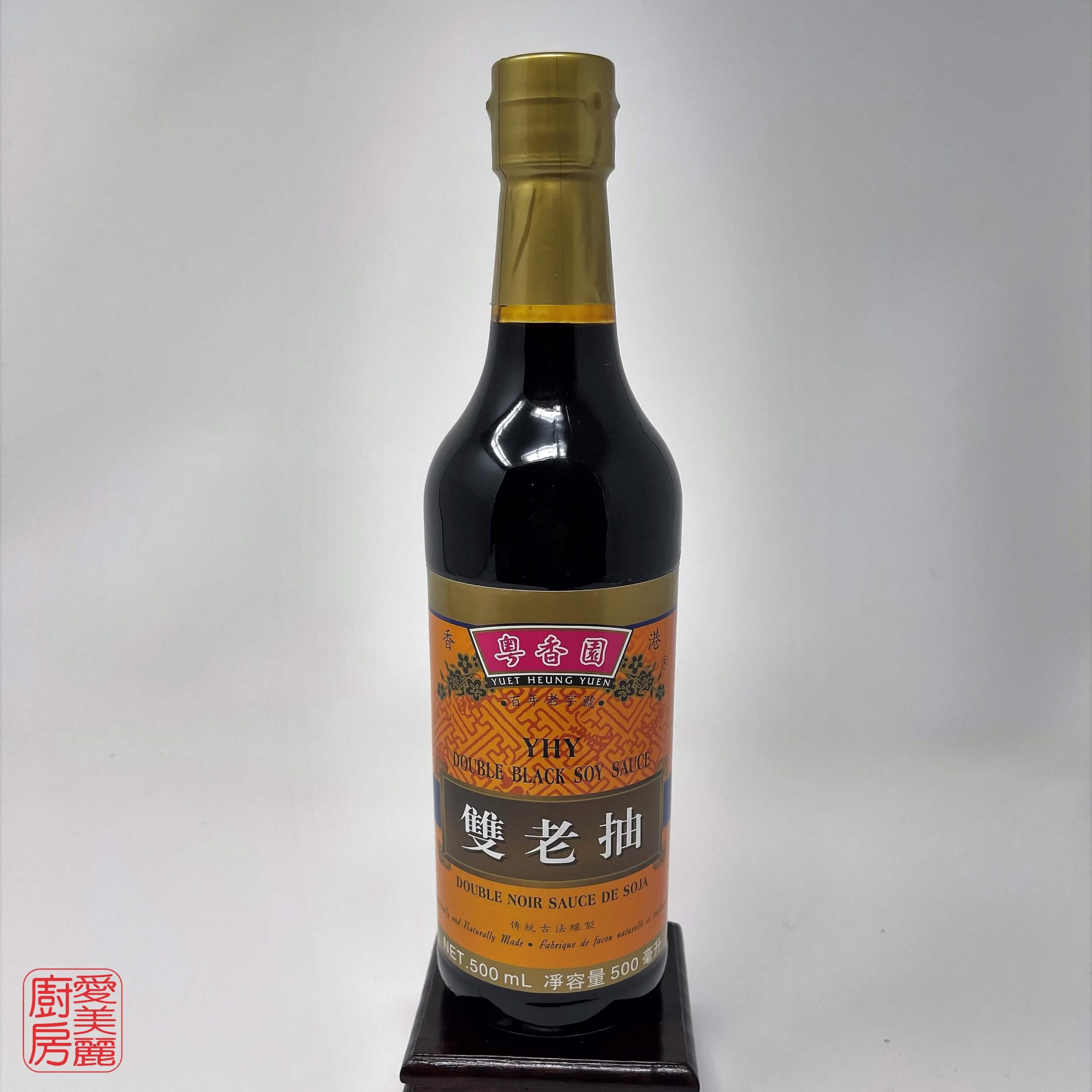
- 1 tbsp Dark soy sauce
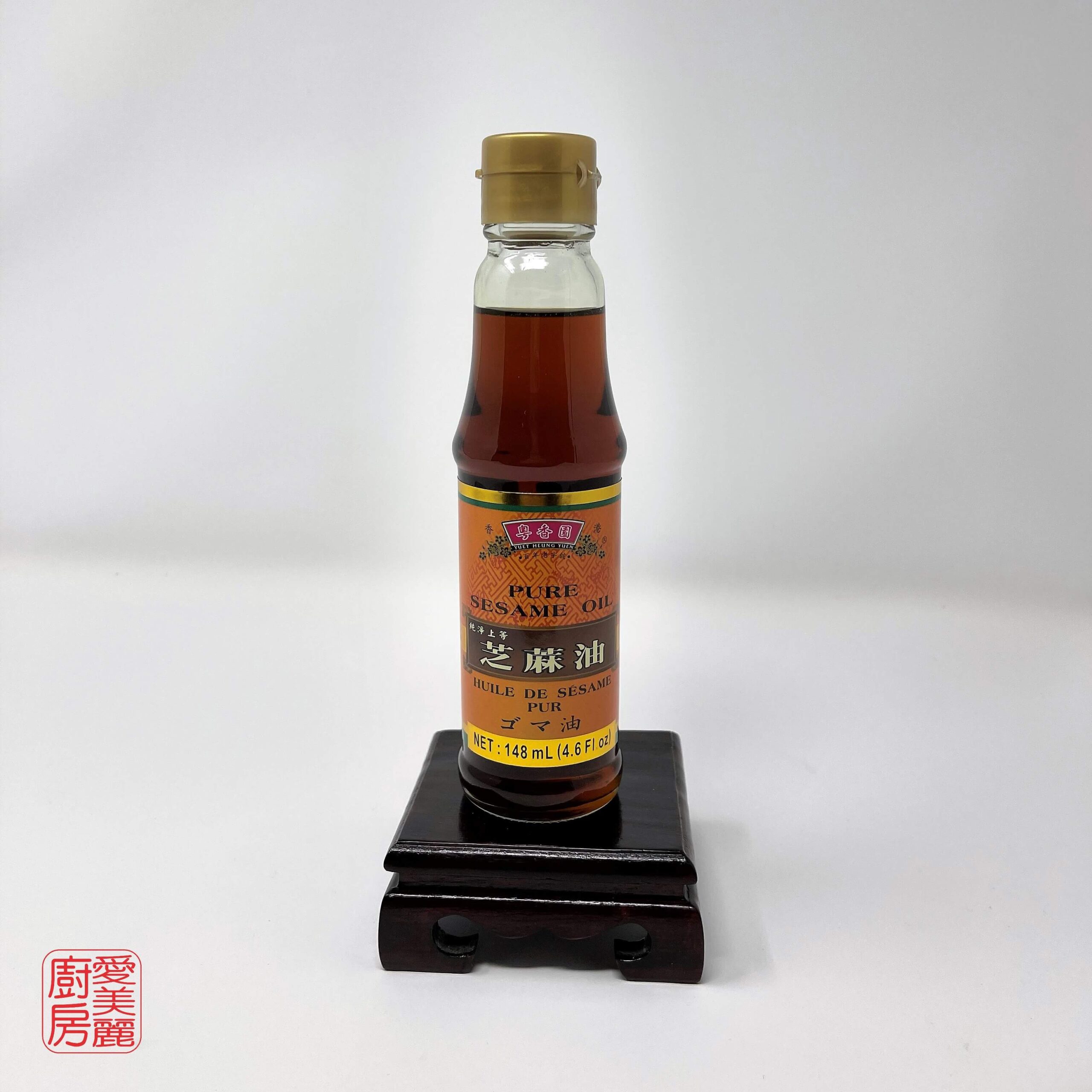
- 1 tsp Sesame oil
- 1 tsp Salt (adjust to account for saltiness of broth)
- 1 tsp Potato Starch (for pork marinade)
- 1 tsp Light soy sauce (for pork marinade)
- ½ tsp Sugar (for pork marinade)
- 1 tsp Oil (for pork marinade)
- ½ stalk Green onions for garnish, chopped
Instructions
- Soak black fungus in water to reconstitute. You can do this overnight or just one hour before slicing. If using dried shiitake mushrooms, soak in water overnight for best results
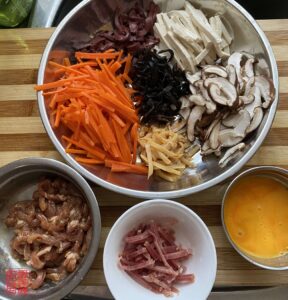
- Julienne pork blood, pork, tofu, shiitake mushrooms, carrots, Jinhua ham, bamboo shoots and black fungus. Put the pork and Jinhua ham in separate bowls respectively. The rest can be put together and blanched in step 5
I used spicy preserved bamboo shoots and it worked quite well. In very high end restaurants, these ingredients are julienned very finely to showcase the chef’s knife skills. My slicing shows that I have no knife skills! - Marinate the pork using 1 tsp light soy sauce, ½ tsp sugar, 1 tsp potato starch and 1 tsp oil. Mix well and set aside
- Beat one large egg and set aside

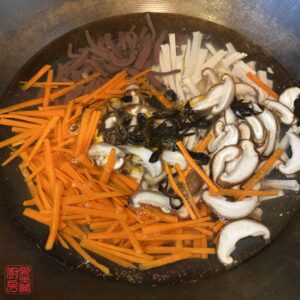
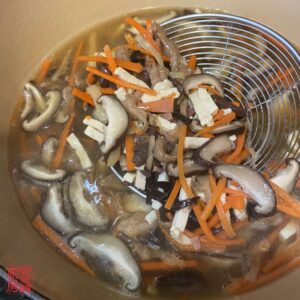
- Boil a pot of water for blanching. Once the water boils, add pork blood, tofu, shiitake mushrooms, carrots, bamboo shoots and black fungus.

- Once the water boils again, remove the contents and set aside.
- Make a slurry with 2 tbsp potato starch and 4 tbsp water. Mix well and set aside
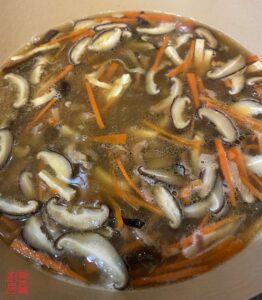
- Pour the broth into a pot and add the blanched ingredients (pork blood, tofu, shiitake mushrooms, carrots, bamboo shoots and black fungus), 1 tbsp rice wine, 1 tbsp dark soy sauce, 1 ½ tsp white pepper powder, ½ tsp Sichuan peppercorn (optional) and 6 g rock sugar. Bring to a boil

- Turn the heat down to medium, add Jinhua ham and pork. Give it one gentle stir to submerse the pork and scatter them evenly. Cover with lid and cook for 4 minutes
- Add 1 tbsp black vinegar and 2 tbsp white vinegar. Taste test. Add salt, light soy sauce, black vinegar if necessary. Turn heat down to low
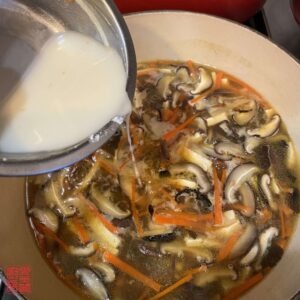
- Give the slurry a mix and slowly pour into the soup while stirring at the same time.
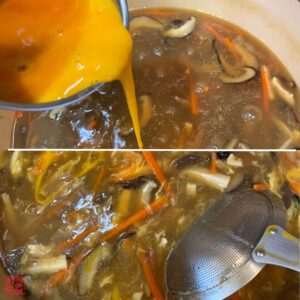
- Be sure that the soup is simmering. Add beaten egg slowly into the soup while gently pushing the soup from one end of the pot to the other end in one direction with a ladle. Or you can stir slowly in one direction. If you stir using back and forth movement, you will break the egg ribbon effect
- At this point, you can add more slurry if you would like it thicker
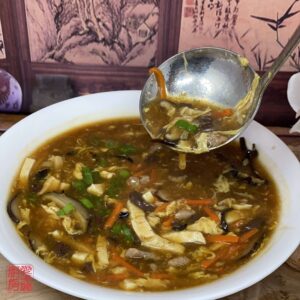
- Add 1 tsp sesame oil and garnish with chopped green onions and serve



What is Jinhua ham, pork blood, black vinegar, potato starch. I would love to learn how to cook like this and as you can see a novice.
Hi Julie! Jinhua ham is a cured ham similar to prosciutto. I can find it in Vancouver in Asian grocery stores where you find Chinese preserved sausages. It gives the soup an extra depth in taste. A little goes a long way. Pork blood is coagulated pork blood that you can find at an Asian butcher shop. It's dark red in colour and texture is similar to tofu. I'm really glad you're interested in making it the traditional way. But don't worry if you can't find these. I believe most restaurants outside of China don't add it. You'll still get a pretty authentic taste. Let me know if you have any more questions. Happy cooking!