


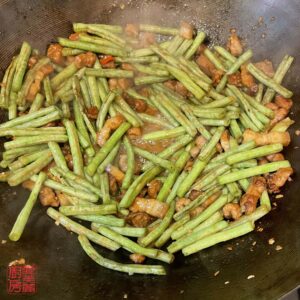
Chinese Long Beans with Shrimp Paste 蝦醬炒豆角 is a classic home-style Cantonese dish. Fermented shrimp paste (or sauce) is a common ingredient in Chinese cooking. But, it's much more popular in Cantonese cuisine. In Malaysia, “belachan” is what they call their shrimp paste and you can find it frequently in stir-fried vegetables.
Before the invention of the refrigerator, food fermentation was an important way of preserving food. Different regions used different species of shrimp or krill to make fermented shrimp paste and so you get varying flavours. Tai O is a fishing village in Hong Kong that was first known for its sea salt. They then became famous for their salted fish and shrimp paste. I’ve tried shrimp paste from Taishan and Tai O. I personally prefer the Tai O shrimp paste because it was more aromatic and the taste lingered longer in my mouth. The texture was also finer.
Shrimp paste is made by salting shrimp or krill and laying them out in the sun to dry and soften. It’s then pounded by hand into a paste and then put under the sun again to go through another round of fermentation. It’s very labour intensive. The result is an extremely aromatic and salty condiment that goes perfectly with seafood, vegetables and pretty much anything.
My favorite way to use fermented shrimp paste is in vegetable stir-fries. I also like to steam meats with it. Adding some to fried rice with some fresh chilies is also really good. Try marinating pork chops with it too. There are really infinite possibilities!
In my Chinese Long Beans with Shrimp Paste 蝦醬炒豆角, I’ll show you how to make this delicious dish in under 30 minutes. My son doesn’t like vegetables but loves this dish. He can finish two bowls of rice when I make it. If you like shrimp paste, you’ll need to try this dish that’s not only tasty, but nutritional and economical too!
Looking for more veggie ideas? Check out my recipes for Water Spinach with Fermented Tofu 椒絲腐乳炒通菜 and Hot and Sour Eggplant 酸辣茄子.
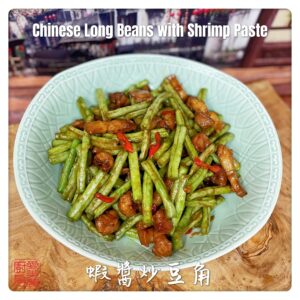
Chinese Long Beans with Shrimp Paste 蝦醬炒豆角
Ingredients
- 450 g Chinese long beans (white or green)
- 200 g Pork belly
- 1 tsp Salt for soaking long beans
- 4 cloves Garlic , chopped
- 2 Thai Chilies , chopped
- 1 tsp Light soy sauce for pork marinade
- ½ tsp Sugar for pork marinade
- ¾ tsp Corn starch for pork marinade
- 1 tbsp Fermented shrimp paste
- ½ tsp Sugar
- 1 tsp Shaoxing wine
- 6 tbsp Water (add in 3 increments)
- 2 tbsp Oil
Instructions
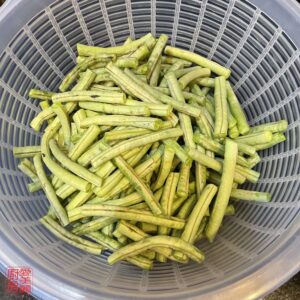
- Cut the ends off the long beans and slice them into your desired length
I like them to be approx. 5 cm or 2” 
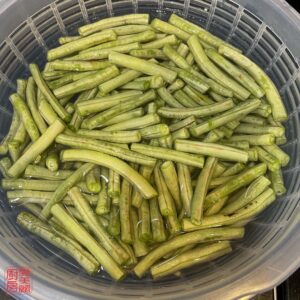
- Soak the beans in water with a tsp of salt. Soak for 15 minutes, drain, rinse well and let dry in a colander.
The salt will help rid the beans of its grassy taste, which is generally regarded as undesirable - Slice pork belly into slices or strips.
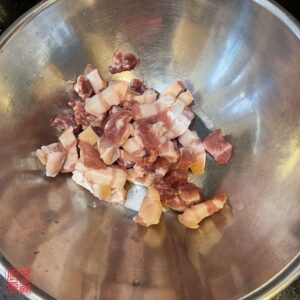
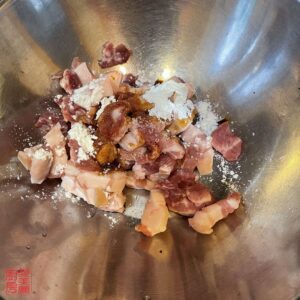
I like to make them the same shape as the long beans - Marinate the pork in 1 tsp light soy sauce, ½ tsp sugar, and ¾ tsp corn starch. Mix well and set aside
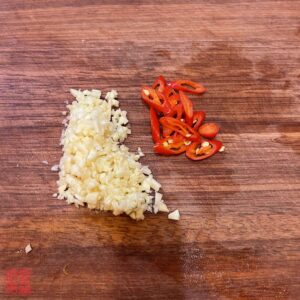
- Chop garlic and chilis. Set aside
- Prepare the sauce by combining 1 tbsp fermented shrimp paste, 1 tsp Shaoxing wine and ½ tsp sugar. Mix well and set aside.
The salt content in fermented shrimp paste may vary so you may need to add more sugar or more salt when you do your taste test - Heat wok on medium high heat
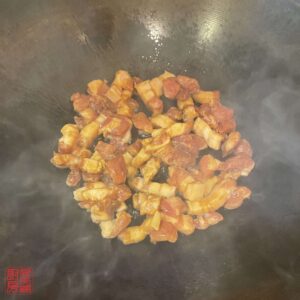
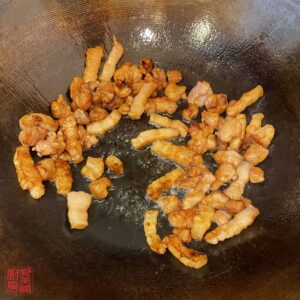
- Add 2 tbsp oil to the wok and add pork belly. Arrange in single layer and let cook for 1 minute or until browned
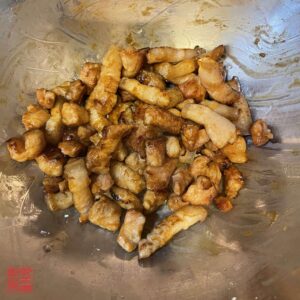
- Flip the pork over and cook for 30 seconds then stir-fry in the wok for another 30 seconds until the pork is done
- Remove pork from wok and leave the oil.
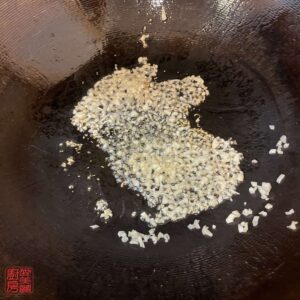
- Add garlic to the wok, stir-fry for 10 seconds
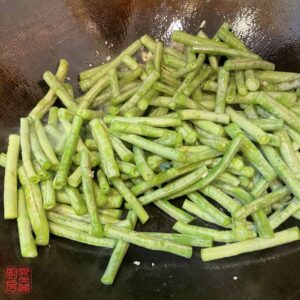
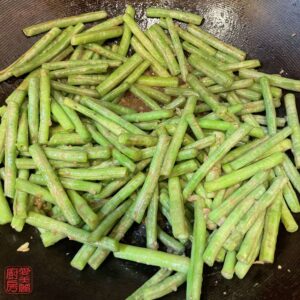
- Add long beans to the wok. Stir-fry for 1 minute
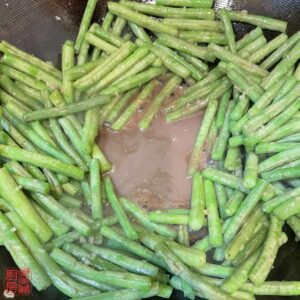
- Make a well in the middle of the wok and add the fermented shrimp paste mixture
- Stir-fry the long beans with the sauce for a minute
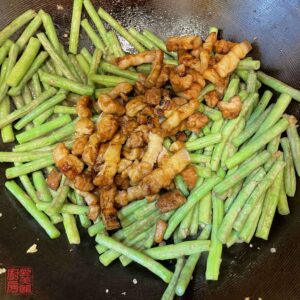
- Add the pork into the wok with 2 tbsp water. Mix well
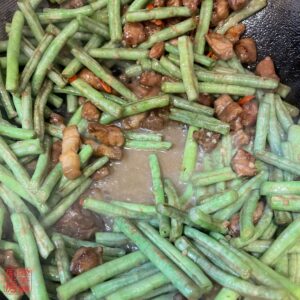
- Add chilies and another 2 tbsp water, mix well and cover with a lid. Cook for 2 minutes
- Stir-fry and check if most of the water has evaporated. If not, turn heat to high
- Once water has mostly evaporated, add another 2 tbsp water directly onto the wok (not on the long beans) to give it more moisture and incorporate the bits of flavour on the wok to make a very light sauce.
- Stir-fry to mix well. Turn off heat
- Serve


Hi Heather, thanks for trying my recipe! I think long beans would've given you better results. However, I do disagree with your comment on marinating the pork. This is the essence of a Chinese stir-fry. Meat is always marinated before stir-frying. It gives the meat a base flavour as well as keeping the meat juices inside the meat. I suppose that I am very used to marinating the meat and frying it first to get that extra toasted flavour. I do believe that the extra 5 minutes is well worth it. Perfection is in the details! Happy cooking!