
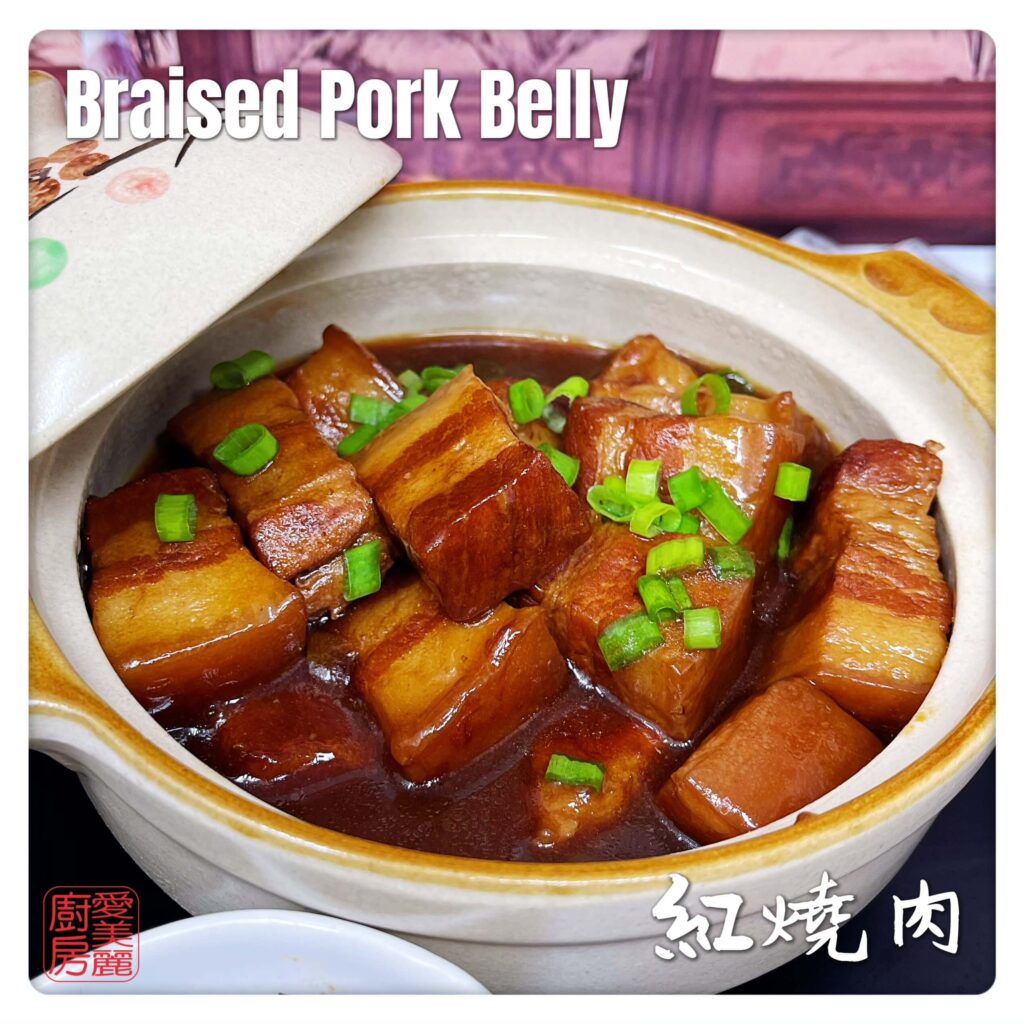

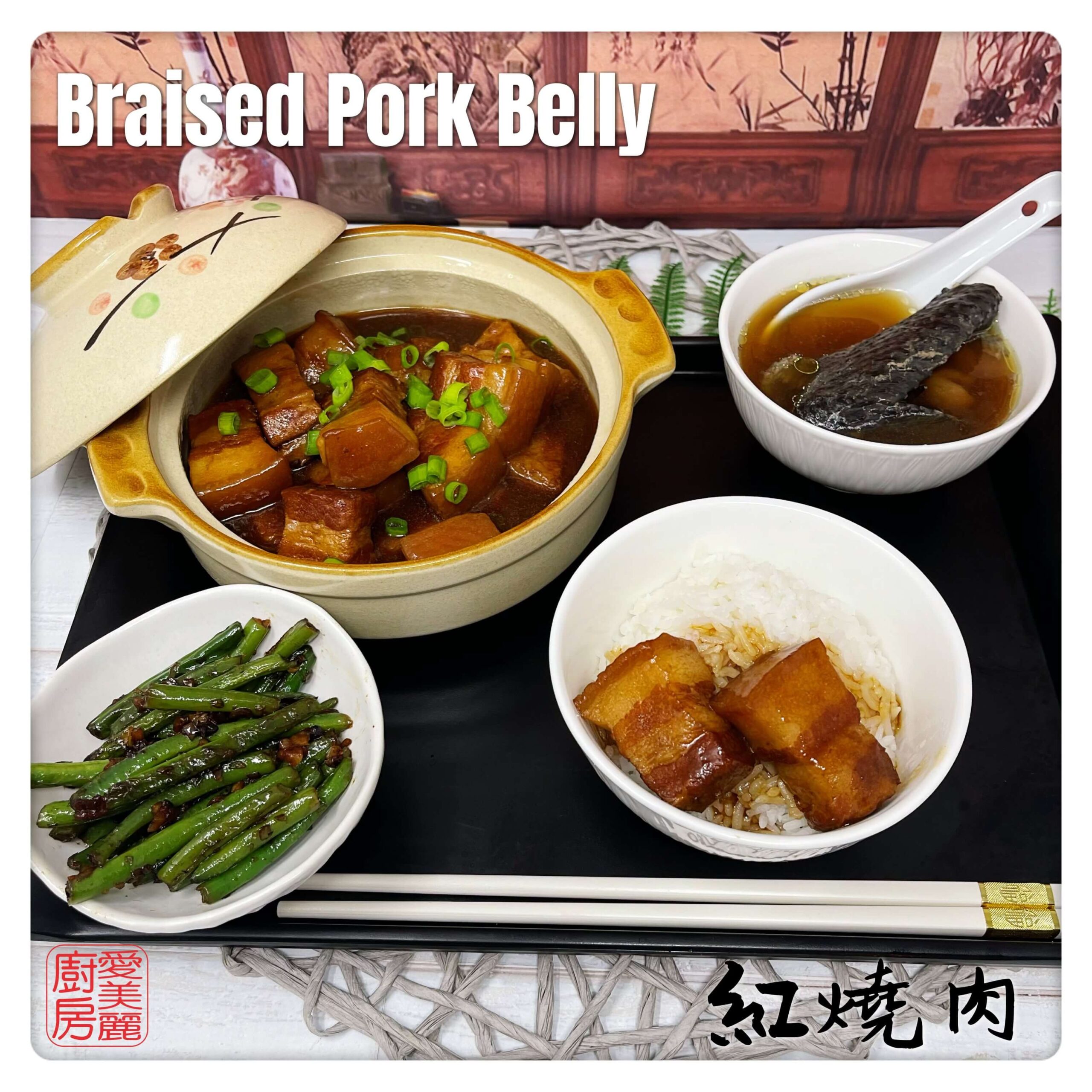
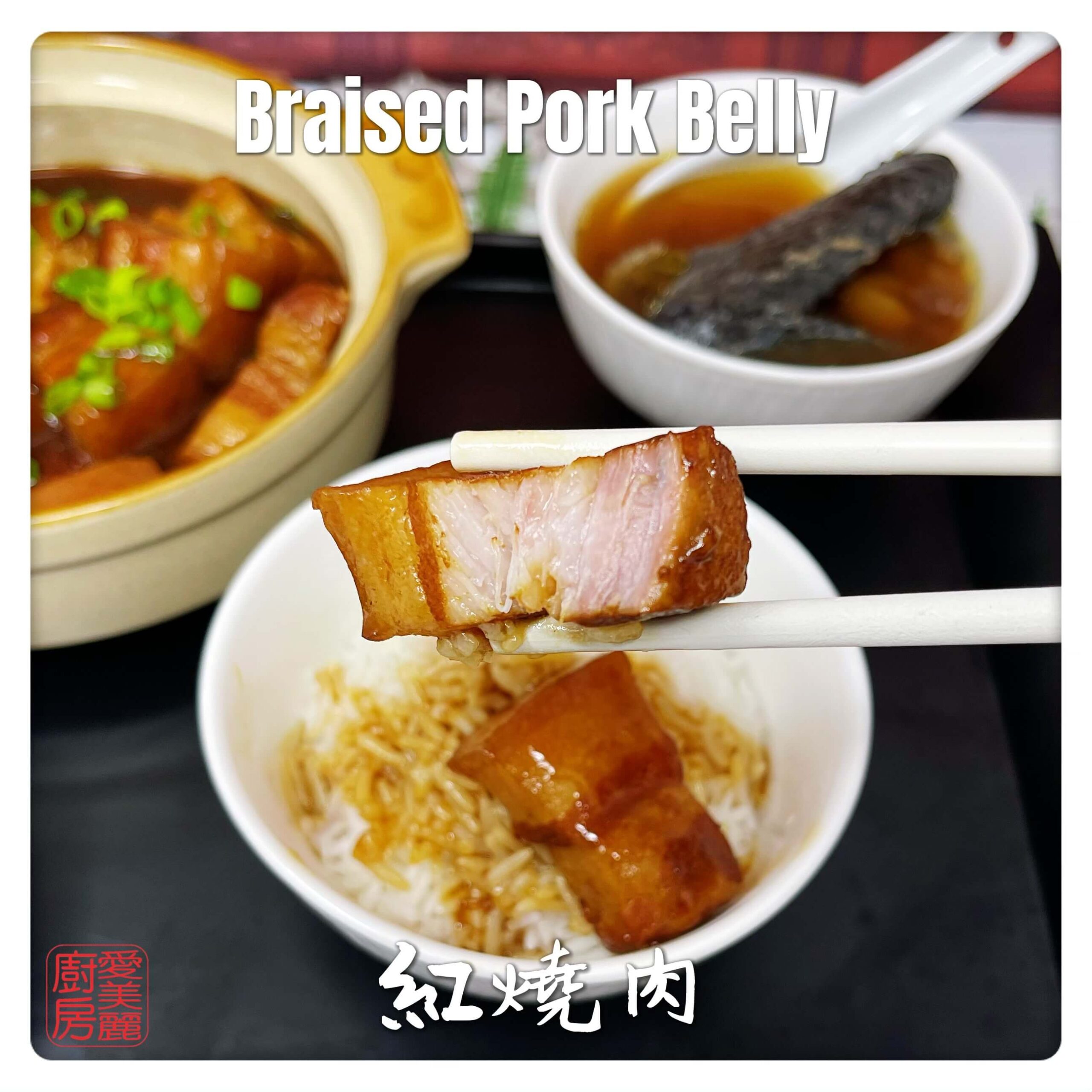
Braised Pork Belly 紅燒肉 (hóng shāo ròu) must be the most common pork dish in China. It’s everywhere! At restaurants and at home, it’s a favourite amongst Chinese people. I love binge watching my Chinese tv dramas. And whether it’s a modern day or a period drama, I see Braised Pork Belly 紅燒肉 all the time! It’s been around for at least 2000 years! Just like most iconic dishes, there are thousands of ways to make it.
Families from different regions use their own blend of herbs and spices. In northern China, you may find it with Sichuan peppercorn and dried chilis. People in Shanghai like it on the sweet side so more rock sugar. In the south, they like it less sweet and braised with fermented bean curd or soy paste. Hard-boiled eggs, white radish, carrots, peppers, shiitake mushrooms, lotus root and chestnuts are some of the more popular ingredients you can add. Whichever way you like it, mouth-watering chunks of tender pork belly with lots of sauce to go with rice really can’t go wrong!
You can find Braised Pork Belly 紅燒肉 in recorded history since the Northern Wei Dynasty around 2000 years ago. There is a very detailed recipe on how to make it so that the fat melts in your mouth but isn’t oily. It also states that the meat should be intact but not dry. From the details of the recipes, we can tell that my ancestors were not messing around when it came to pork belly! They had already perfected it then. No wonder two thousand years later, we’re still pretty much using the same technique.
In my Braised Pork Belly 紅燒肉 recipe, I try to follow the same techniques that were used since the Northern Wei Dynasty. The main difference is that I add beer to mine to tenderize the meat further during braising. It also adds more depth and complexity to the flavour. I will show you how to sweat out the excess fat on the pork belly, leaving you with tender and flavourful pieces of meat with no oily sauce.
My family LOVES pork belly! Some of our favorites include my modern take on the traditional Dong Po Pork 東坡肉: Dong Po BBQ Pork 東坡串燒肉. Another is the traditional Beijing Soy Paste Noodles 炸酱面. You can never go wrong with pork belly!
Braised Pork Belly 紅燒肉
Ingredients
- 600 g Pork belly
- 6 slices Ginger
- 4 stalks Green onions
- 3 tbsp Water to dilute the caramelized sugar
- 330 ml Light beer
- 200 ml Water (or enough to cover the pork when braising)
- 2 Bay leaves
- 2 Star anise
- 1 Small cinnamon stick
- 2 tbsp Shaoxing wine
- 2 tsp Sugar (white granulated or small rock sugar pieces)
- 2 tbsp Light soy sauce
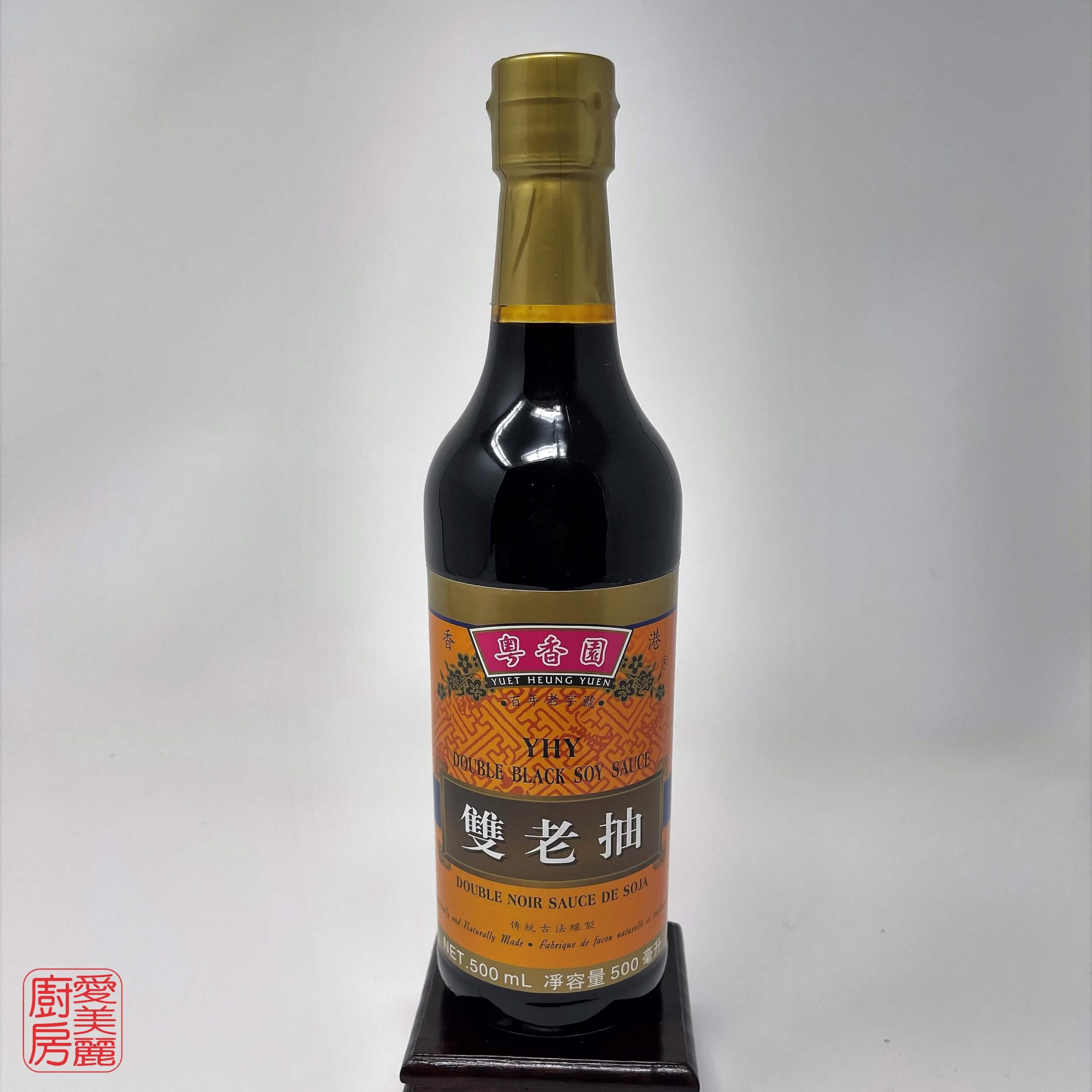
- 1 tsp Dark soy sauce
- 2 tsp Corn starch for slurry
- 2 tbsp Water for slurry
- 1 tbsp Oil
Instructions
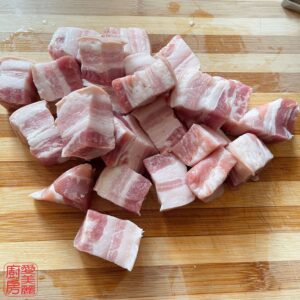
- Slice pork belly into desired size and shape

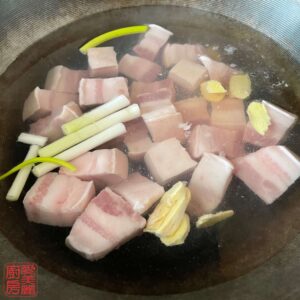
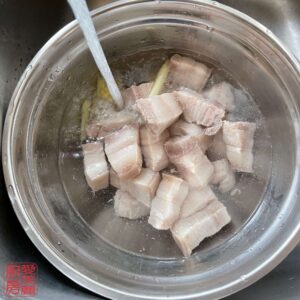
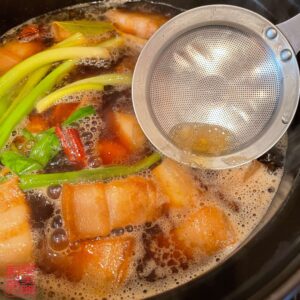
- Place the pork belly into a wok or pot, add water just until it covers the pork belly, add 3 slices of ginger, 1 stalk of green onion (except for the green part which will be chopped up for garnish), and 2 tbsp Shaoxing wine
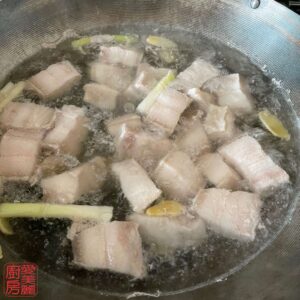
These ingredients will help to neutralize any unwanted odours in the pork - Cover with lid and bring to a boil on high heat
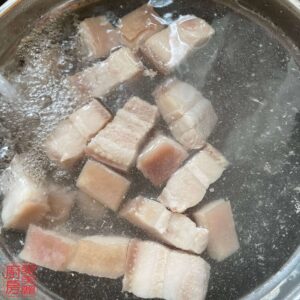
You may want to remove any foam that forms with a skimmer so that the foam doesn’t stick to the pork. But you will also be rinsing the pork so it’s not a big deal if you leave the foam - When the water boils, remove the pork and submerse into cold water
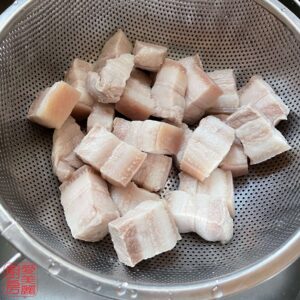
- Rinse with cold water a few times until water runs clear
- Leave pork in colander to dry
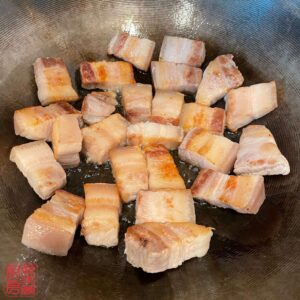
Pat the pork dry with a paper towel if pork has not completely dried to prevent oil splatter in step 7 - In a wok, using medium-high heat, add 1 tbsp oil and add pork belly, arrange pork belly in single layer
We are trying to get a light sear on the pork belly and sweat out excessive pork fat. Be careful of oil splatter in this step because water gets trapped in the skin. If you want to minimize oil splatter, you can sear the skin side before cutting up the pork in a hot wok (no oil). Sear for 2-3 minutes until skin is charred. Then scrape off char and rinse with water - Once pork belly is seared, remove pork belly and pour the fat out in a separate container leaving approx. 2 tbsp in the wok
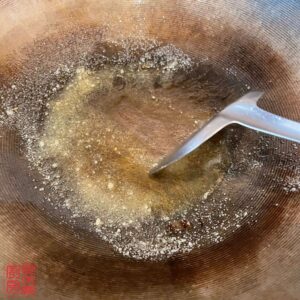
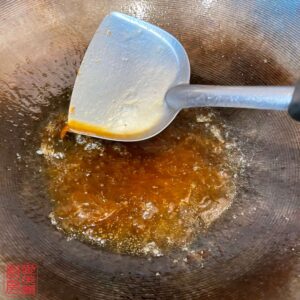
Note that the fat cannot be poured into your kitchen drain. It can cause clogs when it solidifies. I save it and use it to fry vegetables, rice and stir-fries - On medium-high heat, add 2 tsp sugar to the oil in the wok. Use a spatula to move it around until it dissolves and caramelizes
- Add 3 tbsp water to dilute the caramelized sugar
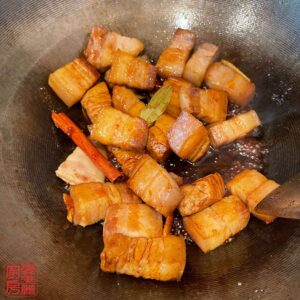
- Add pork, 3 slices of ginger, 2 bay leaves, 2 star anise, 1 cinnamon stick, 2 tbsp light soy sauce and 1 tsp dark soy sauce into the wok and stir-fry until everything is coated with the caramelized sugar
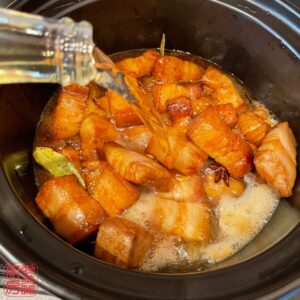
It’s also traditional to add peppercorns (Sichuan, white or black would be fine), but unless I put it into a tea bag while braising, they are difficult to fish out before serving. My family doesn’t like it when they bite into a peppercorn. But if you’d like to add some, you can add them now - Pour in approx. 330 ml of beer. If it’s not enough to cover the pork then add water until pork is covered
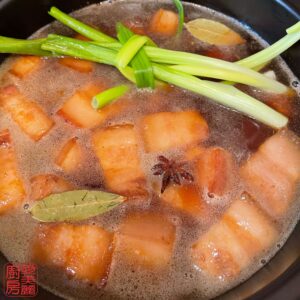
I transferred everything into a clay pot for braising but you can also braise in the wok - Chop some green parts of the green onion for garnish and tie the rest up in a knot and put it in the wok
- Bring to a boil using high heat
- Once it’s boiling, turn heat down to low and let it cook for 60 minutes. Stir 20 minutes and remove foam, if any
- After 60 minutes, the pork should be tender. Taste test and make adjustments if necessary. Remove ginger, green onions, star anise, bay leaves and cinnamon stick
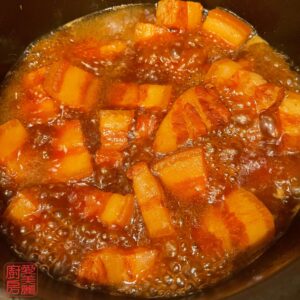
- To thicken the sauce, turn the heat up to high and let the liquid evaporate for around 5 minutes. Do not cover with lid
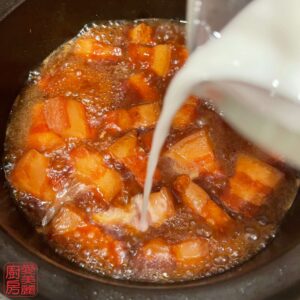
- If you would like the sauce to be thicker, combine 2 tsp corn starch with 2 tbsp water to make a slurry. Mix well and pour it in slowly. Stir until sauce thickens
- Add chopped green onions and serve


Leave a Reply