
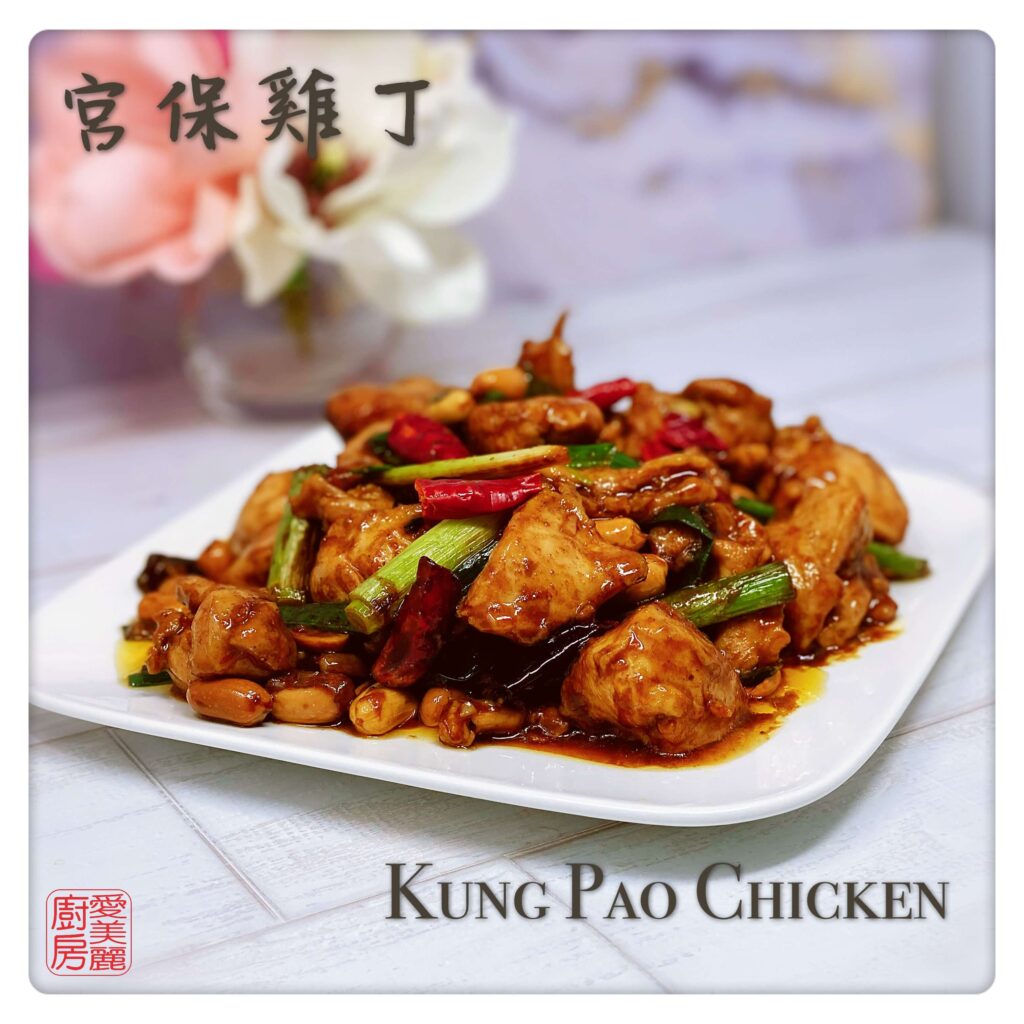
Kung Pao Chicken 宮保雞丁(gōng bǎo jī dīng) has a very interesting history. A Qing Dynasty official by the name of Ding Baozhen丁寶楨 invented the dish. He was a court-favoured official who was known to be righteous, bold and daring. He was given a well-respected title, “宮保” (gōng bǎo) for his various merits and dedication to the Qing Dynasty. Furthermore, he was a “foodie” who loved chicken, peanuts and spicy-hot foods. When he became the governor of Sichuan province, he invented this dish by deep-frying diced chicken meat, peanuts, chilies, Sichuan peppercorn and then tossed everything together with leeks and a tangy vinegar sauce. It became a big hit! Even provinces in the south started making their own less spicy versions.
Today, almost everyone in the world has heard of Kung Pao Chicken 宮保雞丁. But most have forgotten the creator of the dish, even in China. Cantonese people still call it by its original name, 宮保雞丁(gōng bǎo jī dīng). But in most other parts of China, more and more people are calling it 宮爆雞丁(gōng bào jī dīng). The second 爆(bào) means to fry in oil which is a better description of the dish but it lost the historical value.
There are many versions of Kung Pao Chicken 宮保雞丁. The main ones are Sichuan style, Cantonese style and even American style. Sichuan style is probably the closest to the original. It has a “dryish” light sauce and mainly consists of chicken, chilies, Sichuan peppercorn and peanuts. Cantonese style adds some vegetables like carrots and/or celery. And sometimes it’s not spicy at all. American style is pretty much like Cantonese style but much saucier and uses cashews instead of peanuts.
No matter what style you like, it’s still a very yummy dish. While I was testing to find my own style, my son says that he could eat Kung Pao Chicken 宮保雞丁 everyday! He has declared it to be one of his most favourite dishes. In my version of this dish, I’ve tried to be as true to the original as possible except for the deep-frying part. I try to save my deep-frying quota for making things crispy. When it’s not crispy, why bother?! And I didn’t make it very spicy… I do regret having an authentic Southern Chinese palette which deters me from anything “Mala” 麻辣 which means “numbing hot”. I have tried to extend my numbing hot tolerance, but have failed everytime! However, if your “Mala” tolerance is higher than mine, my recipe shows you how to turn up the heat.
Looking for more Sichuan dishes? Try my Mapo Tofu 麻婆豆腐
Kung Pao Chicken 宮保雞丁
Ingredients
- 600 g Boneless chicken
- 3 stalks Chinese leeks (you can also use one stalk of western small-size leeks)
Note that this is different from Chinese chives - 4 cloves Garlic chopped
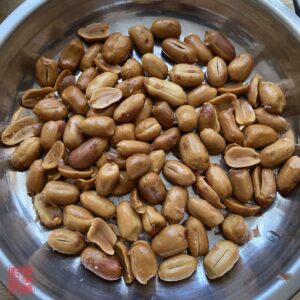
- 80 g Skinless fried peanuts
- 10 g Dried chilies
- 2 tbsp Oil
- 1 tbsp Shaoxing wine
Ingredients for marinade:
- 1 tsp Light soy sauce
- ½ tsp Sugar
- ½ tsp Salt
- 1 ½ tsp Corn starch
- 60 ml Water *For extra Sichuan authenticity, substitute the water used in the marinade for ginger onion water 薑蔥水(jiāng cōng shǔi). Simply add 100ml of water to a small pot. Add 2 large slices of ginger and 2 stalks of green onions (cut into large pieces) to the pot of water. Bring mixture to a boil, cover the pot with a lid and turn off the heat. Set aside for 30 minutes. After it has cooled, strain and use this water in place of regular water to marinade the chicken.
- 1 tsp Oil
Ingredients for sauce:
- 1 tbsp Light soy sauce
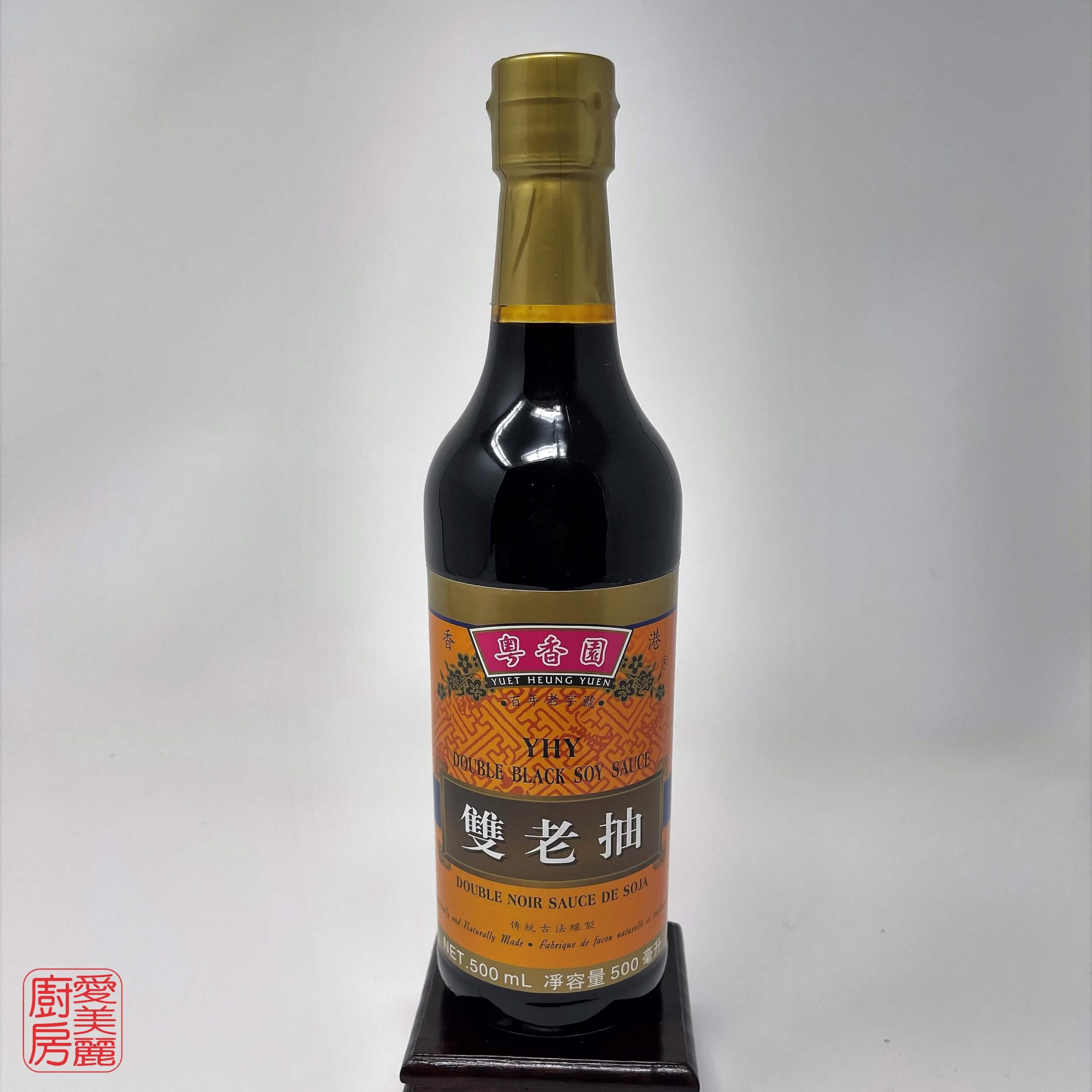
- 1 tsp Dark soy sauce
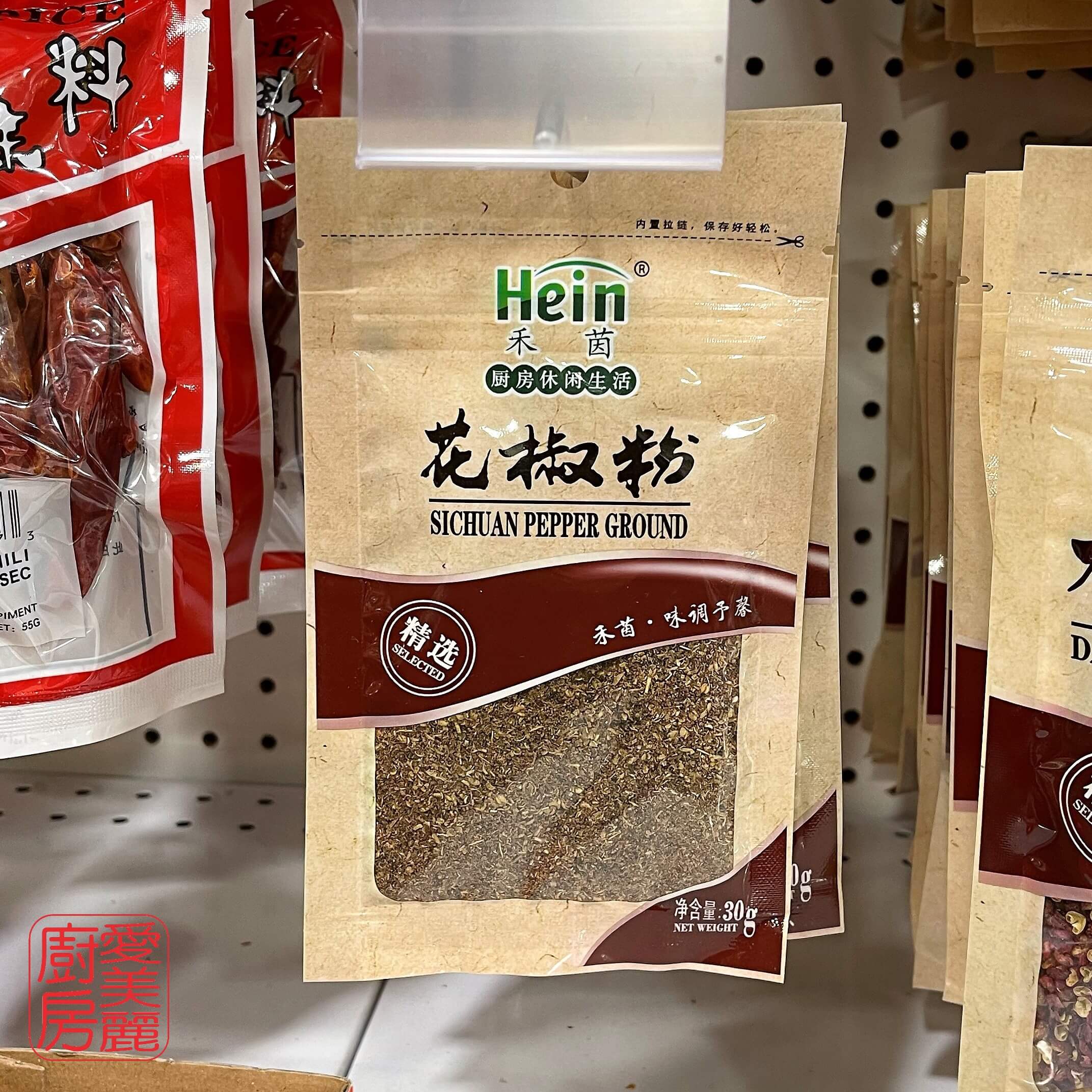
- ½ tsp Sichuan peppercorn powder
- 1 tsp Sugar
- 1 tsp Corn starch
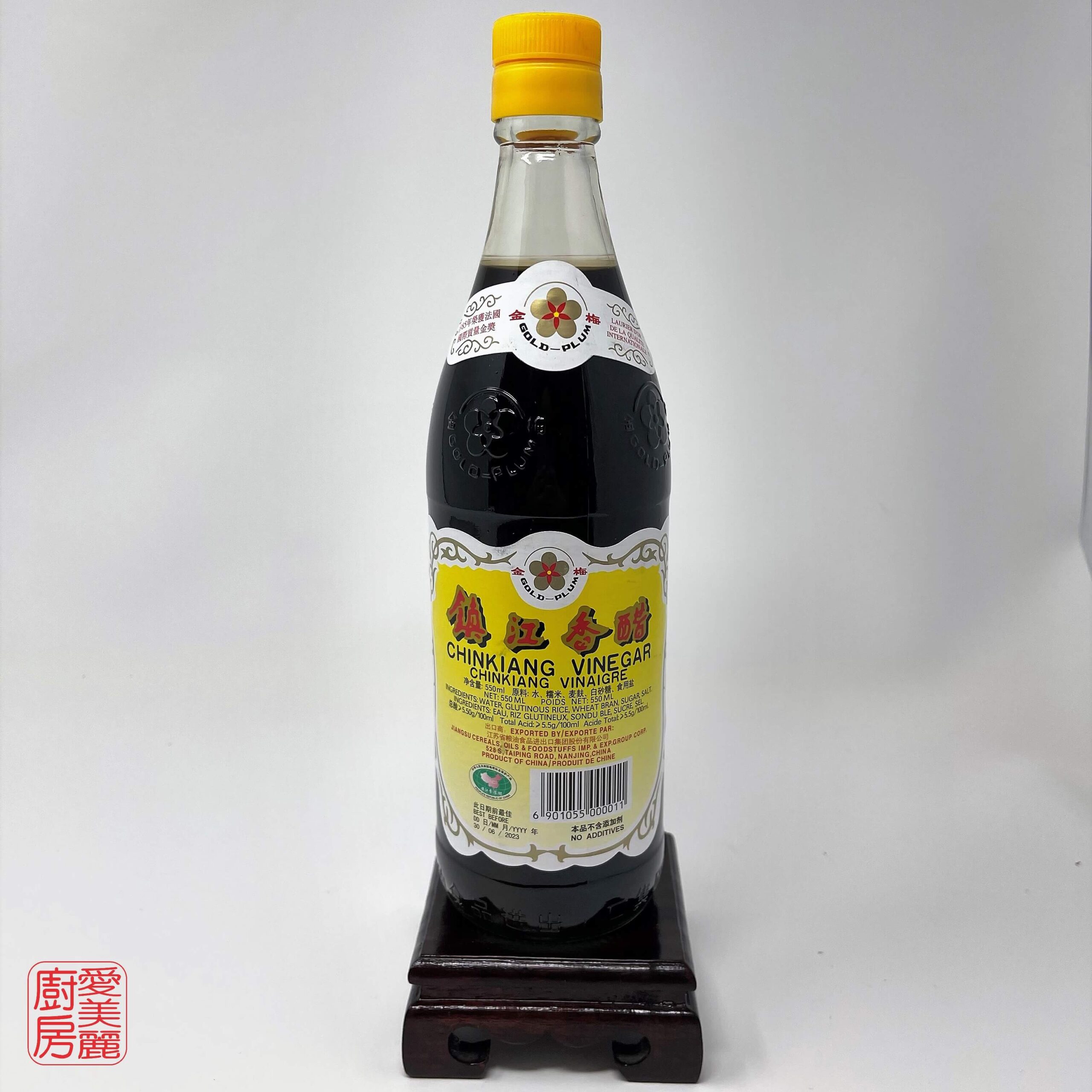
- 1 tbsp Chinese black vinegar (or any black vinegar)
I use Chinkiang vinegar aka Zhenjiang vinegar - 3 tbsp Water
Instructions
Preparation Instructions:
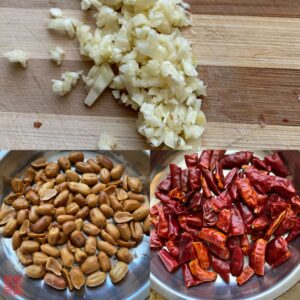
- If your peanuts have not been fried, you will need to remove the skin, and then either toast or fry them in a pan with or without oil until golden. Use low heat. Remove from heat and set aside

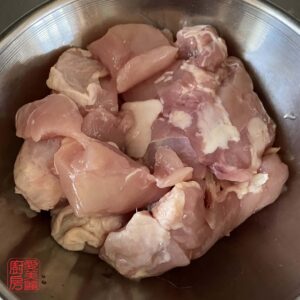
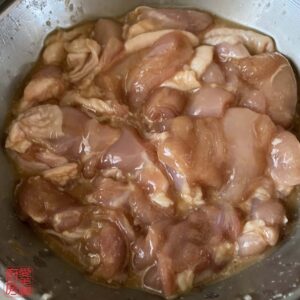
- Cut chicken into 2.5cm (1”) cubes and place in a mixing bowl
the size of my chicken is relatively larger than what is typical. I do this because I am not deep frying my chicken beforehand and so the chicken needs to cook longer in the wok. Plus, I’m a bit slower than restaurant chefs so larger pieces will make it less likely for me to overcook the chicken. You can cut them smaller if you like - Add 1 tsp light soy sauce, ½ tsp sugar, ½ tsp salt, 1 ½ tsp cornstarch and 60 ml water to the diced chicken
Adding water to meat is a technique called 打水 (dá shǔi) or “hit water” (hitting the meat with water). This will make your meat moist and tender. I generally use 10:1 meat to water ratio - Mix all the ingredients with the chicken until all the water has been absorbed. Let sit for 5 minutes
I find it easiest to use your hands to mix the ingredients. Water absorption is better when you squeeze the meat slightly with your hands while you stir in one direction and mix in the marinade. - Give the chicken a stir and add 1 tsp oil to the chicken, mix well and set aside
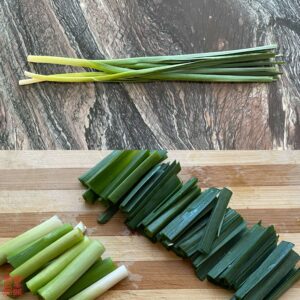
This step is critical to seal the water with the meat - Wash the Chinese leeks, cut them into 4cm (1.5”) pieces and set aside
- Prepare chopped garlic and measure dried chilies (approx. 1 big handful)
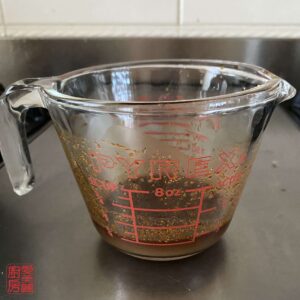
Dried chilies are not very spicy. If you want to add more heat, you can chop up a few fresh Thai chilies. You can also add whole Sichuan peppercorn along with the dry chilies to add more heat! - Prepare sauce by combining 1 tbsp light soy sauce, 1 tsp dark soy sauce, ½ tsp Sichuan peppercorn powder, 1 tbsp sugar, 1 tsp cornstarch, 1 tbsp Chinese black vinegar and 3 tbsp water

Stir-Frying Instructions:
- Heat your wok to medium-high, add 2 tbsp oil
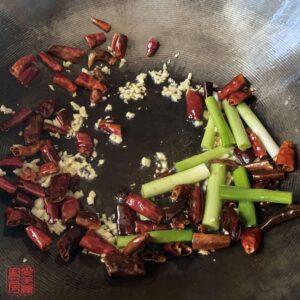
- Add dried chilies, the thick parts of the leeks and garlic to the wok. Fry for 10-15 seconds until you smell the garlic aroma and remove from the wok, leaving only the oil in the wok
You’ll notice that in my photo, I did not remove the chilies and garlic which resulted in my chilies being burnt - Turn up the heat to high
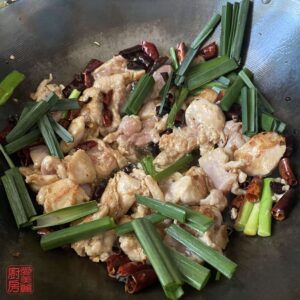
You get best results for this dish on high heat, but you can use medium-high heat as well - Put the chicken into the wok in a single layer. Make some breathing space between some of the chicken pieces to allow the steam to escape. Do not stir or move the chicken for 1 minute
This will allow for the chicken to get a good sear - After 1 minute, flip the chicken over and don’t move it for 30 seconds
- After 30 seconds, start stir-frying the chicken and add the garlic and chilies and mix well
- Spread the chicken to the side of the wok, add peanuts and leeks to the centre of the wok.
- Stir-fry everything together for 30 seconds to a minute.
- Add 1 tbsp Shaoxing wine to the outer part of the wok (not directly on the food) and stir-fry
- Clear some space in the middle of the wok. Stir the prepared sauce mixture and add it to the cleared space and stir-fry everything together until sauce has thickened and chicken is done
- Serve




Leave a Reply