
Pig’s Feet With Sweet Vinegar and Ginger 豬腳薑醋
You can make this dish with the pig’s front trotters (in Chinese, we call them the “hands”, 豬手 zhū shǒu) or back trotters (the “feet”, 豬腳 zhū jǐao). For this dish, I prefer using the feet because there’s less meat and more collagen on them. The meat tends to get a bit tough when it’s been sitting in the vinegar for a while. The ginger should be braising in the vinegar for around 3-4 weeks before adding the pig’s feet and eggs but if you’re in a hurry to use it, I find that it’s still pretty tasty after 3-4 days. The vinegar will not have as strong of a ginger taste and so it may not be as potent, but it’s definitely still delicious!
Approximate cost (CAD) $85
Ingredients
- 1 kg Ginger
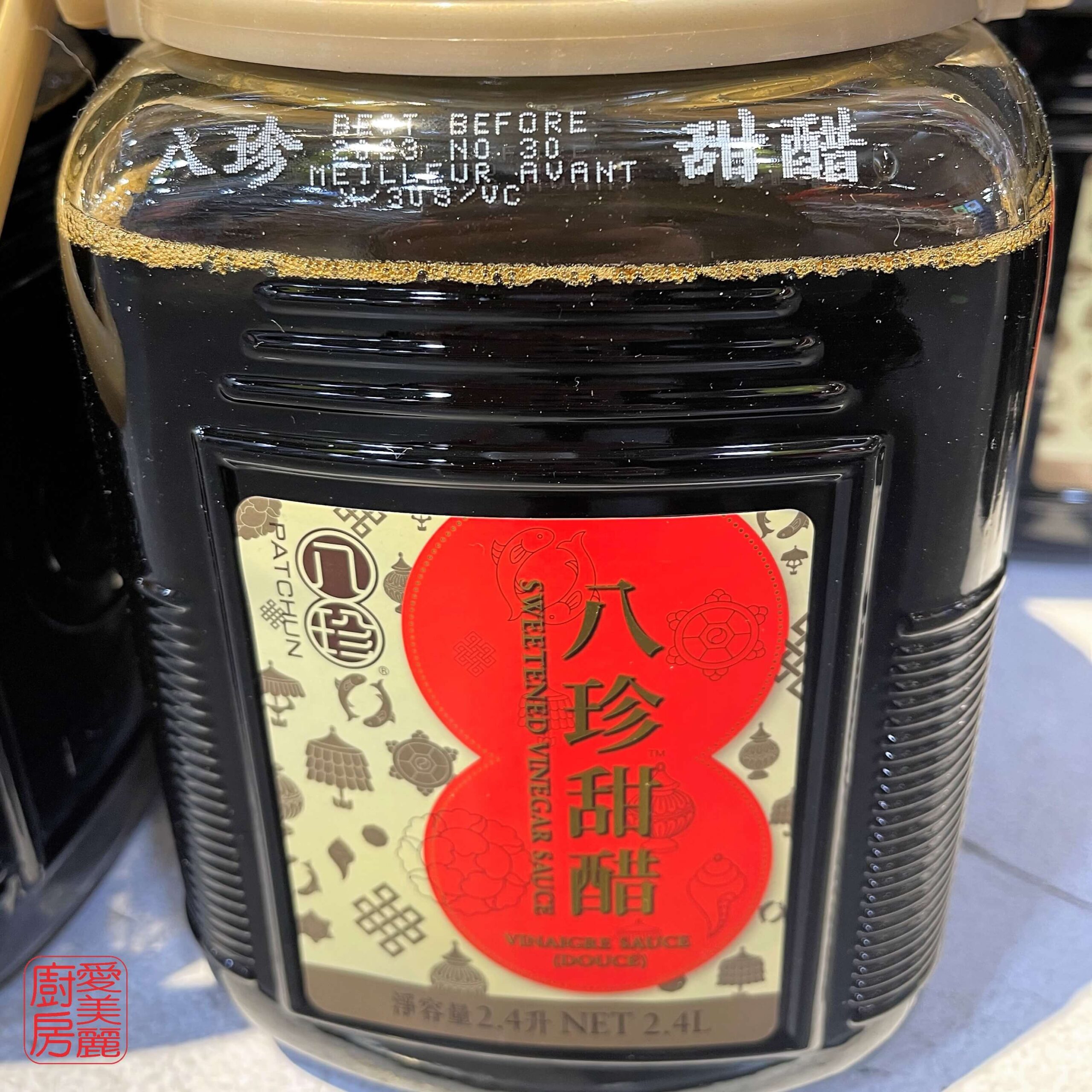
Buy mature ginger 老薑 (lǎo jīang) if possible - 2.4 L Sweetened Vinegar Sauce (甜醋 tían cù)
I buy the Pat Chun (八真) brand from Hong Kong. It’s a bit on the expensive side, but it I like their level of sweetness and their spice blend - 1 c Black Rice Vinegar (黑糯米醋 hēi nùo mǐ cù)
I also buy Pat Chun brand - 2 kg Pig’s feet chopped into approx. 6cm pieces
- 2 tbsp Course salt
- 12 Large eggs

Instructions
- Rinse ginger in water and dry.
I was not able to get any mature ginger so I used mostly regular ginger and some organic ginger. The organic ginger seemed spicier than regular ginger, so it was a good mix - Scrape off the ginger skin with a thin metal teaspoon or a small dull paring knife
- Try to keep the ginger in large pieces when scraping off the skin
Keeping them in large pieces will prevent them from breaking apart into very small pieces during the braising process - Rinse the ginger again, pat dry and line them on a towel to let them air dry for 24 hours in a cool dry place

- Use the side of a cleaver or a meat pounder and pound the ginger slightly so that it cracks open a bit.
This will allow the ginger essences to come out during braising 
- Pour 2.4L of the Sweet Vinegar into a ceramic, clay, glass or stainless steel pot
I used a 5 quart Le Creuset Dutch oven and it seemed to work well 
- Put the ginger in the pot and bring the vinegar to a boil on medium heat

- Turn the heat down to low and let simmer for 1 hour and turn off heat
- Repeat step 7 every 3-4 days for 3-4 weeks
I needed to make some in a rush, so I did step 7 twice a day, everyday for 3 days - After a 3-4 weeks, you can start preparing the pig’s feet
- Put the pig’s feet in a large mixing bowl and rinse with water
- After the first rinse, add 2 tbsp of course salt to the pig’s feet and fill the mixing bowl with water so that it covers all the pig’s feet. Mix the salt around and let it sit for 30 minutes
This step helps to rid the pig’s feet of impurities and wash away some of the odors it may have 
- Pour out all the salt water and rinse the pig’s feet well
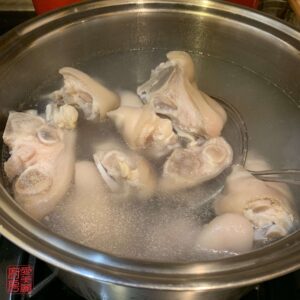
- Prepare a pot of boiling water
- Prepare ice water in a large mixing bowl
- When the water boils, put the pig’s feet in the water for approx. 20-30 seconds. You should be able to see the skin on the pig’s feet shrink slightly
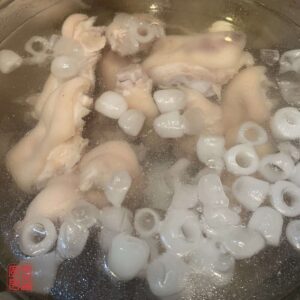
- Remove the pig’s feet and put into the ice bath for 5 minutes
- Pour out the ice water
- Prepare a bowl of water for soaking the tweezers

- With a pair of tweezers, pull off the hairs that are still on the pig’s feet I use fish bone tweezers
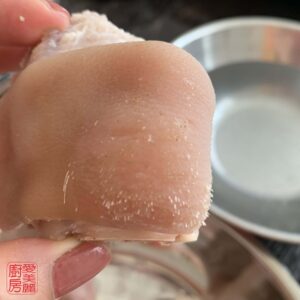
- Dip the tweezers into the bowl of water to detach the hairs from the tweezers
- After removing all the hairs, put the pig’s feet into the sweet vinegar pot and bring it to a boil at medium heat. Turn down the heat to low after it boils and let it simmer for an hour. Stir every half hour so that the pig’s feet don’t stick to the bottom of the pot. Turn off heat

- After 2 hours, reheat the pot again using medium heat. Turn off the heat when it boils. Do not open the lid after you turn off the heat
If you try tasting the vinegar, you may find that it tastes a little bitter. This is flavor from the ginger. Once you add the black glutinous rice vinegar, the taste should balance out - Boil some water in a large pot to cook the eggs
- Add the eggs after the water boils and cook for 6 minutes and 30 seconds
Adding eggs after the water boils will prevent the shell from sticking to the egg white when you peel off the shell 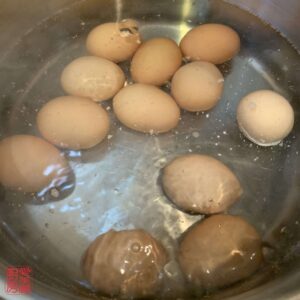
- Stir and turn the eggs gently so that the yolk will be in the centre of the egg and not on one side
- Remove the eggs after 6 minutes and 30 seconds and rinse under cold water for 1 minute

- After the eggs have cooled, remove the shell and rinse with water

- Put the eggs into the pot and try to completely cover them with the vinegar.
You can place some of the ginger on top of the eggs to weigh them down 
- Add 1 cup of black glutinous rice vinegar to the pot, stir and repeat step 23.

- Skim oil off the top of the stew

- The stew is now ready to eat. If you find that the pig’s feet is still a bit tough, repeat step 23. Do not let the stew boil too long because your eggs may break apart
- You can keep adding ginger, pig’s feet, sweet vinegar and eggs to make more batches
The ratio of Sweet Vinegar to Black Glutinous Rice Vinegar is 10 to 1 - Note: You may want to store the unfinished pig’s feet in a separate container and only heat up what you consume. The meat on the pig’s feet will turn hard when submersed in vinegar for a longer duration of time.
Nutrition
Calories: 606kcalCarbohydrates: 20gProtein: 43gFat: 34gSaturated Fat: 12gCholesterol: 304mgSodium: 1561mgPotassium: 882mgFiber: 2gSugar: 6gVitamin A: 238IUVitamin C: 4mgCalcium: 76mgIron: 3mg
Tried this recipe?Let us know how it was!